




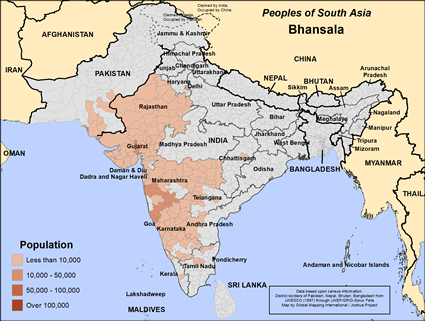
The Bhansala are a Hindu community found primarily in western India, especially in the state of Maharashtra. They speak Marathi, the dominant regional language, while many also use Hindi or English in education, business, and communication outside their communities. The Bhansala are generally associated with the broader Hindu social structure of western India and have long been integrated into the economic and cultural life of the region. Historical information that is specific to the Bhansala is limited, and much of their identity is preserved through family traditions and community relationships rather than written historical records. They have experienced the effects of urbanization, improved education, and economic development while continuing to maintain their cultural heritage.
Most Bhansala families live in towns and cities, although some may reside in rural communities. Their occupations vary widely and include business, professional careers, government service, skilled trades, education, and agriculture. Where they live in farming areas, daily life is likely to resemble that of neighboring agricultural communities, with cultivation of regional crops and participation in local markets. Rice, wheat, millet, lentils, vegetables, dairy products, and regional curries form an important part of their diet. Family relationships are highly valued, and extended families often maintain close connections even when living separately. Marriage, religious ceremonies, and community celebrations bring relatives together throughout the year. Festivals such as Diwali, Holi, Ganesh Chaturthi, and Gudi Padwa are widely observed in Maharashtra. Education is generally valued, and younger generations increasingly pursue higher education and careers in a variety of professions.
The Bhansala traditionally follow Hinduism, participating in the worship of Hindu deities and observing festivals, temple worship, and family religious ceremonies. Daily religious practices may include prayer, offerings, and the observance of certain days according to the Hindu calendar. Family traditions and customs often shape religious life. While exposure to Christianity may occur through education, media, or personal relationships, many Bhansala have limited understanding of the biblical message that salvation comes by God's grace through faith in Jesus Christ alone. Opportunities remain for respectful relationships through which believers can clearly communicate the gospel.
Many Bhansala enjoy access to education and economic opportunities, yet every community has a need for the transforming power of the gospel. Biblical resources that communicate clearly in the languages they understand would help people examine the claims of Christ for themselves. Christian workers who demonstrate humility, compassion, and genuine friendship can build meaningful relationships that open doors for spiritual conversations. Churches in western India would benefit from wisdom and boldness as they seek to share the gospel in culturally appropriate ways. Those who place their faith in Christ will need discipleship, fellowship, and encouragement to grow in biblical maturity while living faithfully within their families and communities.
Pray that the Holy Spirit will open the hearts of the Bhansala people to understand the good news of Jesus Christ.
Pray that believers in western India will demonstrate Christ's love through humble service, genuine friendships, and faithful witness.
Pray that God will provide scripture and discipleship resources in the languages the Bhansala use every day.
Pray that those who come to faith in Christ will grow into mature disciples and become effective witnesses to their own community.
Scripture Prayers for the Bhansala in India.
https://www.peoplegroups.org/
https://www.britannica.com/place/Maharashtra
https://censusindia.gov.in/
https://www.ethnologue.com/language/mar
https://www.india.gov.in/
| Profile Source: Joshua Project |




