


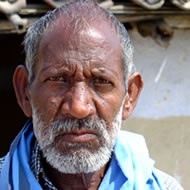

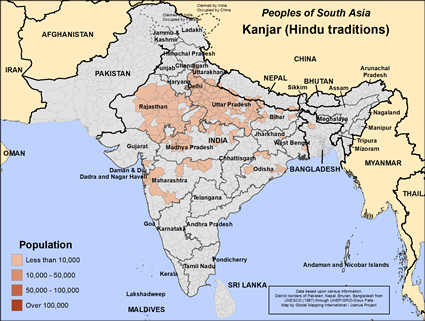
The Kanjar are a traditionally nomadic and semi-nomadic community found mainly in northern and western India, especially in Rajasthan, Uttar Pradesh, Madhya Pradesh, Haryana, Punjab, and nearby regions. They speak Hindi, Rajasthani, Punjabi, Bhojpuri, and related regional dialects depending on location. Historically, the Kanjar were known for itinerant occupations including entertainment, trading, craftwork, animal dealing, basket making, stone work, and seasonal labor. Some subgroups also became associated with dance, music, and traveling performance traditions.
During British colonial rule, the Kanjar were among the many communities unfairly labeled under the Criminal Tribes Act of 1871, which branded entire groups as hereditary criminals. Though this law was repealed after Indian independence, the stigma and social suspicion attached to the Kanjar continued for generations and still affects many communities today. Social exclusion, poverty, weak educational access, and unstable employment have contributed to cycles of marginalization among many Kanjar families.
The Kanjar are not a single uniform community but consist of many regional branches and related groups. Some remain partially nomadic, while others now live in permanent settlements or urban slums. Their identity has been shaped by centuries of mobility, social rejection, and survival outside mainstream village society.
Life for many Kanjar families is marked by economic instability and social marginalization. Some work as agricultural laborers, construction workers, street vendors, entertainers, transport workers, or scrap collectors. Others remain involved in traditional crafts, performance arts, or small-scale trade. In some regions, generations of poverty and exclusion have pushed portions of the community into exploitative and illegal activities, including prostitution networks and organized begging systems.
Many Kanjar settlements are located on the edges of villages or urban areas where infrastructure, sanitation, healthcare, and education may be very limited. Children often grow up with restricted access to stable schooling, and discrimination from surrounding communities can reinforce social isolation. Women in some Kanjar communities carry especially heavy burdens due to poverty, exploitation, and inherited social structures.
Family and clan identity remain important. Marriages are usually arranged within accepted community boundaries, and elders often help resolve disputes and preserve traditional customs. Oral traditions, music, dance, and storytelling remain significant parts of Kanjar cultural life in many regions. Despite hardship, strong internal community ties often help families survive difficult economic conditions.
The Kanjar identified with Hindu traditions generally practice a mixture of Hinduism, folk religion, animism, and ancestor reverence. Worship may include devotion to Hindu goddesses such as Bhavani and Prabha along with rituals connected to spirits, supernatural protection, and ancestral powers. Offerings, prayers, incense, alcohol, and ceremonial observances may be used in attempts to gain blessing, protection, healing, or deliverance from evil influences.
Many Kanjar communities also consult spiritual specialists, exorcists, fortune tellers, or folk healers believed to possess power over spirits and curses. Fear of evil spirits and unseen supernatural forces strongly shapes worldview and daily religious practice in some communities. Religious identity is often inherited through family tradition and community custom rather than through formal theological understanding.
Although some Kanjar have heard the name of Jesus Christ, many still have little understanding of the biblical gospel. In many places Christianity is viewed as foreign or irrelevant to their community struggles. Large numbers of Kanjar have never heard a clear explanation of sin, repentance, grace, forgiveness, and salvation through Jesus Christ alone.
The Kanjar need improved access to stable housing, healthcare, education, sanitation, and long-term employment opportunities. Communities affected by social stigma and generational poverty often struggle to gain equal treatment within broader society. Women and children in vulnerable settlements are especially at risk of exploitation, abuse, and illiteracy. Consistent educational access and vocational opportunities are urgently needed in many Kanjar communities.
Spiritually, the Kanjar need compassionate and faithful gospel witness rooted in long-term relationships and biblical truth. Because many communities are oral in culture and distrustful of outsiders, patient discipleship, oral Bible storytelling, audio Scripture resources, and practical acts of compassion are especially important. Mature local believers and churches are needed to share the gospel clearly and demonstrate the transforming power of Christ among Kanjar families and settlements.
Pray that the Kanjar people will hear and understand the gospel clearly in their own languages and place their faith in Jesus Christ.
Pray that God will raise up compassionate and courageous believers who can build trust with Kanjar communities and faithfully disciple new followers of Christ.
Pray that Kanjar families facing poverty, exploitation, social stigma, and limited educational opportunities will experience practical help, dignity, and hope.
Pray that the Kanjar people will be adopted through the People Group Adoption program so that ongoing prayer, evangelism, discipleship, and church planting efforts will continue among them.
Scripture Prayers for the Kanjar (Hindu traditions) in India.
https://peoplegroups.org/people_groups/pg041618/
https://en.wikipedia.org/wiki/Kanjar
https://vajiramandravi.com/current-affairs/kanjar-tribe/
https://pubmed.ncbi.nlm.nih.gov/32031496/
https://en.wikipedia.org/wiki/Kanjarbhat
https://en.wikipedia.org/wiki/Kuchband
| Profile Source: Joshua Project |




