


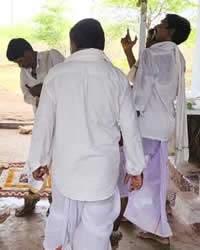

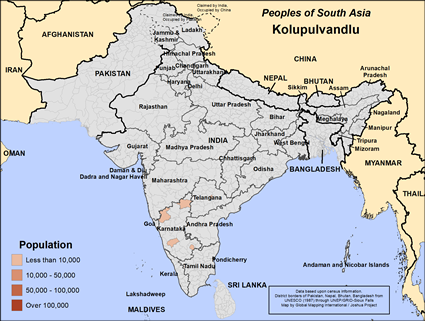
The Kolupulvandlu are a distinct community residing primarily in the Indian states of Andhra Pradesh and Telangana, with a smaller population in Karnataka. In the official government classification, they are designated as a Scheduled Caste (SC). Historically, they were among the marginalized and "untouchable" groups that suffered severe social and economic segregation under the traditional Hindu caste system.
Caste classifications in India are critical for accessing affirmative action, educational quotas, and legal protections, and the Kolupulvandlu fall into this category.
Traditionally, communities categorized alongside the Kolupulvandlu were associated with hereditary occupations. While some historical records group them with traditional performers, musicians (such as Pambala), and village servants, they have also historically engaged in manual labor, agriculture,
tanning, and fishing.
Economically, the Kolupulvandlu are primarily working-class. They earn their living through farming, manual labor, tanning, and fishing. In more modern contexts, many find work as agricultural laborers or participate in community-based self-help groups to build financial independence.
Because of the legacy of the caste system, they have historically endured low social status and significant marginalization, which has made it difficult for families to break the cycle of poverty and rise above their circumstances.
They are traditionally devotees of major Hindu deities, particularly Lord Venkateswara, Lord Narasimhaswamy, and Lord Shiva. Alongside mainstream Hinduism, they practice indigenous folk religions that involve the worship of local deities and spirits tied to their regional communities. While officially classified as Hindu, many Kolupulvandlu have incorporated beliefs and practices from Islam or Christianity into their cultural celebrations. It is not uncommon for members of the community to celebrate festivals across these different faiths. While the community is officially Hindu, many Kolupulvandlu have integrated Christian or Islamic beliefs into their practices over time. They often celebrate a mix of local traditions alongside Muslim or Christian festivals.
Primarily need social upliftment, economic empowerment, and relief from caste-based discrimination. Historically disadvantaged, they require targeted access to education, modern livelihood development, and active inclusion in social, political, and welfare programs to overcome structural inequalities.
Specific development and social needs include support to rise above the cycle of structural exclusion, often requiring government or non-profit intervention to ensure equal opportunities. They need to be integrated into financial networks, such as Self-Help Groups (SHGs) and cooperative programs, to provide micro-credit, business training, and diverse income streams. Access to quality education and vocational training can create pathways out of generational poverty. Better accessibility to basic medical services and government welfare schemes would improve overall quality of life. They also need sustained representation from advocacy groups and local governments to protect their rights and improve community resources.
Prayer for their cultural traditions to be renewed and shaped in a God-honoring way.
Petitions the Holy Spirit to guide family and community leaders, granting them wisdom.
Pray for dedicated workers to establish a strong, lasting discipleship movement among them.
Pray for social and economic equity to overcome deep-seated discrimination and extreme poverty.
Pray for opportunities in agriculture, fishing, or vocational trades to break cycles of poverty and manual labor.
References
Scripture Prayers for the Kolupulvandlu in India.
| Profile Source: Joshua Project |




