
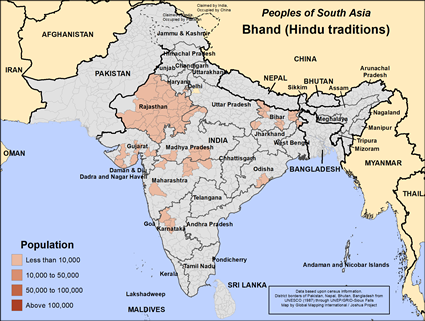
The Bandh people, also known as the Rehr or Bhand, derive their name from a word associated with bamboo. This reflects their longstanding connection to bamboo craftsmanship. Many Bandh families traditionally make bamboo baskets, and they are also known for producing bamboo containers used for storing grain. Their identity is closely linked to artisan work, rural livelihoods, and the social patterns of northern Indian society.
Bamboo work remains an important source of livelihood for many Bandh people. Some families have obtained land for cultivation and engage in farming, while others work as day laborers. Compared with some rural communities, they are reported to have access to infrastructure such as electricity, water supplies, roads, and schools.
Family customs and kinship relationships play a strong role in community life. A Bandh woman may divorce her husband and remarry if the new husband compensates the former husband. Marriage customs may also permit a person to marry a deceased spouse's younger sibling. Inheritance practices generally provide equal shares for sons. Daily life likely revolves around family responsibilities, manual work, local customs, and village social networks.
The Bhand people practice Hinduism. Their religious life reflects the wide diversity found within Hindu traditions in India. At the popular level, worship commonly involves devotion to deities of the Hindu pantheon through temple visits, offerings, prayers, flowers, incense, and rituals intended to obtain blessing, protection, or favor.
They participate in major Hindu festivals such as Holi, Diwali, Navratri, and Rama Navami. Their beliefs and practices are shaped by religious observances, cultural traditions, and community celebrations that reinforce spiritual and social identity. Hindu religious expression among them may include both devotional practices and broader philosophical influences found within Indian religious life.
The Bhand people need opportunities to encounter the gospel of Jesus Christ in ways that are understandable and culturally meaningful. They need the work of the Holy Spirit to open hearts and minds to the person and saving work of Jesus.
In addition to spiritual needs, practical concerns related to employment, education, and community well-being remain important. Families dependent on artisan labor, agriculture, or daily wage work may face economic uncertainties. Continued access to healthcare, education, clean water, and community support can contribute to stronger and healthier family life.
Pray that the Bhand people will be adopted through the People Group Adoption program so that sustained prayer, committed partnership, and future gospel engagement will reach them.
Pray that Christians will lovingly and faithfully reach out to the Bhand people, helping them encounter the hope and life found in Jesus Christ.
Pray that a deep spiritual hunger will grow among the Bhand people, leading many to seek and follow Jesus Christ no matter what the cost.
Pray for the physical needs of the Bhand people, including healthcare, schools, clean water, stable livelihoods, and support for families and communities.
Scripture Prayers for the Bhand (Hindu traditions) in India.
https://en.wikipedia.org/wiki/Bhand
https://www.ethnologue.com
https://censusindia.gov.in
| Profile Source: Joshua Project |