


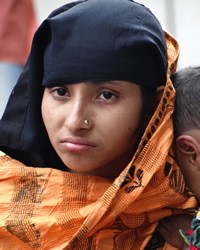

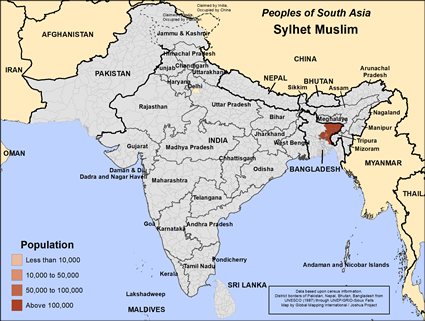
The Sylheti Muslims are the dominant Muslim population of the Sylhet region in northeastern Bangladesh, with related communities extending into northeastern India and throughout the global Sylheti diaspora. They are distinguished by their use of the Sylheti language, which many linguists regard as a distinct language, while others classify it as a dialect of Bengali. The Sylhet region has a long history as a crossroads of trade, agriculture, and Islamic influence. Over many centuries, Muslim rulers, traders, and Sufi teachers helped establish Islam throughout the region, shaping the religious and cultural identity of the people.
The Sylheti people have developed a strong regional identity that sets them apart from other Bengali populations. Their culture reflects both the broader traditions of Bengali society and unique customs that originated in the Sylhet region. Historical migration has also played an important role in shaping the community. Large numbers of Sylhetis have settled abroad, especially in the United Kingdom and other parts of the world, while maintaining close ties to their homeland through family, culture, and religion.
The Sylheti Muslims live in both rural and urban settings. Agriculture remains important in many areas, with rice cultivation, tea production, fishing, and small-scale commerce providing livelihoods for numerous families. In towns and cities, many work in business, education, government service, transportation, and professional occupations. Migration for employment has also become a significant feature of Sylheti life, and remittances from family members working abroad contribute to many local economies.
Family relationships are highly valued, and extended family networks often provide social, emotional, and financial support. Marriage is considered an important family responsibility, and weddings frequently combine Islamic practices with cultural traditions unique to the region. Hospitality is highly regarded, and family gatherings play an important role in maintaining community ties. Daily life commonly revolves around work, family responsibilities, religious observance, education, and community activities. Traditional foods include rice, fish, lentils, vegetables, and a variety of regional dishes for which Sylhet is well known.
The Sylheti Muslims are predominantly Sunni Muslims, most following the Hanafi tradition. Religious life centers on belief in Allah, observance of daily prayers, fasting during Ramadan, charitable giving, and participation in the wider Muslim community. Islamic festivals such as Eid al-Fitr and Eid al-Adha are widely celebrated and play an important role in community life.
Sufi influences have historically been significant in the region, and reverence for pirs (saints) and shrines continues among many families. At the same time, reform movements such as Deobandi and Tablighi influences have gained followers within the community. In some areas, cultural customs and folk practices coexist with formal Islamic observance, creating forms of religious syncretism that blend local traditions with Islamic beliefs. Most Sylheti Muslims have had little opportunity to hear a clear explanation of the biblical message that salvation comes through faith in Jesus Christ and His completed work on the cross.
The Sylheti Muslims need greater access to the gospel through trusted relationships, Scripture resources, and faithful Christian witnesses who can communicate biblical truth in culturally understandable ways. Although portions of Scripture and Christian resources are available in the Sylheti language, many people have never personally encountered a follower of Jesus who can clearly explain the gospel.
Practical needs vary across the region. Some communities face challenges related to employment opportunities, education, healthcare access, and economic development. Rural families may also face difficulties associated with flooding and seasonal economic instability. Efforts that strengthen families, improve educational opportunities, and provide compassionate community support can help address tangible needs while building meaningful relationships.
Above all, the Sylheti Muslims need opportunities to encounter Jesus Christ through God's word, understand the message of grace, and see transformed lives through the witness of mature believers and healthy fellowships of faith.
Pray that the Sylheti Muslims would have many opportunities to hear a clear presentation of the gospel and understand who Jesus Christ truly is.
Pray that God would raise up faithful workers who will build genuine relationships among the Sylheti Muslims and share biblical truth with wisdom, humility, and love.
Pray that the Sylheti Muslims would be adopted through the People Group Adoption program so that churches and believers will commit to ongoing prayer, outreach, and future gospel engagement among them.
Pray that any existing Sylheti-speaking believers would be strengthened in their faith and equipped to share the gospel with their own community and with other peoples throughout Bangladesh and beyond.
Scripture Prayers for the Sylheti (Muslim traditions) in Bangladesh.
https://en.wikipedia.org/wiki/Sylhetis
https://en.wikipedia.org/wiki/Sylheti_language
https://www.britannica.com/place/Sylhet
https://banglapedia.org
https://en.wikipedia.org/wiki/Sylhet_Division
| Profile Source: Joshua Project |



