


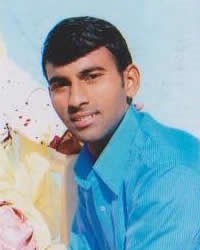

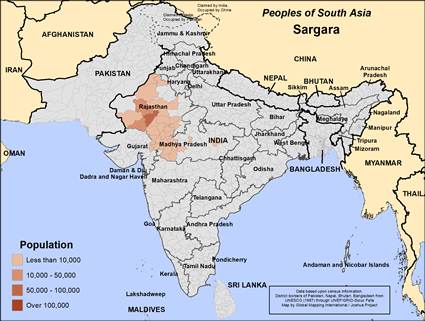
The Sargara are a Hindu community found primarily in the western Indian states of Rajasthan and Gujarat, with smaller populations in neighboring regions. Historically, the Sargara people originate from a proud Agnivanshi and Suryavanshi Kshatriya (Rajput) lineage.
They were the ones who mastered the use of arrows and bows. Sargara word itself means "Sar" means the head, and "gara" originally a sanskrit word "gada" which means shot. This means that they experts at using weapons as their name implies. They were the frontline warriors who led the Rajput armies and sometimes they were also advisers in the Rajput court. Over generations, changing economic conditions led the community to diversify into agriculture, animal husbandry, trade, wage labor, and various skilled occupations.
The Sargara have maintained a distinct social identity while sharing many cultural characteristics with neighboring communities of western India. Their primary languages include Rajasthani, Marwari, Gujarati, and Hindi, depending on their location. Community traditions, family networks, and regional customs continue to play an important role in preserving their heritage and identity.
A significant segment of the community chose to remain fully integrated within the traditional Rajput power structures, forts, and royal factions. This branch never altered its occupational lifestyle, successfully preserving its unbroken socio-cultural status.
They are a mixed Hindu community consisting of the status of both mainstream Rajputs and as an agrarian scheduled caste. Many maintain strict marital, social, and structural ties with the broader Rajput clans.
Today, some members of the Sargara community work in government service, education, transportation, and other modern professions. Their rural counterparts are often landowners, though the less fortunate among them work for others.
Family life is highly valued, and extended family networks often provide support during times of financial need, marriage arrangements, and major life events. Respect for elders remains important, and community relationships frequently influence social and economic opportunities. Marriage is generally viewed as a significant family responsibility, and weddings are important occasions for maintaining social ties.
Daily life revolves around work, family responsibilities, education, and participation in community and religious activities. Food habits typically reflect the cuisine of Rajasthan and Gujarat, including wheat-based breads, lentils, vegetables, dairy products, and regional specialties. Festivals, community gatherings, and religious celebrations help strengthen social bonds and preserve cultural traditions.
Their deep-seated warrior heritage is mirrored in their shared worship of powerful family deities, predominantly Mata Chamunda, Baan Mata, Ashapura mata, Nagnechi Mata and Mata Ambajee, along with regional reverence for Hanumanjee, Mahakal and Bherujii.
The Sargara are predominantly Hindu. Their religious life includes temple worship, household rituals, observance of Hindu festivals, and devotion to various gods and goddesses. Many families honor regional deities and local traditions alongside the broader practices of Hinduism.
Like most Hindu communities, the Sargara generally believe in karma, rebirth, and the pursuit of spiritual merit through religious observances, good works, and devotion. Religious activities may include offerings, fasting, festival participation, pilgrimages, and family ceremonies. In some areas, folk beliefs and local customs are woven into their religious practices, reflecting traditions that have been passed down through generations.
Most Sargara have had little opportunity to hear a clear presentation of the biblical message that forgiveness of sins and reconciliation with God come through faith in Jesus Christ rather than through religious rituals, personal effort, or accumulated merit.
The Sargara need greater access to the gospel through trusted relationships, Scripture in languages they understand, and faithful Christian witnesses who can communicate biblical truth with clarity and compassion. Few will ever have direct exposure to biblical Christianity and may never know that the only way to reconciliation with the Father is through the blood of Jesus Christ.
Practical needs vary across regions. Some families continue to face challenges related to employment opportunities, educational advancement, healthcare access, and economic stability. Community development efforts, vocational training, literacy programs, and educational opportunities can help strengthen families and improve long-term prospects.
Pray that God would raise up faithful workers who will build meaningful relationships among the Sargara and communicate biblical truth with wisdom, humility, and love.
Pray that the Sargara would be adopted through the People Group Adoption program so that churches and believers will commit to ongoing prayer, outreach, and future gospel engagement among them.
Pray that any existing believers who have connections with the Sargara would be strengthened in their faith and equipped to share the gospel with their own community and neighboring peoples.
Scripture Prayers for the Sargara in India.
https://en.wikipedia.org/wiki/Sargara
https://www.peoplegroups.org/explore/GroupDetails.aspx?peid=12123
https://censusindia.gov.in
https://www.india.gov.in
| Profile Source: Joshua Project |




