




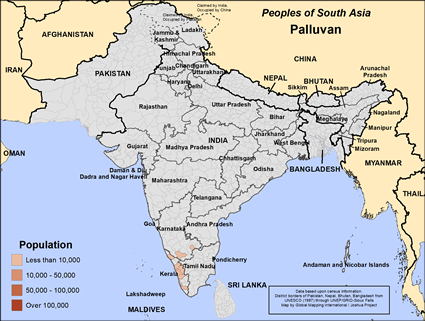
The Palluvan are a traditional community found mainly in the southern Indian state of Kerala. They are closely connected to Malayalam-speaking culture and have long been associated with ritual music, folk religious ceremonies, and traditional healing practices within village society. Historically, the Palluvan were known for performing ritual songs and ceremonies connected to serpent worship, especially ceremonies intended to honor or appease serpent spirits believed to influence family well-being and fertility.
The community developed within Kerala's highly structured caste society, where occupational and ritual roles were often passed down through generations. Palluvan men traditionally played instruments such as the pulluvan veena and pulluvan kudam during ceremonial performances, while women also participated in singing ritual songs connected to local religious customs. Though modernization has affected many traditional occupations, elements of these customs continue in some areas of Kerala today.
Many Palluvan families live in villages, towns, and semi-urban areas across Kerala. Some continue traditional artistic or ceremonial roles, while others work in agriculture, wage labor, construction, transportation, small businesses, or modern service occupations. Education and urban migration have gradually expanded opportunities for younger generations, though economic conditions can still vary widely.
Family relationships are important within Palluvan society, and extended families often maintain close connections. Marriage, festivals, and religious ceremonies remain important social events that strengthen community identity and family ties. Kerala's culture strongly influences daily life through language, food, clothing, and social customs.
Meals commonly include rice, coconut-based dishes, fish, lentils, vegetables, and spices typical of Kerala cuisine. Music and oral traditions have historically played an important role in preserving community customs and religious practices.
While Kerala has comparatively strong educational development, poorer families may still struggle with employment opportunities, financial instability, housing concerns, or access to specialized healthcare. Social identity connected to caste background can also continue to influence opportunities and relationships in some settings.
The Palluvan primarily follow Hindu traditions, but their religious life has historically been strongly connected with serpent worship and folk religious practices. Ritual ceremonies dedicated to serpent deities are especially significant in some Palluvan traditions. These ceremonies may involve ritual songs, offerings, symbolic drawings, music, and prayers intended to seek blessing, healing, protection, fertility, or relief from perceived spiritual problems.
Their beliefs often combine mainstream Hindu worship with animistic and folk religious elements involving local spirits, ancestral customs, ritual purity, and fear of spiritual harm. Religious ceremonies may accompany major family events, illnesses, agricultural concerns, or perceived spiritual disturbances.
Most Palluvan have had little exposure to a clear biblical presentation of the gospel. Many may know very little about Jesus Christ beyond general awareness of Christianity within Kerala's broader religious landscape. Biblical teaching concerning salvation through Christ alone is still unfamiliar to many within the community.
The Palluvan need faithful gospel witness presented with compassion, biblical clarity, and cultural understanding. They need access to Scripture, discipleship, and mature believers who are willing to build long-term relationships within their communities. Because traditional religious practices are deeply tied to family and community identity, those who become interested in following Christ may face social pressure or opposition.
Practical needs may include stable employment, vocational opportunities, support for struggling families, and continued access to education and healthcare. Individuals transitioning away from traditional ritual occupations may also face economic uncertainty.
There is also a need for biblically grounded churches and spiritually mature local believers who can disciple others and faithfully proclaim the gospel throughout surrounding communities in Kerala.
Pray that the Palluvan people will hear a clear and faithful presentation of the gospel in the Malayalam language.
Pray that God will raise up compassionate Christian workers who can lovingly share biblical truth among the Palluvan community.
Pray that the Palluvan people will be adopted through the People Group Adoption program so that ongoing prayer and future gospel engagement will continue among them.
Pray that believers in Kerala will grow in spiritual boldness and faithfully share the gospel with the Palluvan and neighboring peoples.
Scripture Prayers for the Palluvan in India.
https://peoplegroups.org/people_groups/pg041527/
https://en.wikipedia.org/wiki/Pulluvan
https://www.britannica.com/place/Kerala
https://en.wikipedia.org/wiki/Sarpa_Kavu
| Profile Source: Joshua Project |




