


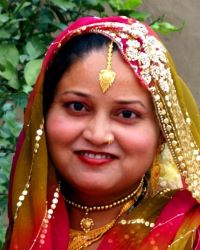

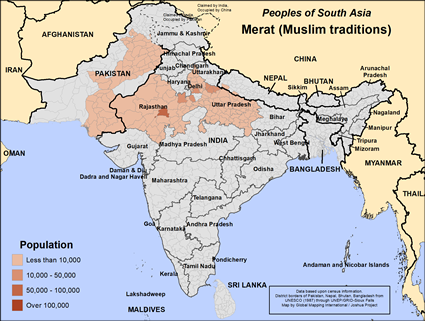
The Merat are a Muslim community found primarily in the Indian state of Rajasthan, especially in the Ajmer region and surrounding districts. They are sometimes associated historically with the Meena and Rajput populations of northwestern India, and their cultural identity reflects a blend of local Rajasthani traditions and Islamic influence. Most Merat speak Rajasthani dialects, Hindi, or related regional languages used throughout Rajasthan. Their history developed within the rural village culture of western India, where clan identity, agriculture, and local loyalties strongly shaped community life.
Historical traditions suggest that the Merat gradually adopted Islam over generations while still retaining elements of older regional customs and social patterns. Like many Muslim communities in Rajasthan, they developed a distinct identity shaped by both Islamic practice and local cultural heritage. Some Merat families historically worked as farmers, livestock keepers, traders, or village laborers, while others became involved in transportation or small-scale commerce. Even today, clan relationships and extended family structures remain influential within the community.
Most Merat families live in villages or small towns where agriculture, livestock care, daily wage labor, and local business provide the main sources of income. Farming remains important in many areas, though harsh climate conditions and inconsistent rainfall in Rajasthan can create economic uncertainty. Some families also work in transportation, construction, government service, or small trade businesses.
Family honor and community reputation are highly valued. Extended families commonly remain closely connected, and marriages are generally arranged within accepted social and clan boundaries. Traditional Rajasthani customs continue to influence clothing, weddings, music, and social celebrations. Meals commonly include flatbreads, lentils, vegetables, dairy products, and locally available meat dishes.
Educational access has improved for some younger generations, especially near urban areas, yet many rural families still face limitations in schooling, healthcare, and employment opportunities. In some communities, conservative social expectations can especially affect educational and economic opportunities for women. Village leadership and religious figures often play significant roles in shaping community decisions and preserving social traditions.
The Merat primarily follow Islam, though in some areas Islamic beliefs may be mixed with older regional customs and folk practices. Most identify with Sunni Islam and participate in mosque prayers, Ramadan fasting, Islamic festivals, marriage ceremonies, and funeral traditions. Religious identity is often closely connected with family heritage and community belonging.
Alongside formal Islamic observance, some Merat communities may retain practices connected to saints' shrines, local spiritual traditions, charms, blessings, or fear of supernatural powers. Folk customs and regional traditions can remain influential even where Islamic identity is strong. Respect for religious leaders and family elders often shapes moral and social life.
Although the Merat know of Isa (Jesus) through Islamic teaching, many have never encountered the biblical message that Jesus Christ is the crucified and risen Son of God who alone provides forgiveness of sins and reconciliation with God. In many cases, exposure to Christianity is limited, and there may be misunderstanding or suspicion toward the gospel message. Faithful, respectful, relationship-based witness is especially important among Muslim communities such as the Merat.
Many Merat communities need improved access to education, healthcare, stable employment, and economic opportunity, especially in poorer rural regions affected by drought and limited infrastructure. Young people often face pressure to leave villages in search of work, creating additional social and economic strain on families.
Spiritually, the Merat need opportunities to encounter the gospel clearly in their own language and cultural context. Many have never read the Bible or heard a biblical explanation of grace, repentance, forgiveness, and salvation through Jesus Christ. There is a need for mature believers who can demonstrate Christ's love through humility, integrity, compassion, and long-term friendship. Scripture access, discipleship, and culturally sensitive outreach are especially important among Muslim communities where open conversion may bring family or social opposition.
Pray that the Merat people will encounter the truth of the gospel clearly and come to know Jesus Christ as Savior and Lord.
Pray that God will raise up wise and compassionate believers who can build trusting relationships with Merat families and faithfully share biblical truth.
Pray that Merat communities facing poverty, drought-related hardship, limited healthcare, and educational challenges will experience practical provision and hope.
Pray that the Merat people will be adopted through the People Group Adoption program so that ongoing prayer, evangelism, discipleship, and church planting efforts will continue among them.
Scripture Prayers for the Merat (Muslim traditions) in India.
https://peoplegroups.org/explore/GroupDetails.aspx?peid=41505
https://en.wikipedia.org/wiki/Meo
https://en.wikipedia.org/wiki/Islam_in_Rajasthan
https://www.britannica.com/place/Rajasthan-state-India
| Profile Source: Joshua Project |




