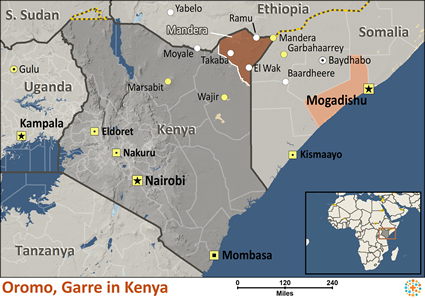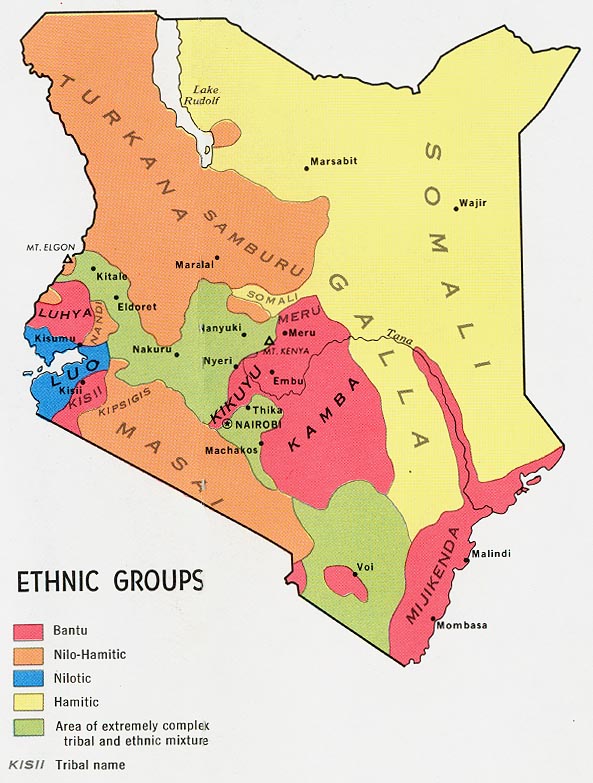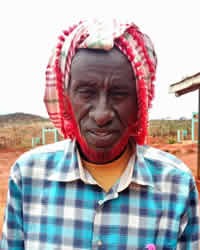

The Garre Oromo are one of the many tribes within the broader Oromo people group of East Africa. They are found primarily in northeastern Kenya, especially in Mandera County near the borders of Somalia and Ethiopia. Their language, Garre, is related to other Oromo languages, although each subgroup maintains its own distinct identity and dialect.
Historically, the Garre have lived as nomadic or semi-nomadic agro-pastoralists, moving across dry regions in search of pasture and water for their herds. Their culture has been shaped by life in this arid environment, as well as by close interaction with neighboring Somali and other Cushitic-speaking peoples. Clan identity has remained a strong and defining feature of Garre society, reinforcing unity and mutual support across borders.
The Garre Oromo traditionally live as agro-pastoralists, combining small-scale farming with the herding of livestock such as camels, goats, and cattle. Their way of life is closely tied to the rhythms of the land, requiring mobility to adapt to seasonal changes in rainfall and grazing conditions. In more settled areas, some Garre have also engaged in trade or small businesses, especially in local markets.
Clan loyalty is extremely important among the Garre. Members of a clan support one another in times of need, whether related to economic hardship, conflict, or social obligations. This strong kinship system influences decision-making, conflict resolution, and social organization. Elders often play a key role in guiding the community and maintaining order.
Family life is central, with extended families often living in proximity or maintaining regular contact even when separated by distance. Households may consist of multiple generations, and responsibilities are shared among family members. Men are typically responsible for herding livestock and protecting the community, while women manage the home, care for children, and may assist with milking animals or small trading activities.
Daily life can be physically demanding due to the harsh climate and limited natural resources. Access to clean water, healthcare, and education is often limited in remote areas. Meals commonly include milk, meat, and grains when available, reflecting both pastoral and agricultural influences.
Social life is closely tied to family, clan relationships, and religious observances. Gatherings often include storytelling, discussion of community matters, and the strengthening of social bonds through shared experiences.
The Garre Oromo converted to Islam several centuries ago and today identify almost entirely as Muslim. Their Islamic faith is generally orthodox and plays a central role in shaping daily life, moral values, and community expectations.
Religious practices such as daily prayers, fasting during Ramadan, and participation in Islamic festivals are widely observed. Local religious leaders hold influence within the community, and Islamic teaching is often passed down through both family and community instruction.
Their strong identification with Islam is closely tied to their cultural and social identity. As a result, other belief systems, including Christianity, are often viewed with suspicion or as a threat to community unity and tradition.
The Garre Oromo face both spiritual and practical challenges. Spiritually, there are very few followers of Christ among them, and strong cultural and religious barriers make it difficult for them to consider the gospel. Fear that Christianity could undermine their identity, traditions, and social structure remains a major obstacle.
Practically, many Garre communities live in remote and arid regions where access to clean water, healthcare, and education is limited. Drought, poverty, and instability along border regions can further complicate daily life and long-term development.
There is a need for compassionate, relationship-based outreach that respects their culture while clearly demonstrating the love and truth of Jesus Christ. Holistic ministry that addresses both spiritual and physical needs can help build trust and open doors for deeper engagement.
Pray that the Garre Oromo would be adopted through the People Group Adoption program, leading to sustained prayer and faithful gospel engagement among them.
Pray that Kenyan believers and others would build genuine friendships with Garre communities, sharing the message of Jesus with wisdom and love.
Pray that a deep spiritual hunger would arise among the Garre, leading many to seek truth and follow Jesus Christ no matter the cost.
Pray for improved access to clean water, healthcare, education, and sustainable livelihoods in Garre communities.
Scripture Prayers for the Oromo, Garre in Kenya.
https://www.peoplegroups.org/explore/GroupDetails.aspx?peid=19613
https://www.ethnologue.com/language/gex/
| Profile Source: Joshua Project |