


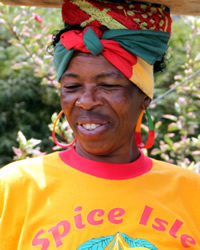

The Afro-Grenadian community is the largest ethnic group in Grenada, a Caribbean nation. Most are descendants of Africans brought to the island during the transatlantic slave trade and who later established communities across Grenada, Carriacou, and Petite Martinique. Over generations, African heritage merged with European and Caribbean influences, shaping the identity of modern Grenadians.
English remains the official language, while Grenadian English Creole is commonly spoken in everyday life. Some older residents still use expressions from Grenadian French Creole, though its use has declined. Afro-Grenadians generally identify strongly with their national identity and Caribbean roots.
Grenada's history involves periods of French and British colonial rule, plantation agriculture, slavery, emancipation, and eventual independence. The resilience of enslaved Africans and their descendants has left a permanent mark on the country's culture, music, language, and social life. Today, Afro-Grenadians continue to play a vital role in the cultural and economic life of the island nation.
Life among Afro-Grenadians is closely connected to family, community, and faith. Extended families often maintain strong relationships, and relatives frequently support one another during celebrations, hardships, and important life events. Respect for elders remains important in many homes.
Many Afro-Grenadians work in tourism, government services, education, agriculture, fishing, construction, and small business. Grenada is known as the "Isle of Spice," and crops such as nutmeg, cocoa, cloves, and other spices remain significant to the country's economy. In coastal communities, fishing continues to provide income and food for many families.
Meals commonly feature fish, chicken, rice, breadfruit, callaloo, vegetables, and locally grown fruits. Oil down, Grenada's national dish, combines breadfruit, meat or fish, coconut milk, and seasonings in a rich stew.
Music and festivals contribute greatly to social life. Carnival is one of the most anticipated annual celebrations, bringing together colorful costumes, dancing, steel bands, and traditional performances. Christmas, Easter, Independence Day, and community festivals also draw widespread participation. Throughout the year, churches, schools, and local organizations host events that strengthen neighborhood ties.
Although modern technology and global influences continue to shape daily life, many Afro-Grenadians remain deeply connected to local traditions and community relationships.
Christianity is the dominant faith among Afro-Grenadians, with Roman Catholic, Anglican, Pentecostal, Seventh-day Adventist, Baptist, and other Protestant churches present throughout the islands. Church attendance, prayer, and participation in religious celebrations remain important parts of life for many families.
At the same time, some people blend Christian practices with folk religious traditions that involve spiritual rituals, protective practices, or beliefs about unseen spiritual powers. In certain settings, individuals may seek guidance, protection, healing, or insight through practices that combine elements of Christianity with beliefs rooted in African and Caribbean spiritual traditions. These expressions represent genuine religious trust in spiritual forces and are often passed down through generations.
Many Afro-Grenadians have access to churches and Christian teaching, yet not all have experienced a personal relationship with Jesus Christ or a clear understanding of salvation through his grace alone. Religious activity is often visible, but spiritual growth and discipleship remain important needs. The message of Christ's death and resurrection continues to call people beyond tradition and ritual into faith, repentance, and new life in him.
Economic opportunities remain uneven across parts of Grenada, leading some individuals to seek employment abroad or face uncertainty about their future. Young people often benefit from stronger educational and vocational opportunities that prepare them for meaningful work and service.
Families face many of the same pressures found throughout the Caribbean, including migration, changing cultural values, and financial challenges. Healthy family relationships and strong community support systems remain important for long-term stability.
Although churches are widespread, continued discipleship is needed so that believers grow in biblical understanding and spiritual maturity. Greater access to Christian resources, leadership development, and gospel-centered teaching can help strengthen local congregations.
The Afro-Grenadian people are in a position to contribute significantly to God's work beyond their own islands. As believers grow in faith and mission, they can participate more actively in sharing the gospel with less-reached peoples around the world.
Pray that Afro-Grenadian families will experience stability, healthy relationships, and opportunities to flourish economically.
Pray that those who practice religious traditions without a clear understanding of the gospel will encounter the saving grace of Jesus Christ.
Pray for pastors, church leaders, and Christian workers to teach God's word faithfully and effectively disciple believers.
Pray that the church in Grenada will become a strong sending force, helping bring the message of Christ to peoples who still have little access to the gospel.
Scripture Prayers for the Afro-Grenadian in Grenada.
https://www.britannica.com/place/Grenada
https://en.wikipedia.org/wiki/Afro-Grenadians
https://peoplegroups.org/people_groups/pg016346/people-group-research
https://www.peoplegroups.org/explore/GroupDetails.aspx?peid=16346
https://travelgrenada.net/grenada.html
https://www.encyclopedia.com/humanities/encyclopedias-almanacs-transcripts-and-maps/grenadians
| Profile Source: Joshua Project |



