




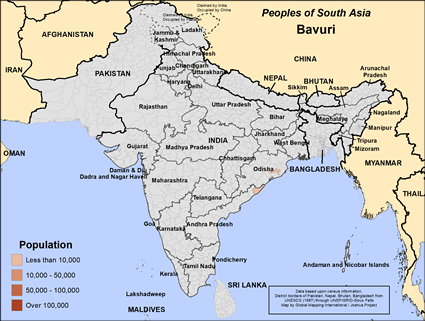
The Bavuri are a small Hindu community found primarily in the Indian state of Karnataka, especially in the northern districts of Bidar and Kalaburagi (formerly Gulbarga). Their primary language is Telugu, though many also speak Kannada because of the region where they live. Historically, the Bavuri were associated with tanning and leather-related occupations, which contributed to their placement among socially disadvantaged communities within the traditional caste structure of India.
Over time, many Bavuri families moved away from tanning into agriculture, trade, labor, and government employment. Their history reflects the broader social realities faced by many marginalized communities in India, where caste identity has strongly influenced economic opportunity, education, and social mobility. Much of Bavuri history and identity has been preserved through oral tradition, family networks, and local community customs rather than written historical records.
The Bavuri live within the wider cultural environment of South India, where Hindu religious traditions, village life, and extended family structures remain highly influential. Although Christian ministry has existed in parts of Karnataka and Telangana for generations, many Bavuri still have limited understanding of the gospel and little access to long-term discipleship.
Most Bavuri families today live in rural or semi-rural communities where farming, trade, manual labor, and government employment provide income. Agriculture remains especially important for those living in villages, while others seek work in nearby towns and cities. Economic advancement can still be difficult because of social barriers and limited educational opportunity in poorer areas.
Community gatherings and festivals are important parts of Bavuri social life. Singing, dancing, and local celebrations help preserve cultural identity and strengthen family and community ties. Like many South Indian communities, weddings, religious festivals, and seasonal celebrations often involve communal meals, music, and extended family participation.
Food commonly includes rice, lentils, vegetables, chutneys, flatbreads, and regional curry dishes. Family loyalty and respect for elders remain important values. Younger generations increasingly face tension between preserving traditional identity and adapting to modern urban life and employment opportunities.
In some areas, Bavuri families continue to experience social disadvantage connected to caste identity. Access to higher education, stable employment, healthcare, and economic opportunity may still be limited for poorer households despite government assistance programs intended to help disadvantaged communities.
The Bavuri are primarily Hindu, but many also retain older animistic and folk religious beliefs alongside formal Hindu practice. Their religious life may include temple worship, offerings, observance of Hindu festivals, reverence for local deities, and traditional rituals connected to blessing, protection, healing, and spiritual favor.
Like many communities influenced by folk Hinduism, spiritual beliefs may also involve fear of harmful spirits, curses, or unseen supernatural powers. Religious customs are often deeply connected to family identity, village traditions, and social belonging.
Although some Bavuri may have heard of Christianity, very few are known to follow Christ personally. Many have never heard a clear biblical explanation of sin, grace, repentance, and salvation through Jesus Christ alone. Access to mature Christian discipleship and fellowship remains limited.
The Bavuri need greater access to the gospel through culturally understandable evangelism, local-language Scripture resources, and long-term discipleship. Many still have little understanding of biblical Christianity or the message of salvation by grace through faith in Christ. Christian workers willing to build patient, long-term relationships are greatly needed among them.
Practical needs also remain important. Many Bavuri communities continue to face economic hardship, educational barriers, unstable employment opportunities, and social challenges connected to caste identity. Although government reservation programs exist to improve opportunities for disadvantaged communities, many families still struggle to achieve long-term economic stability.
The Bavuri would benefit from literacy programs, vocational support, medical outreach, compassionate community ministry, and strong local churches capable of providing biblical teaching and discipleship. Telugu-speaking and Kannada-speaking believers nearby also have opportunities to share the gospel faithfully among Bavuri communities.
Pray that the Bavuri people would hear the gospel clearly and come to trust in Jesus Christ alone for salvation.
Pray that God would raise up faithful Christian workers who are willing to serve among the Bavuri with humility, wisdom, and perseverance.
Pray that the Bavuri would be adopted through the People Group Adoption program so they receive sustained prayer, ongoing gospel engagement, and future discipleship efforts.
Pray that believers throughout Karnataka and Telangana would grow bold in sharing the truth of Christ with the Bavuri and neighboring communities.
Scripture Prayers for the Bavuri in India.
https://peoplegroups.org/people_groups/pg111482/
https://en.wikipedia.org/wiki/J%C4%81ti
https://en.wikipedia.org/wiki/Balija
https://www.scstrti.in/index.php/communities/sc-communities/108-sc-communities/340-bavuri
| Profile Source: Joshua Project |




