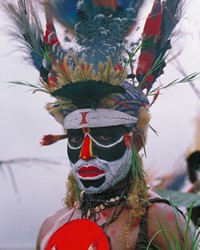

The Sindamon Yau are an Indigenous highlands people of Papua New Guinea, living in the Southern Highlands region between river valleys and rugged mountain terrain. Their homeland lies south of Nipa and north of the Erave River, with villages spread across forested ridges and cultivated slopes. Geography has long shaped their movement, social organization, and interaction with neighboring groups.
They speak Angal Enen, using the Megi (Sindamon) dialect in everyday life. Language remains central to Sindamon Yau identity, carrying oral history, local knowledge, and social expectation. Over time, contact with government structures and Christian mission efforts brought wider connections beyond the region, significantly influencing social life and belief systems while leaving clan identity and land ties intact.
Sindamon Yau life is deeply communal. Extended families form the foundation of villages, with multiple generations sharing responsibilities and resources. Daily work is cooperative, whether clearing gardens, tending crops, or caring for children and elders. Leadership tends to rest with respected individuals who demonstrate wisdom, generosity, and relational skill rather than formal authority alone.
Most families rely on subsistence gardening. Sweet potatoes, greens, and other crops dominate the diet, supplemented by pigs, which play a major role in social exchange, celebrations, and reconciliation events. Sharing food remains an important expression of unity and mutual obligation.
Community life includes frequent gatherings, especially around church events and seasonal activities. Singing and storytelling remain valued forms of expression. While modern goods appear more frequently than in the past, the rhythm of life continues to center on land, kinship, and shared responsibility rather than individual advancement.
The Sindamon Yau are mostly Christian, with Evangelical faith widely embraced across the community. Churches are active and influential, shaping worldview, moral expectations, and community decision?making. Scripture portions and the New Testament are available in their language, allowing many to hear God's Word in familiar speech patterns.
Some retain elements of traditional ethnic religion, including fear of spirits associated with illness or misfortune. In such cases, Christian confession may coexist with older beliefs, resulting in divided trust between Christ and the spirit world. Overall, however, Christian identity is strong, publicly affirmed, and socially reinforced within Sindamon Yau communities.
Despite strong community ties and church presence, the Sindamon Yau face ongoing physical challenges. Medical care is limited and often distant, leaving many families without timely treatment for preventable illness or injury. Clean water access and sanitation vary by village, affecting overall health.
Educational opportunities beyond the basic level are scarce. Young people with the desire for further schooling or vocational training face significant barriers due to cost, distance, and infrastructure limitations. Road access and transportation remain underdeveloped, restricting mobility and economic opportunity. Addressing these needs would strengthen both community well?being and church leadership capacity.
Thank God for the strong Christian faith among the Sindamon Yau and the availability of Scripture in their heart language.
Pray for deeper discipleship, that believers will fully place their trust in Jesus Christ rather than any spiritual powers.
Ask the Lord to raise up biblically grounded leaders who will shepherd the churches with humility and wisdom.
Pray that the Sindamon Yau church will send workers and encouragement to nearby people groups who lack a living relationship with the Lord of lords.
Scripture Prayers for the Yau, Sindamon in Papua New Guinea.
https://www.ethnologue.com/language/aoe/
https://www.silpng.org/resources/languages/angal-enen/
https://www.grn.org/en/people/angal-enen
https://www.britannica.com/place/Papua-New-Guinea/Highlands-region
| Profile Source: Joshua Project |