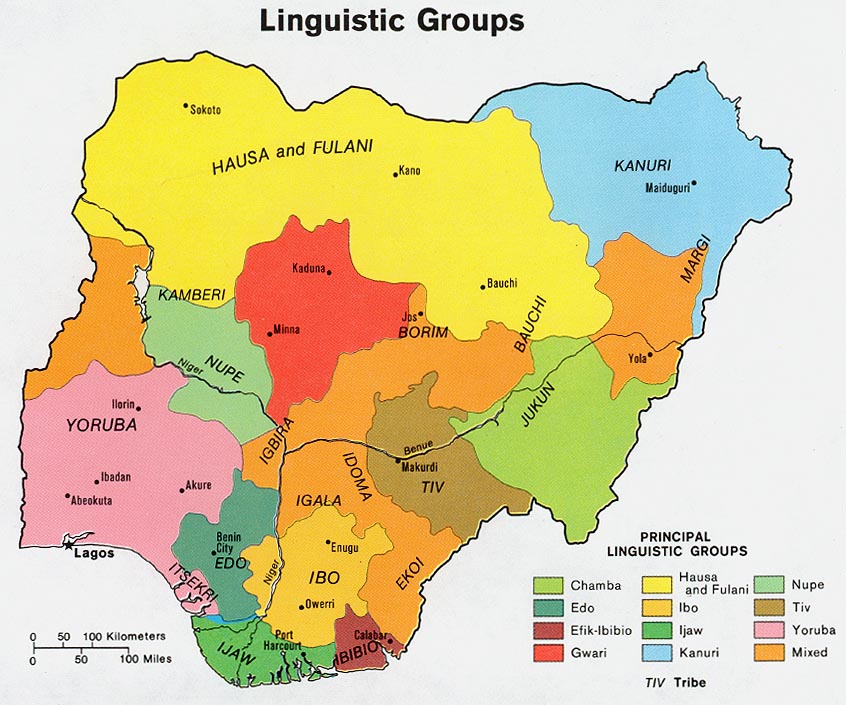
The Iyive, also known as the Uive, Yiive, Ndir, or Asumbos, are a small Tivoid people of the Nigeria-Cameroon border region. Their ancestral homeland lies in the Manyu Division of Cameroon's Southwest Region, northeast of Akwaya town near the Nigerian border, in the area known as Yive village. The ethnic group associated with this language is called the Ndir. Conflict in their home area has driven the majority of Iyive speakers across the border into Nigeria, where most now reside.
The Iyive belong to the Central Tivoid branch of the Southern Bantoid languages, a group within the broader Niger-Congo family. Their language is closely related to Tiv, the largest and most well-known language in the Tivoid family, and the Iyive share deep cultural and historical ties with the Tiv people and other Tivoid groups of the Nigeria-Cameroon borderlands. Like the Tiv, the Iyive trace their origins to migrations that brought their ancestors from further east and south into the forests and savannas of the Middle Benue region over many centuries.
The Tivoid peoples of this border zone lived largely apart from the major precolonial states of the region, organizing their lives around clan and lineage rather than centralized political authority. The arrival of British and German colonial administrations in the late nineteenth and early twentieth centuries drew administrative boundaries through Tivoid territory, dividing communities that had long shared land, language, and custom. The Iyive people have lived with the consequences of that division, and the more recent conflict that uprooted them from their Cameroonian homeland has added another layer of displacement and disruption to their communal story.
The Iyive, like their Tiv neighbors and relatives, are primarily subsistence farmers. The fertile lands of the Benue and Cross River borderlands support the cultivation of yams, cassava, maize, sorghum, and other staple crops. Small livestock including goats and chickens are kept, and fishing supplements the agricultural diet where rivers and streams are accessible. The community practices and social rhythms of the Iyive reflect their shared heritage with the broader Tivoid world — organized around extended family and lineage, with elders providing guidance and maintaining community cohesion.
The Iyive language is today severely endangered, described by linguists as moribund. Fluent speakers are largely confined to the older generation, and the language is not being transmitted to children. Cameroon Pidgin English, Tiv, and Nigerian languages serve as languages of daily communication for most community members. The loss of the Iyive language represents the loss of oral traditions, community memory, and a distinct cultural identity built across generations.
Displacement from their ancestral Cameroonian homeland has added further stress to community life, and many Iyive families now navigate the challenges of resettlement in Nigeria — building new lives while carrying the memory of a home and a way of life that has been deeply disrupted.
The Iyive people share cultural and religious heritage with the broader Tivoid world. The Tiv people and their relatives in the Nigeria-Cameroon borderlands have had significant exposure to Christian mission activity, and Christianity is widely practiced among the Tivoid communities of this region. Many Iyive are understood to identify with the Christian faith, in common with their Tiv neighbors and relatives.
Traditional Tivoid belief, as documented among the Tiv and related peoples, centers on a worldview in which spiritual forces known as akombo interact with daily life, and the manipulation of these forces by elders and ritual specialists was historically central to community wellbeing. How these traditions interact with Christian identity among the Iyive today is not fully documented, and careful, respectful discipleship remains important wherever faith is maturing.
The Iyive face both immediate and long-term needs. The loss of their language and the disruption of their community through displacement represent profound cultural wounds. Whatever remains of the Iyive language, oral tradition, and communal identity is at serious risk of being lost within a generation if no effort is made to document and preserve it.
Spiritually, the most pressing need is for the Christian faith to be deeply owned and lived out by every generation. Believers among the Iyive need grounding in Scripture, godly local leadership, and a faith community that is genuine, growing, and oriented toward blessing others.
Pray for the believers among the Iyive, that their faith would be genuine and growing, rooted in the word of God and expressed in lives of love, faithfulness, and witness within their community.
Pray for Iyive families — for parents and children — that the love of Christ would be clearly present in every home, and that faith would be passed on with conviction to the next generation.
Pray that the Iyive church would develop a vision beyond its own community, catching a heart to send workers to the unreached peoples of Africa.
Pray for the preservation of the Iyive language and the cultural heritage it carries, and that whatever is sustained would find its deepest meaning within a community anchored in the grace of Jesus Christ.
Scripture Prayers for the Iyive, Ndir in Nigeria.
https://en.wikipedia.org/wiki/ISO_639:uiv
https://en.wikipedia.org/wiki/Tivoid_languages
https://en.wikipedia.org/wiki/Tiv_people
https://en.wikipedia.org/wiki/Tiv_language
https://www.ethnologue.com/language/uiv/
https://glottolog.org/resource/languoid/id/iyiv1235
https://www.endangeredlanguages.com/lang/uiv
https://www.academia.edu/26394222/THE_TIVOID_LANGUAGES_OVERVIEW
https://www.britannica.com/topic/Tiv
| Profile Source: Joshua Project |