




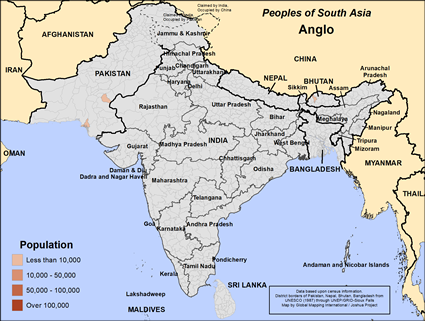
The Anglo-Indian community is a distinct minority in India, tracing its origins to the colonial era when British and other European men married Indian women. This community emerged because of the scarcity of European women in India during the early days of British rule. Over time, Anglo-Indians developed a unique identity, blending Western and Indian cultural elements. They played significant roles as intermediaries between the British administration and Indian society, especially in sectors such as the railways, education, and the military. After India's independence in 1947, many Anglo-Indians emigrated to countries like the United Kingdom, Australia, and Canada, but a substantial number remained in India, primarily in urban centers such as Kolkata, Chennai, Bengaluru, and Mumbai.
Anglo-Indians are predominantly urban dwellers, with most living in major cities. Their first language is typically English, and their homes often reflect a blend of Western and Indian influences in food, music, and social customs. The community is known for its vibrant social life, with clubs, associations, and annual reunions playing a central role in maintaining their cultural identity.
Anglo-Indians have historically contributed to education, establishing and running many reputable schools across India. Women in the community have often been pioneers in fields such as aviation and education. While many Anglo-Indians have achieved professional success, others face challenges related to economic opportunity and social integration, especially as traditional government jobs have become less accessible.
The Anglo-Indian community is predominantly Christian, with Roman Catholicism and various Protestant denominations represented. Churches are central to community life, providing not only spiritual guidance but also social support and a sense of belonging. Religious festivals such as Christmas and Easter are celebrated with enthusiasm, often blending Western and Indian traditions. While Christianity is the main faith, Anglo-Indians are generally open-minded and respectful toward other religions, reflecting the pluralistic environment of Indian society.
The Anglo-Indian community needs greater recognition and support to preserve its unique cultural heritage in the face of assimilation and emigration. Many Anglo-Indians require improved access to economic opportunities, as traditional employment avenues in government and the railways have diminished. There is a need for initiatives that support youth education and professional development, helping younger generations to thrive in a rapidly changing society. The community also needs platforms to address issues of identity and belonging, especially as their numbers decline and their distinctiveness risks being lost. Access to healthcare and social security is important for elderly members, many of whom may lack extended family support due to migration.
Pray for the preservation and celebration of the Anglo-Indian community's unique cultural and spiritual heritage.
Ask God to provide new opportunities for economic advancement and professional growth, especially for young Anglo-Indians.
Pray for unity and encouragement within the community, particularly for those who feel isolated or marginalized.
Intercede for the elderly and vulnerable, that they would receive the care and support they need.
Pray that the Anglo-Indian church would continue to be a beacon of faith, hope, and love in their cities and beyond.
Scripture Prayers for the Anglo in India.
https://en.wikipedia.org/wiki/Anglo-Indian_people
https://www.encyclopedia.com/humanities/encyclopedias-almanacs-transcripts-and-maps/anglo-indians
https://www.vedantu.com/general-knowledge/anglo-indians
https://sharedculturalheritage.wordpress.com/2020/08/17/the-great-anglo-indian-story/
https://www.britannica.com/topic/Anglo-Indian
AI generated by Gospel Flow
| Profile Source: Joshua Project |




