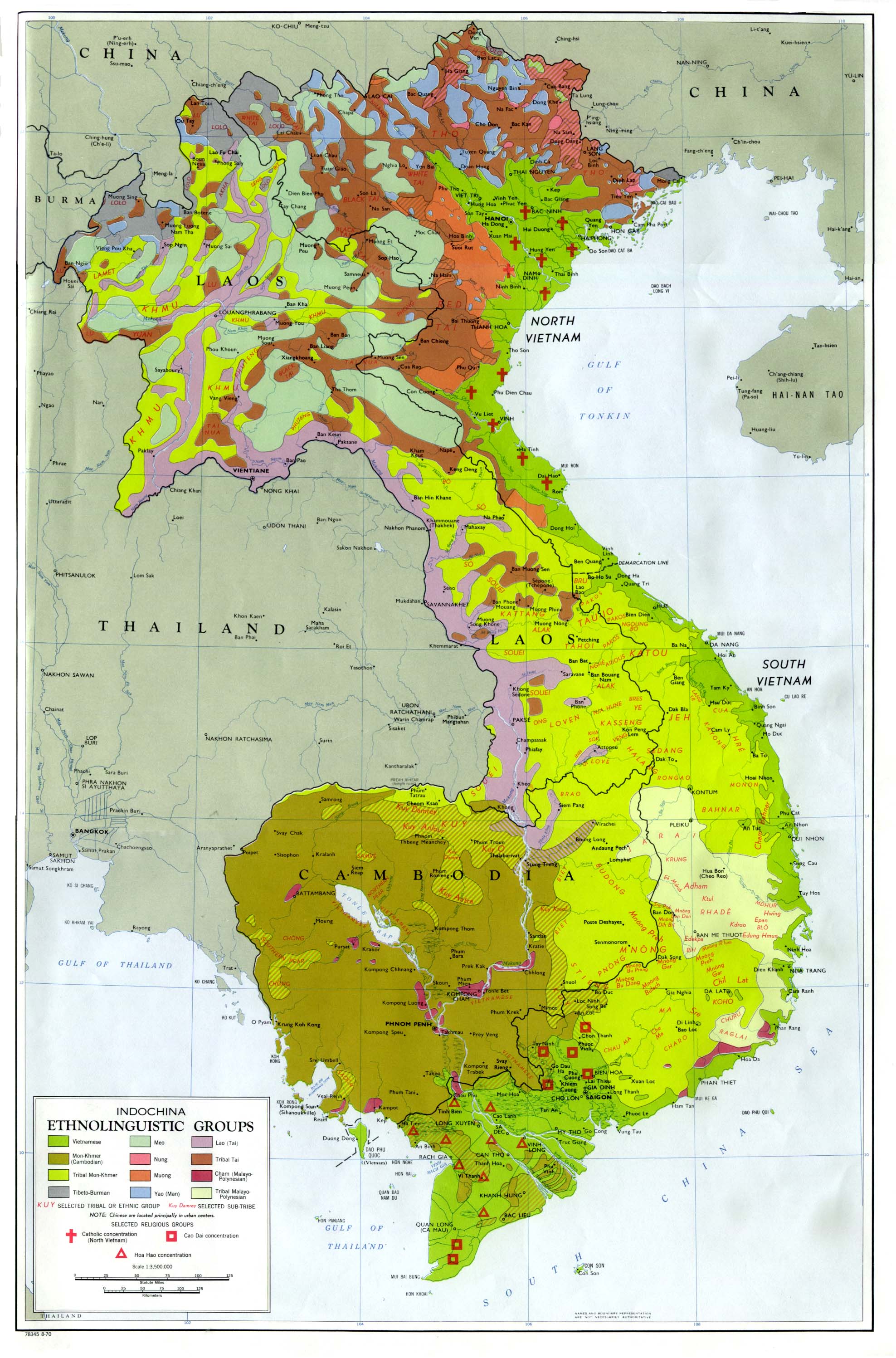
The Oh people of Laos are a small ethnic minority living primarily in the rugged mountains of northern Laos, especially near the borders with Vietnam and China. They are part of the broader Mon-Khmer linguistic family and are closely related to several neighboring highland groups. Because of their remote location and relatively small population, the Oh have often remained isolated from the political and economic centers of the country.
For generations, the Oh have depended on the land and forests of the highlands for survival. Their villages are typically found on steep hillsides or in narrow valleys where farming is possible. Historically, movement between villages was difficult, helping preserve their language and traditional customs. At the same time, this isolation limited access to schools, medical care, transportation, and outside religious influence.
Like many minority groups in Laos, the Oh experienced significant disruption during the wars and political changes of the twentieth century. Some communities were displaced, while others struggled with poverty and lack of infrastructure after conflict ended. In recent decades, roads and government programs have brought gradual changes, but many Oh villages remain remote and underserved.
Most Oh families live by subsistence agriculture. Rice is the primary staple food, often grown on mountain slopes through slash-and-burn farming methods. Families may also cultivate corn, cassava, vegetables, bananas, and other crops suited to the tropical highlands. Hunting, fishing, and gathering forest products continue to supplement their diets, especially in more isolated communities.
Village life is strongly centered around the extended family. Homes are often built from bamboo and wood and raised slightly above the ground to protect from rain and animals. Villagers usually work together during planting and harvest seasons, reinforcing close social bonds within the community.
The Oh tend to live simply, with limited material possessions. Electricity, clean water systems, and healthcare services may be inconsistent or unavailable in some villages. Travel to larger towns can require long journeys over rough roads, especially during the rainy season. Because educational opportunities are limited in remote areas, literacy rates are often lower than in urban parts of Laos.
Traditional music, storytelling, and ceremonies remain important aspects of Oh culture. Elders are respected for their wisdom and knowledge of customs. Festivals connected to agriculture and seasonal cycles help strengthen community identity. Although younger generations are increasingly exposed to Lao national culture through schools, media, and migration, many Oh communities still maintain distinct cultural practices and their own language.
The Oh have traditionally followed ethnic religious beliefs centered on spirits, ancestors, and the unseen world. Many believe that spirits inhabit forests, rivers, fields, and homes. Ceremonies and sacrifices are often performed to seek protection, healing, favorable harvests, or peace with spiritual powers believed to influence daily life.
Ancestor respect is also important in Oh society. Families may conduct rituals to honor deceased relatives and maintain harmony between the living and the spiritual world. Illness, crop failure, or misfortune are sometimes understood as signs that spirits have become displeased or that spiritual balance has been disturbed.
At the same time, Buddhism from the surrounding Lao culture has influenced some communities, particularly those with greater contact with lowland populations. In recent years, there has also been a small but growing Christian witness among the Oh. Some believers have come to faith through neighboring Christians, personal evangelism, or Scripture and audio resources in related languages. However, many Oh communities still have little access to consistent biblical teaching or Christian fellowship.
Fear of spirits can remain deeply rooted even among those exposed to Christianity. New believers may face pressure from relatives or village leaders who worry that abandoning traditional rituals could bring harm upon the community. Because family and village unity are highly valued, following Christ can involve significant social cost.
The Oh people need greater access to the gospel in forms they can clearly understand. In many villages, there are few mature believers, limited Christian resources, and little access to Scripture in their own language. Oral Bible stories, audio recordings, and faithful long-term discipleship are especially important for communities where literacy levels may be low.
Training local Christian leaders is another major need. Outside workers may have difficulty reaching isolated mountain settlements regularly, so strong indigenous leadership is essential for lasting church growth. Believers need encouragement to stand firm in their faith while showing love and respect toward their families and communities.
The Oh also face practical challenges connected to poverty and isolation. Many villages would benefit from improved healthcare, better schools, agricultural assistance, clean water systems, and safer transportation routes. Children and elderly villagers are particularly vulnerable when medical services are distant or difficult to reach.
Economic pressures are also changing traditional village life. Some younger people leave their communities in search of work, exposing them to both new opportunities and new dangers. Ministries that combine compassionate service with biblical truth can help demonstrate Christ's love in tangible ways.
Pray that the Oh people would hear a clear presentation of the gospel in their own language and cultural context.
Ask God to strengthen the small number of Oh believers and help them grow in biblical understanding and courage.
Pray for the development of trustworthy Bible translation, audio Scripture resources, and discipleship materials for the Oh language.
Ask the Lord to raise up mature local Christian leaders who can shepherd and teach their communities faithfully.
Pray that fear of spirits would be replaced by confidence in the power of Jesus Christ.
Pray for the Oh people to be adopted through the People Group Adoption Program so that churches and ministries will commit to long-term prayer, evangelism, and discipleship among them.
Pray for improved healthcare, education, clean water, and economic opportunities that will help families flourish and reduce suffering.
Scripture Prayers for the Oh in Laos.
Ethnologue
PeopleGroups.org
Minority Rights Group International
Southeast Asian ethnographic studies
Government and NGO reports on ethnic minorities in Laos
| Profile Source: Joshua Project |