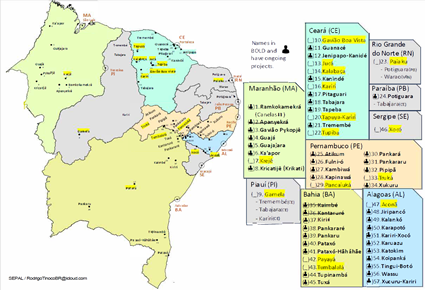
The Tabajara people live primarily in the northeastern Brazilian states of Paraíba and Ceará. 1 They are considered an Indigenous community whose ancestors lived in this region long before the arrival of Portuguese settlers. Over time, they faced intense displacement, disease, and pressure to assimilate. Many were absorbed into colonial society through forced labor, mission settlements, and shifting political alliances.
Despite centuries of outside influence, the Tabajara have maintained a distinct cultural identity tied closely to their ancestral homeland. Their history includes cooperation and conflict with both colonial forces and neighboring Indigenous groups. In recent decades, they have been working to preserve cultural memory, rebuild fragmented communities, and seek legal recognition of their traditional lands.
Most Tabajara families live in small rural communities where daily life centers on subsistence activities, community responsibilities, and local agriculture. People often grow cassava, beans, and regional fruits. Some keep small animals or gather forest products to supplement their food supply. In more urbanized areas, many work as laborers, artisans, or in service-sector jobs.
Meals typically use regional ingredients such as cassava flour, fish, corn, and tropical produce. Food preparation and shared meals strengthen family ties and reflect traditions passed down through generations.
Family structures tend to be close-knit. Elders hold an honored role, contributing to decisions, storytelling, and cultural continuity. Children are raised with a strong sense of community belonging, and extended kin often live near one another.
Celebrations vary by community but commonly include gatherings with music, dance, and traditional foods. Some events blend Indigenous customs with Christian observances, reflecting the community's long interaction with Christian institutions. Ceremonies frequently serve to affirm identity, honor ancestors, and unite families across generations.
Christianity is the primary religious identity among the Tabajara. Churches and Christian leaders often play an important social role in the community. Over time, Christian teaching and practices have been woven into local customs in ways unique to their cultural setting.
Some Tabajara also continue or remember elements of Indigenous spirituality, especially practices connected to nature, ancestral reverence, and healing traditions. Strong followers of Jesus are present within the group, and they have access to scripture and Christian resources in Portuguese. Their faith communities can be important places of hope, mutual care, and identity, especially in areas where people face poverty or social marginalization.
Tabajara communities still face challenges related to land rights, economic opportunity, and access to healthcare. Rural families may struggle with limited infrastructure, inadequate schools, or lack of employment options. Clear documentation of land ownership remains a significant issue for many Indigenous groups in northeastern Brazil.
Spiritually, the Tabajara need opportunities for continued growth in faith, discipleship, and biblical understanding. Where Christian believers are present, they can benefit from strong local leadership, unity between churches, and sustainable ministry efforts. In communities where Indigenous traditions and Christian beliefs blend, wise teaching is needed to help people understand and follow Jesus in ways that honor Scripture while valuing their cultural identity.
Pray for fair land recognition and stable living conditions.
Ask God to strengthen Tabajara believers in their walk with Christ.
Pray for wise, culturally sensitive Christian leadership in each community.
Pray that Tabajara followers of Jesus will share their faith with indigenous communities that lack a gospel witness.
Scripture Prayers for the Tabajara in Brazil.
| Profile Source: Joshua Project |