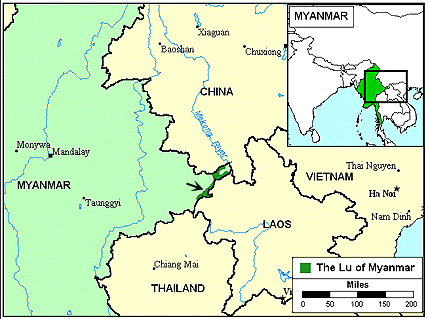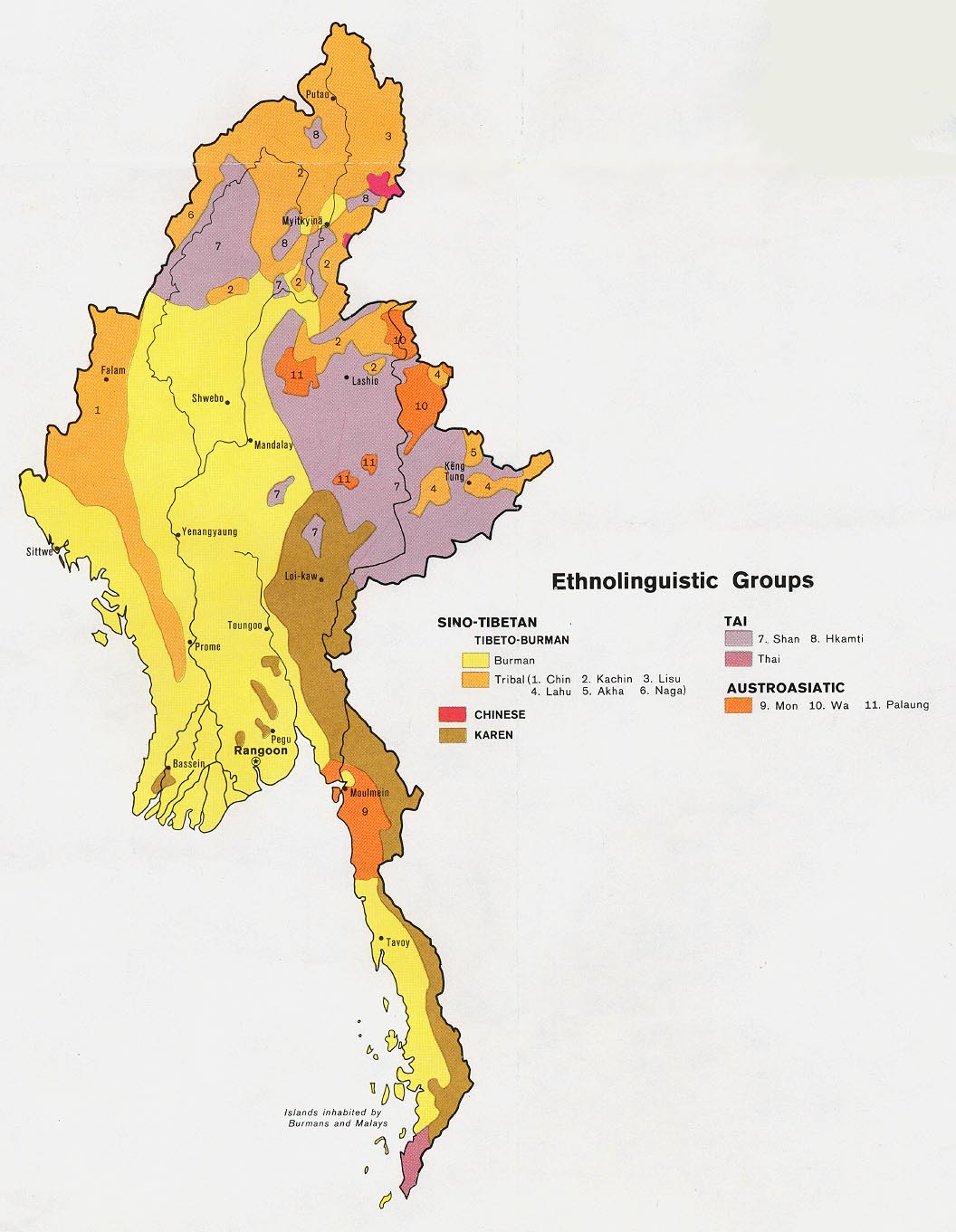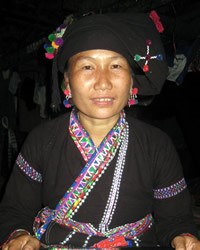

Tai Lue people inhabit the three townships of Kengtung, Mongyawng, and Mongla in northeast Myanmar's Shan State. Kengtung District borders China, Laos, and Thailand. As a result, Tai Lue people are found in each of those three countries and in north Vietnam. More than one million Tai Lue people are scattered throughout the world, with close to a million in China's Yunnan Province. The Tai Lue homeland is Xishuangbanna, which is a Chinese transliteration of the Tai name Sipsongpanna, meaning " The Tai Lue have been recognized as a distinct ethnic group in Myanmar since the 19th century.
In each country where they reside, the Tai Lue are known by different names according to the national language. For example, in Laos they are widely known as the Lao Lue, while in China they are grouped together with other Tai-speaking groups to form the Dai minority. Several thousand Tai Lue live in the United States, and thousands more inhabit other Western nations. Specific numbers in each country are difficult to ascertain, as in the West they usually identify themselves as Thai or Lao people to avoid having to explain their ethnicity.
Tai Lue is a distinct language with its own script, which is primarily used in Buddhist monasteries. Although all Tai groups acknowledge a broad historical and cultural affiliation, the Tai Lue vernacular is distinct from other Tai languages in the area and shares low intelligibility with the regional Shan language. Most can also speak Khun, while younger generations have learned Burmese at school.
There are indications that the Tai Lue were once the dominant people group in the region, having arrived around the time of Christ. By the ninth century they had a well-developed agricultural system, "using oxen and elephants to till the land and to construct extensive irrigation systems."
The first recorded Tai Lue ruler was King Phrya Jeung, who came to power at Chiang Rung in 1180. His territory evolved into the Lue kingdom, which later came under the authority of the Lanna ("million rice fields") kingdom based in Thailand.
Multitudes of tourists flock to witness the colorful festivals of the Tai Lue, of which Songkran is the most famous. People splash water over each other, believing it cleanses the sins of the past year. Although most people today consider the Tai Lue to be a peaceful, happy, and graceful people, an early missionary described them in these unflattering terms: "They impressed me as less civilized than any Tai people I have met. They are less polite and deferential, more talkative, even rude in their manners. But they are less timid, more sturdy, more hospitable, more receptive."
Although almost all Tai Lue people consider themselves Buddhists, in many areas their faith is little more than a veneer thrown over ancient animistic rituals that are designed to protect them from the threat of evil spirits. One researcher said: "Sacrifices are offered to the spirits, and the village is shut in on itself; all roads and tracks giving access to the community are blocked with barricades of trees and branches. The whole village is encircled with ropes, and no outsiders of any description, not even monks or members of the elite ruling class, are permitted to attend these rites."
The Presbyterian missionary Daniel McGilvary and his co-workers first brought the gospel to the Tai Lue in 1893, riding elephants from their base in Thailand and distributing Christian literature along the way. The first Tai Lue church was formed in China in the early 1920s, but believers faced strong persecution. Although a few hundred Tai Lue people in Myanmar today are Christians, most people remain oblivious to the gospel. The Tai Lue New Testament was published in 1933 but is nearly impossible to obtain in Myanmar. For nearly a century the Tai Lue Old Testament has remained untranslated.
Pray for the Lord to raise up a strong movement to Christ to saturate the hearts and minds of the Tai Lue people.
Pray for God's blessing, strengthening and healing of Tai Lue families and communities within this people group through the abundant life Jesus offers to all who call on his name.
Pray for God's blessing on the leaders in this people group, along with their families, and for their communities to welcome and enjoy God's blessing.
Pray for the Lord to multiply the reception and influence of his word among this people group, leading them to love him with their whole being.
Scripture Prayers for the Tai Lue in Myanmar (Burma).
Asia Harvest, Copyrighted 2026 © Used with permission
| Profile Source: Joshua Project |
| Other PDF Profile |