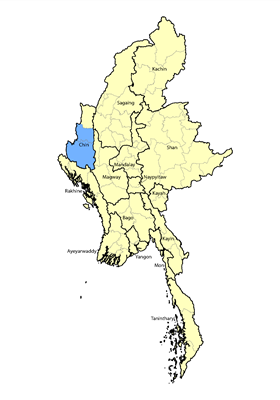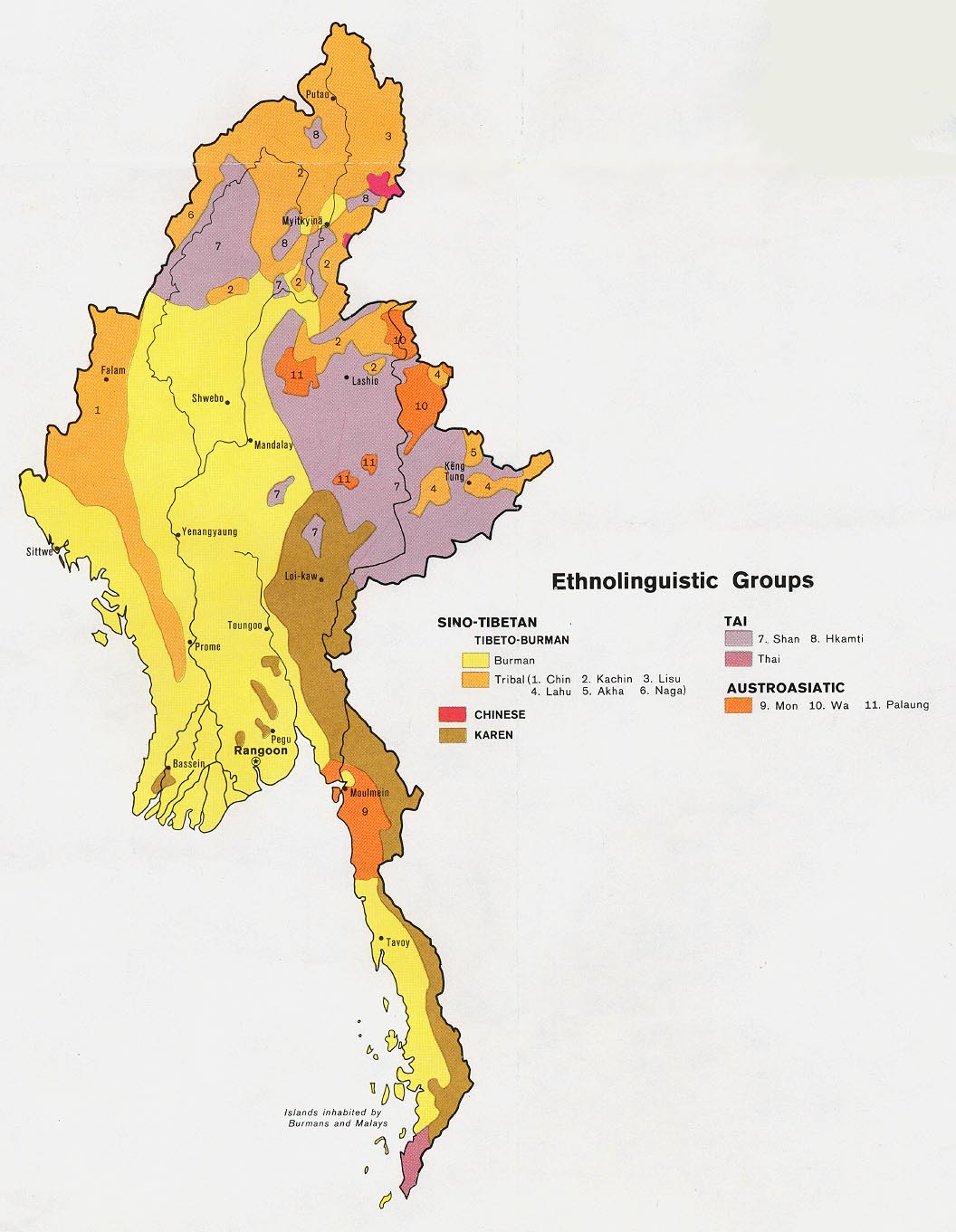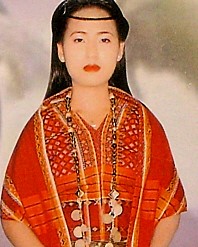

The Mara people in Myanmar inhabit 70 villages in Chin State's mountainous Paletwa, Matupi, and Thantlang townships in the border area with India. Other Mara people live in the southern part of the Indian state of Mizoram, where they are acknowledged as a Scheduled (official) Tribe.
The Mara have long appeared in official lists of Myanmar's ethnic groups. Mara is the self-name of this group, with Lakher being the name Mizo people use for them. The Mara are part of the great Chin race, which comprises more than 60 tribes in Myanmar, each of which have been profiled in this book.
The Mara language, which consists of three dialects (Tlongsai, Hlawthai, and Sabeu) in Myanmar, is spoken by all members of the tribe, most of whom can also speak Burmese. Mara is also spoken as a second language by the Zophei tribe. An early 20th-century missionary wrote: "The Maras consist of a number of tribes, having a dialect slightly differing one from the other…. From our study, we found that anyone acquiring a thorough knowledge of the Tlongsai dialect can communicate with all other tribes of Mara with understandable ease."
The Mara claim to be closely related to the Mru tribe, who inhabit the Chittagong Hill Tracts in southern Bangladesh and Myanmar's Rakhine State. In the 19th century, the king of the Mru people "asked the Mara clan to come and make friends. A deputation went, taking two large elephant tusks as a peace offering. The king had two of the party treacherously killed, which led to much bloodshed." The feud between the Mara and the Mru continued for decades, causing many families to flee the violence by relocating to their present locations. The Mara historically kept slaves, who "were the absolute property of their masters, to be sold like any other possession. Female slaves were not allowed to marry, but were encouraged to become mothers, as their children were the property of the owners."
In keeping with many other tribes in this part of Asia, the Mara in remote areas practiced head hunting to placate spirits. It was considered deeply auspicious to bring back a head from a distant village. To protect themselves from enemies and wild animals, Mara villages were "surrounded by a triple line of stockading or by an impenetrable belt of thorny jungle, through which a narrow pathway, defended by three gates, led to the village."
For centuries the Mara were animists, living in fear of malicious spirts and observing numerous superstitions. All spirits, however, were believed to be under the control of a supreme creator named Khuazing. This belief caused the Mara to listen when they first heard the gospel from British missionaries Reginald and Maud Lorrain, who commenced work in "Maraland" in 1907. ?They founded the Lakher Pioneer Mission and the first school in the area, and taught people how to read by introducing a Mara written language. While the Christian faith found fertile ground almost immediately among the Maras in Mizoram, it took longer to take root on the Myanmar side of the border, and at the time of the 1931 census all Mara people in Myanmar identified as animists.
In India, the Lorrains' work later morphed into the Evangelical Church of Maraland, which remains the largest Christian denomination among the Mara people today.8 Jesus Christ has impacted the Mara people in a deep way, as reflected in the 2011 Indian census, which returned a staggering 99.3% of Mara people identifying as Christians. In Myanmar a similar saturation of the gospel has occurred, with informants for this book simply saying, "all Mara people in Myanmar are Christians." The Mara New Testament was published in 1928, and the full Bible in 1955, although its availability in Myanmar is limited due to strict border controls.
Pray for Mara families of believers loving and serving others to grow reproducing churches.
Pray for a chain reaction of families reaching families that results in thousands of new believers who share their faith with others.
Pray for grace and truth expanding into the entire Mara society as all believers learn to love others.
Pray that churches and believers will bless their entire people group in such a way that God's love will change the Mara people like yeast changes dough.
Scripture Prayers for the Mara in Myanmar (Burma).
Asia Harvest, Copyrighted 2026 © Used with permission
| Profile Source: Joshua Project |
| Other PDF Profile |