




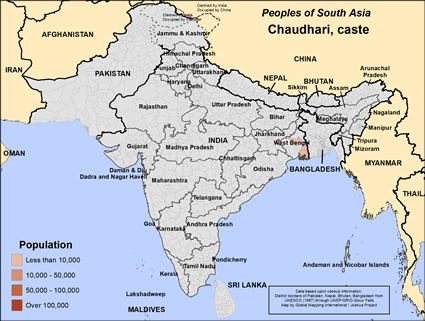
Chaudhari refers to numerous castes and communities found across India. In regions such as Gujarat and Rajasthan, "Chaudhari" has traditionally been used as a title for a village headman or local community leader. The term can carry social, administrative, or community significance depending on the region and cultural setting. Their social classification falls within the category known as Other Backward Caste (OBC), placing them lower in the traditional Hindu social hierarchy, though not among the most marginalized groups.
The Chaudhari communities are connected to the broader cultural and religious life of rural India. Their language and local customs may vary by region, reflecting the diversity found across Indian society.
Many Chaudhari people are subsistence farmers and share a lifestyle like other rural communities in India. Daily life often revolves around agriculture, seasonal work, family responsibilities, and village relationships. Families may live in multigenerational households where community identity and kinship ties are important.
Food, work patterns, and social customs generally reflect the surrounding regional culture. Agricultural labor, care for livestock, local markets, festivals, and community gatherings can play important roles in daily life. Traditional values, family honor, and participation in village affairs often shape social interaction.
The Chaudhari people practice Hinduism, the ancient and highly diverse religious tradition of India. Their beliefs and practices fit within the broader Hindu religious world, where devotion to various deities, ritual observance, and cultural tradition are closely connected.
Many Hindus worship gods and goddesses of the Hindu pantheon, seeking protection, blessing, prosperity, or relief from suffering. Religious devotion commonly includes temple visits, prayers, offerings of food, flowers, incense, and participation in rituals. Hindu belief often includes concepts such as karma, dharma, and rebirth.
Like many Hindu communities, the Chaudhari people may participate in annual religious celebrations such as Holi, Diwali, Navratri, and Rama Navami. Hinduism contains both devotional and philosophical expressions, and beliefs can differ widely across communities and social settings.
The Chaudhari people need opportunities to encounter the gospel of Jesus Christ in culturally understandable and relational ways. They need to hear the message of forgiveness, grace, and new life found in Christ and to discover their identity and hope in the King of kings and Lord of lords.
Practical needs common to many rural communities may also affect them, including access to healthcare, education, stable livelihoods, and community resources that strengthen families and future generations. Compassionate Christian witness expressed through both word and service can help address spiritual and practical needs together.
Pray for Christians to lovingly reach out to the Chaudhari people with humility, truth, and the message of Jesus Christ.
Pray that the Chaudhari people will experience a deep spiritual hunger that leads them to seek Jesus Christ no matter what the cost.
Pray that the Chaudhari people will be adopted through the People Group Adoption program so that ongoing prayer, committed partnership, and future gospel engagement will grow among them.
Pray for their physical needs, including stronger access to healthcare, schools, clean water, agricultural support, and resources that help families flourish.
Scripture Prayers for the Chaudhari, caste in India.
https://en.wikipedia.org/wiki/Chaudhary
https://www.britannica.com/topic/Hinduism
https://www.censusindia.gov.in
| Profile Source: Joshua Project |




