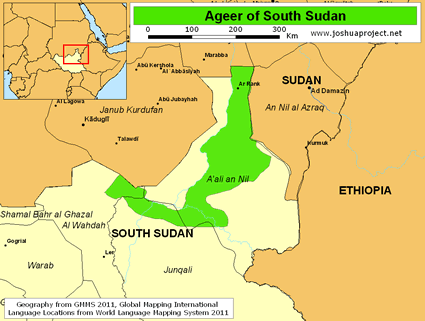

The Ageer are a Nilotic people living primarily along the Upper Nile region of South Sudan. They are closely related to other northeastern Dinka-speaking communities and share deep historical ties to the river systems and seasonal floodplains of the region. For generations, the Ageer have organized their lives around cattle, land, and kinship, shaping an identity rooted in pastoral resilience and communal responsibility. Like many people groups in South Sudan, they have been affected by decades of conflict, displacement, and political instability, which have disrupted traditional patterns of life while strengthening internal bonds of family and clan. Despite outside pressures, the Ageer have retained a strong sense of cultural continuity, orally passing down history, values, and moral expectations through elders and communal life.
Most Ageer families depend on a combination of cattle herding, small-scale farming, fishing, and seasonal labor. Cattle are far more than economic assets; they represent wealth, social status, and relational commitments such as marriage alliances and conflict resolution. During the rainy season, families often reside in more permanent villages where crops like sorghum are cultivated. In the dry season, many move with their herds to grazing areas closer to water, living in temporary shelters.
Family life is communal and structured around extended kinship networks. Elders are highly respected, and decision-making often occurs through consultation and consensus rather than formal authority. Men typically manage cattle and external relations, while women bear much of the responsibility for farming, food preparation, childcare, and maintaining household life. Children contribute early, herding animals, fetching water, or helping in the fields.
Celebrations frequently mark life events such as births, marriages, and reconciliations between families. These gatherings include singing, rhythmic movement, storytelling, and feasts when resources allow. Staple foods generally include sorghum porridge, milk, wild greens, and fish from nearby waterways. Meals are simple but deeply communal, reinforcing social bonds and shared identity.
The Ageer primarily adhere to ethnic traditional religious beliefs that emphasize a supreme creator along with the influence of ancestral spirits. Spiritual life is woven into daily existence and closely connected to nature, cattle, health, and fertility. Misfortune is often understood in spiritual terms, linked to broken relationships, neglected rituals, or offended spirits.
A smaller portion of the community identifies with Christianity, often blending Christian language or practices with long-held traditional beliefs. While exposure to the gospel has occurred, biblical understanding and access to Scripture in familiar linguistic and cultural forms remain limited. Faith is typically communal rather than individual, and spiritual decisions are strongly influenced by family and clan leaders.
The Ageer face ongoing challenges related to insecurity, displacement, and limited access to basic services such as education, healthcare, and clean water. Seasonal hunger and vulnerability to flooding or drought place constant strain on families. Children and youth often lack sustained schooling, which limits future opportunities and leadership development.
Culturally meaningful access to the gospel remains a significant need. Many Ageer have little opportunity to hear or explore the message of Jesus Christ in ways that respect their worldview and address their deepest fears, hopes, and questions. Believers from within their own cultural background are few, and discipleship is fragile. Strengthening local leadership, reconciliation within fractured communities, and long-term spiritual nurture are essential for lasting transformation.
Pray that the Ageer people would encounter Jesus Christ as the true source of life, hope, and restoration, and that his blessing will spread far and wide in their community.
Ask God to raise up men and women from within the Ageer who will follow Christ wholeheartedly and courageously share his love through evangelism and discipleship.
Pray for existing believers to grow deep roots in Scripture and to live out their faith with humility and boldness.
Intercede for physical needs including peace, food security, healing from trauma, and access to education and medical care.
Ask the Lord to guide workers and prayer partners who desire to walk patiently alongside the Ageer, serving with wisdom, compassion, and long-term commitment.
Scripture Prayers for the Ageer in South Sudan.
https://www.britannica.com/topic/Nilot
https://www.britannica.com/place/South-Sudan/Religion
https://orvillejenkins.com/profiles/dinka.html
| Profile Source: Joshua Project |