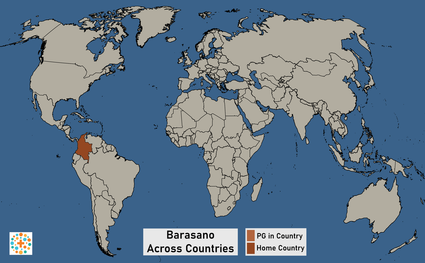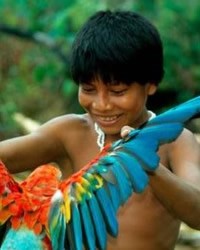

The Southern Barasano are an Indigenous people living in the Amazon rainforest region of southeastern Colombia, especially along the Pira-Paraná River basin in the Vaupés region. They are also known by names such as Béntar, Macaguán, and Janera. The Southern Barasano belong to the broader network of Eastern Tucanoan peoples who inhabit the northwest Amazon and maintain interconnected social and ceremonial relationships with neighboring tribes.
Their language, known as Barasana or Southern Barasano, belongs to the Eastern Tucanoan language family. In traditional regional culture, multilingualism is common because marriage customs often require spouses to come from different language groups. This complex system of clan identity and linguistic exchange has shaped Barasano society for generations.
The Southern Barasano have lived in the Amazon rainforest for centuries, preserving a strong connection to the rivers, forests, and spiritual traditions of their ancestors. Their oral histories, mythology, and ceremonial practices remain central to community identity. Despite outside pressures from logging, modernization, and regional instability, many Southern Barasano continue to maintain traditional ways of life and strong cultural continuity.
Christian witness among the Southern Barasano has remained very limited. Many have had little opportunity to hear the gospel clearly in their own language and cultural setting.
The Southern Barasano depend heavily on the rainforest and river systems for survival. Fishing, hunting, small-scale agriculture, and gathering forest resources form the foundation of daily life. Canoes are essential for transportation through the waterways of the Amazon region, and traditional knowledge of the forest is highly valued.
Their social structure is complex and strongly organized around clans and kinship systems. Extended families often live together in communal houses known as malocas, which serve as centers for family life, ceremonies, storytelling, and community gatherings. Traditional dances, music, rituals, and oral teaching continue to preserve cultural identity across generations.
Food commonly includes cassava, fish, wild game, fruits, and crops grown in forest gardens. Cassava is especially important and is used to prepare bread and traditional beverages. Men are generally responsible for hunting, fishing, and constructing canoes, while women often oversee food preparation, pottery, and agricultural work.
The Southern Barasano face growing pressure from outside economic interests, environmental destruction, and cultural change. Logging, land encroachment, and outside influence threaten both their territory and traditional way of life. Younger generations increasingly encounter pressures connected to modernization and outside society.
The Southern Barasano follow a traditional animistic and shamanistic religion closely tied to their mythology and understanding of the natural world. Spiritual life centers on maintaining harmony with supernatural powers believed to inhabit the forest, rivers, animals, and unseen realms.
Shamans hold an important role within the community and are believed to communicate with spiritual forces for healing, protection, guidance, and ceremonial purposes. Rituals may involve chanting, sacred instruments, visions, and the use of psychoactive substances during spiritual ceremonies.
Their mythology is deeply woven into daily life and social identity. Traditional stories explain the origins of the world, the clans, the animals, and the spiritual order governing creation. Fear of harmful spirits and the need to maintain spiritual balance strongly influence many community practices.
Very few Southern Barasano are followers of Christ. Access to biblical teaching, Scripture resources, and mature Christian discipleship remains extremely limited.
The Southern Barasano need clear access to the gospel in culturally understandable ways and in their own language. Many have never heard a biblical explanation of salvation through Jesus Christ alone. Long-term Christian workers willing to live humbly, learn the language, and build trust are greatly needed.
Practical needs are also significant. The Southern Barasano face threats from environmental destruction, outside economic exploitation, territorial pressure, limited healthcare access, and educational challenges in remote rainforest regions. Protecting their communities from displacement and preserving their ability to live sustainably within their homeland remain major concerns.
The Southern Barasano would benefit from oral Bible resources, audio Scripture recordings, medical outreach, educational support, and compassionate ministry rooted in respect for their culture and long-term relationship building. There is also a need for indigenous believers from nearby peoples to help carry the gospel into remote Amazon communities.
Pray that the Southern Barasano people would hear the gospel clearly and come to trust in Jesus Christ alone for salvation.
Pray that God would raise up faithful Christian workers who are willing to serve among the Southern Barasano with humility, wisdom, and perseverance.
Pray that the Southern Barasano would be adopted through the People Group Adoption program so they receive sustained prayer, ongoing gospel engagement, and future discipleship efforts.
Pray that believers among Indigenous peoples throughout the Amazon region would grow strong in biblical faith and boldly share the truth of Christ with neighboring tribes.
Scripture Prayers for the Barasano, Southern in Colombia.
https://www.onic.org.co/en/indigenous-people/3237-barasana
https://en.wikipedia.org/wiki/Barasana
https://pib.socioambiental.org/en/Povo%3ABarasana
https://en.wikipedia.org/wiki/Barasana-Eduria_language
https://www.uk.om.org/20-southern-barasano-in-colombia
https://radical.net/podcasts/pray-the-word/being-holy-leviticus-1144-45/
| Profile Source: Joshua Project |