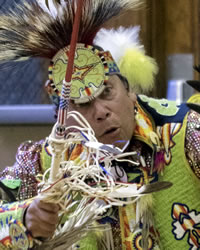

The Oneida, meaning "People of the Standing Stone," are one of the original members of the Haudenosaunee Confederacy, also called the Iroquois Confederacy. Traditionally located in what is now central New York State, the Oneida lived in longhouse communities organized around extended families and clans, and they practiced a balanced combination of agriculture, hunting, and gathering. Corn, beans, and squash—the "Three Sisters"—formed the foundation of their agricultural life and spiritual worldview. They organized themselves into three clans—Wolf, Bear, and Turtle—with descent passed down through the mother.
The Oneida played a significant and distinctive role during the American Revolutionary War. The Oneida sided with the American colonists, offering crucial support in battles and logistics. This loyalty, however, did not shield them from the subsequent waves of land loss, displacement, and broken treaties that marked the 19th century. Following the war, many Oneida families moved westward to Wisconsin and Ontario, Canada.
Modern Oneida life is a blend of resilience, cultural revival, and adaptation to contemporary realities. Each Oneida nation operates as a sovereign government, overseeing judicial systems, social programs, business enterprises, and education.
Many Oneida nations have developed robust economic initiatives. Enterprises such as hospitality services, gaming operations, retail businesses, and agriculture generate revenue that supports tribal programs. These funds sustain community housing, health care centers, elder support, educational scholarships, and cultural programs.
Their language has become a focal point of cultural revitalization. Although English predominates in everyday use, Oneida leaders have invested significantly in language recovery. Immersion classes for children, adult learning programs, teacher training, digital learning tools, and curriculum development are all part of the ongoing effort. For many families, learning the language reconnects them to traditional worldviews, ceremonial life, and ancestral identity. Cultural education extends beyond language. Traditional crafts, beadwork, wampum belts, basketry, and regalia-making remain vibrant. Ceremonies, social dances, and seasonal gatherings foster unity and cultural continuity among people of all ages.
Traditional Oneida spirituality teaches that life is a gift from the Creator and that all living things—animals, plants, water, and the earth—are interconnected. Oneida traditional religion includes seasonal ceremonies, thanksgiving rituals, and a cycle of observances tied to agricultural and natural events. The Oneida creation story, involving Sky Woman and the formation of Turtle Island (North America), underscores the themes of cooperation, care, and the sacredness of the natural world.
Over the past two centuries, Christian missions, boarding schools, and colonization introduced Christianity into Oneida communities. Today, many Oneidas identify as Christian, though the depth of Christian practice varies. Some communities maintain historic Christian congregations; others blend Christian and traditional teachings.
The Oneida people face spiritual, cultural, social, and economic needs. Intergenerational cultural transmission—through stories, ceremonies, crafts, and traditional knowledge—is vital for preserving identity. Centuries of displacement, broken treaties, and forced assimilation have left intergenerational scars. Programs that support mental health, cultural healing, and community resilience are deeply needed. Equitable access to schools, scholarships, housing, and health care remain important.
Pray for the healing of historical trauma and for unity within communities.
Pray that God send Christians to share a deeper understanding of the Creator.
Pray for God to give the young people hope and purpose.
Pray that soon, Oneida Christians will share their faith and disciple others who lack the hope that only Jesus Christ offers.
Scripture Prayers for the Oneida in United States.
| Profile Source: Joshua Project |