


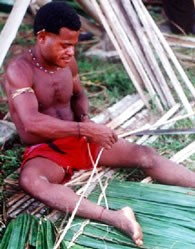

The Nakwi are a small indigenous ethnic group living in the interior of Papua New Guinea, specifically in the East Sepik Province. Their villages are in a remote area of the Tunap–Hunstein region, including communities such as Augot, Nakwi-Amasu, Tiki, and Uwau, situated south of the Ama-speaking area.
The Nakwi people are identified by their language, also called Nakwi, which belongs to the Left May (Arai) group of Papuan languages. This language family is part of the complex network of indigenous languages spoken across New Guinea, an island known for its remarkable linguistic diversity. The Nakwi language serves as a primary marker of community identity, linking people through shared communication, oral tradition, and cultural memory.
Historically, the Nakwi have lived in relatively isolated settlements surrounded by dense forests and river systems. The rugged terrain of East Sepik Province has contributed to the development of many small language groups that remained distinct from one another over generations. In such settings, communities maintained strong internal bonds through kinship networks, clan relationships, and shared land use.
Like many peoples of the Sepik region, the Nakwi likely developed through long-term settlement in their present homeland, gradually forming village communities connected through marriage and occasional interaction with neighboring groups. Oral traditions, stories of ancestors, and knowledge of the land are passed down through generations, preserving a sense of identity rooted in both language and place.
During the twentieth century, government administration, mission work, and limited educational outreach began reaching more remote parts of East Sepik Province. Although these outside influences introduced new ideas and opportunities, many Nakwi communities continue to live in ways shaped primarily by traditional village life.
Life among the Nakwi revolves around the natural environment and the rhythms of village agriculture. Most families depend on small garden plots for their food supply. Gardens are typically planted with staple crops such as taro, sweet potatoes, yams, bananas, and other tropical plants that grow well in the humid climate of the Sepik region.
Gardening is usually a cooperative effort within families. Men often clear forest areas for planting, build houses, and hunt small animals in nearby forests. Women play a vital role in planting crops, maintaining gardens, preparing meals, and caring for children. They may also gather edible plants, fruits, and other resources from surrounding forests.
The forest environment provides many necessities for daily life. Wood, bamboo, and palm leaves are commonly used to construct homes and other structures. Houses are often built on raised platforms or sturdy frames, with thatched roofs made from palm leaves to protect families from heavy rains.
Nakwi villages tend to be small and centered around extended family groups. Relatives live close to one another, creating a strong sense of mutual responsibility and cooperation. Children grow up learning practical skills from parents and elders, including gardening, hunting, and the traditions of their community.
Social life is shaped by family relationships, clan ties, and respect for elders. Elders hold important roles as keepers of knowledge and oral history. They pass down stories about ancestors, land boundaries, and cultural practices that help define the community's identity.
Community gatherings mark important events such as marriages, harvest celebrations, and reconciliation between families. These gatherings often involve shared meals, singing, dancing, and storytelling. Such events reinforce unity within the village and strengthen bonds among relatives.
The traditional religious life of the Nakwi centers on ethnic religions that recognize a world filled with spiritual forces. Many people believe that unseen spirits inhabit forests, rivers, and other parts of the natural environment. These spirits are often thought to influence health, success in hunting or gardening, and the well-being of the community. (Joshua Project)
Ancestors also hold an important place in the spiritual worldview of the Nakwi. The spirits of those who have died may be believed to remain active in the lives of the living. Respect toward ancestors and attention to spiritual balance are often expressed through rituals or practices intended to maintain harmony with these unseen powers.
When sickness, accidents, or other misfortunes occur, they may be interpreted as the result of spiritual disturbance or the activity of harmful spiritual forces. In such cases, community members may seek guidance from individuals believed to possess special spiritual knowledge. Ritual actions or ceremonies may be performed to restore balance and seek protection.
Christianity has reached parts of the Nakwi community through missionary activity and local church work. Some people identify with Christian teaching and participate in church gatherings. However, traditional spiritual beliefs often continue to shape how individuals interpret events in daily life.
The Nakwi people need a clear understanding that Jesus Christ alone has authority over every spiritual power. Through His death and resurrection, Christ offers forgiveness, freedom from fear of spiritual forces, and eternal life to all who trust in Him.
The Nakwi live in a remote area where transportation and infrastructure are limited. Travel between villages or to nearby towns can be difficult, especially during heavy rains or flooding. Improved transportation and communication would help communities access essential services.
Healthcare is another challenge. Remote villages may have limited access to medical care, making it difficult to treat common illnesses or respond quickly to emergencies. Medical outreach, clinics, and improved sanitation would greatly benefit families.
Educational resources are also limited in isolated parts of East Sepik Province. While some children attend school, teachers and materials are often scarce. Increased support for schools and literacy programs would help the younger generation gain skills needed for both village life and participation in the wider society.
Spiritually, the Nakwi need continued access to the gospel in their own language. Bible translation work has begun for the Nakwi language, but Scripture resources remain very limited. (Joshua Project) Greater availability of Scripture, along with trained local believers who can teach and disciple others, would strengthen the growth of the church within this community.
Pray that more Nakwi people will hear the gospel clearly and trust in Jesus Christ for salvation.
Pray for the progress and completion of Bible translation in the Nakwi language.
Pray for improved healthcare, education, and safe transportation for remote villages.
Pray that Nakwi believers will grow strong in their faith and share the gospel with neighboring communities.
Scripture Prayers for the Nakwi in Papua New Guinea.
https://joshuaproject.net/people_groups/13926/PP
https://en.wikipedia.org/wiki/Nakwi_language
https://pnglanguages.sil.org/resources/languages/language/nax
https://joshuaproject.net/languages/nax
| Profile Source: Joshua Project |



