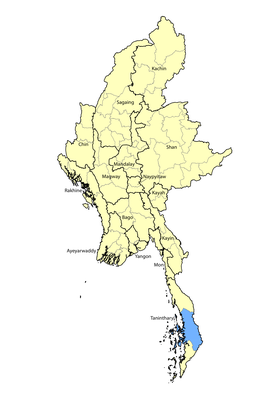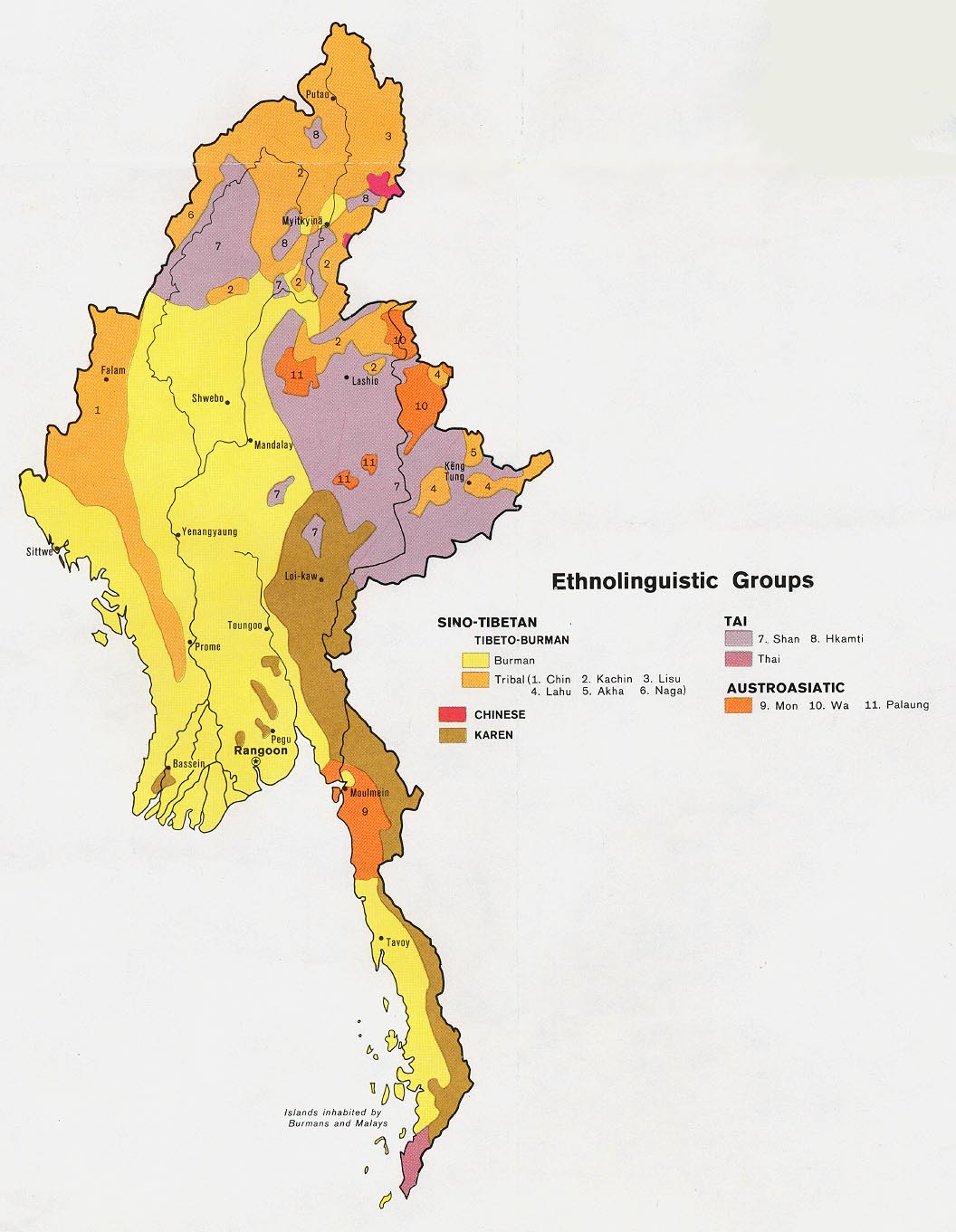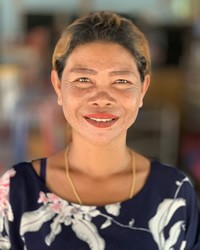

The Moken people inhabit many islands in the remote Mergui Archipelago, which is flanked by the Andaman Sea to the west and Thailand to the east. Most families live on boats, but some choose to settle on the many islands in this southeast corner of Myanmar.1 Other Moken people inhabit islands in adjacent parts of Thailand. Experts are baffled by the origins of the Moken people. They seem out of place in this part of Asia, and may have originated far afield, as Austronesian languages are scattered as far as Madagascar off the coast of Africa.
The Moken have been recognized in Myanmar for well over a century. Despite their modest population, the Moken have been studied extensively, as they are possibly the most unique people group in Myanmar. Although their self-name is Moken, the Burmese call them "Solon." One source says their name "comes from two of their words and means 'drowned in the sea.' Generations ago, the ancestors of the Moken had a large kingdom. They were turned out by the Burmese and taken to boat life…. Many drowned in the sea, hence their name."2
Many claim that Moken, which has three dialects and consists of 22 consonants and 25 vowels, is the only language spoken in Myanmar from the Austronesian family, but the nearby Malay also speak an Austronesian language.3 While all Moken adults speak their mother tongue, some young people are increasingly using Burmese, and Moken may be threatened in the future.
The Moken have incredible aquatic skills and underwater sight. They seem happiest when diving to catch sea slugs, sea cucumbers, clams, and large shellfish. The Moken have appeared in many documentaries.6 Some fear for their future, however, and that they may face extinction due to outside influences.7 An early 20th century missionary described the Moken as "cooking, eating, sleeping, and marrying in their unique little craft. They are to be found here today and 50 miles off tomorrow. Some of them have small huts, like magnified dog kennels, on various islands, but even these people spend the greater part of their time traveling about in their boats, seeking food."8
Baptist missionaries in the 1850s noted: "An interesting feature of this people is their pure monotheism. One supreme being, Tooda, is recognized as the creator of all things."9 In reality, the superstitious Moken have practiced Animism and have been enslaved by a myriad of demons, with shamans casting spells on people and acting as mediators between people and the spirits.10 Although about one in ten Moken people today profess to be Christians, the faith of many is nominal.
Christianity: The first missionary among the Moken was Durin Brayton from Vermont, who arrived in 1846 but abandoned the work six years later after 16 converts had been won. Early efforts to evangelize the Moken were often hindered by their addiction to alcohol and opium.11 Although the Jesus film is available in Moken and the New Testament was published in 2000, it has made little impact because most Moken people are only partially literate.12 While many Moken have professed Christ, discipleship has been a challenge, with a large percentage of Moken believers leaving the church.
Life in remote island communities can make access to healthcare, education, and economic opportunities difficult. Vulnerability to storms, environmental changes, and fluctuations in marine resources affects the stability of many families. Greater access to schools, medical services, and sustainable sources of income would strengthen communities and improve quality of life. Preservation of the Moken language and cultural heritage would help younger generations maintain their identity while participating in the wider society. Scripture, biblical resources, and trained Christian workers are needed so that more people can hear and understand the good news of Jesus Christ. Believers who are already present would benefit from discipleship and encouragement to become effective witnesses among their own people.
Pray that God will provide improved healthcare, education, and stable livelihoods for Moken families living along the coast and islands.
Pray that the Lord will protect communities affected by storms and environmental challenges and provide for their daily needs.
Pray that the Holy Spirit will open hearts to the gospel and raise up faithful believers who will share the message of salvation through Jesus Christ.
Pray that Scripture, discipleship, and Christian workers will reach Moken communities and establish strong, Christ-centered fellowships.
Scripture Prayers for the Moken in Myanmar (Burma).
Asia Harvest
1 A missionary book from 150 years ago remarked that the Moken "make nothing but boats, and they are made without nails or ropes, and yet can ride out the storms and run swifter than any other craft on the waters. This is certainly creditable to them, and we can only wish that they would try their skill in making clothes, for they go as nearly naked as it is possible to suppose human beings to go." Francis Mason, The Story of a Working Man's Life, with Sketches of Travel in Europe, Asia, Africa and America (New York; Oakley, Mason & Co., 1870), p. 284. A good video of the Moken people and their area is at: https://www.youtube.com/watch?v=IQrzvVE-Lcc
2 W. C. B. Purser, Christian Missions in Burma (London: Society for the Propagation of the Gospel in Foreign Parts, 1911), p. 34.
3 David Bradley, "The Languages of Myanmar," Report to UNICEF Myanmar 2016, p. 5.
4 "State and Claims of Tavoy and Mergui," Baptist Missionary Magazine (vol. 34, no. 12) (Boston: American Baptist Missionary Union, 1853), p. 478.
5 Judson Benjamin, "Journal of Mr. Benjamin," Baptist Missionary Magazine (vol. 34, no. 3) (Boston 1853), p. 84.
6 See https://www.youtube.com/watch?v=YIKm3Pq9U8M (short version), and https://www.youtube.com/watch?v=RrCu63QGSTI
7 See https://www.youtube.com/watch?v=XwOsGGiJMpM
8 Purser, Christian Missions in Burma, p. 35.
9 "Tavoy Mission," Baptist Missionary Magazine (vol. 34, No. 7) (Boston, 1853), p. 269.
10 See Purser, Christian Missions in Burma, pp. 35-36.
11 A book in 1870 described the Moken as "the most hopeless nation of drunkards and opium smokers. Mr. and Mrs. Benjamin did everything for them that could be done when they were in Mergui. They sought them in town and frequently visited them in their coves and on their sandy beaches at the imminent risk of their lives, in open boats and blowing weather. Yet they were so besotted with their love of alcohol and opium that Mr. Benjamin could induce no one to stay with him and be shut out from alcohol and opium for more than a very few days." Mason, The Story of a Working Man's Life, p. 286.
12 The Bible itself was printed in a very small font size, which was difficult for people to read. A new version is being prepared.
https://www.britannica.com/topic/Moken
https://www.ethnologue.com/language/mwt
https://www.unesco.org/en/articles/moken-sea-nomads-andaman-sea
https://www.survivalinternational.org/tribes/moken
https://en.wikipedia.org/wiki/Moken
https://www.myanmar.gov.mm/
| Profile Source: Joshua Project |
| Other PDF Profile |