


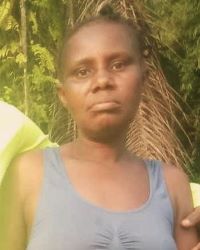

The Gbii—also spelled Gbee—are one of Liberia's recognized indigenous ethnic groups, living in Nimba County in the northeastern interior of the country, west of the Cestos River. Nimba County is one of Liberia's most ethnically diverse regions, home to sixteen of the nation's ethnic groups, and the Gbii are among its smaller indigenous communities. Their language, also called Gbii, belongs to the Kru branch of the Niger-Congo language family, a cluster of languages spoken by peoples stretching from southeastern Liberia through southwestern Côte d'Ivoire. The Gbii language has a written form, and portions of Scripture are available along with an audio New Testament and the Jesus Film.
The Kru-speaking peoples, of which the Gbii are a part, are believed to have migrated into present-day Liberia from the northeast between the fifteenth and seventeenth centuries. They established small, politically decentralized communities organized around patrilineal clans and governed by clan heads and town chiefs rather than centralized kingdoms. Unlike many African peoples, the Kru became known throughout West African history for their fierce resistance to enslavement, even adopting distinctive facial markings to identify themselves as freemen when encountered by slave traders. The Gbii of Nimba County share in this broader Kru heritage of independence and resilience.
Nimba County bore some of the worst violence of Liberia's devastating civil wars of the 1990s and early 2000s, and communities throughout the county—including the Gbii—suffered displacement, loss of life, and destruction of livelihoods. Since the formal end of conflict in 2003 and the stabilization of Liberia's government in subsequent years, communities have been slowly rebuilding. Today Liberia is a constitutional republic, and the Gbii, like other Liberians, are navigating the challenges of post-conflict recovery, economic development, and national identity.
The Gbii live in small villages scattered across the hills and forests of Nimba County, a landscape of rivers, rolling terrain, and rich vegetation. Rice is both the dietary staple and the cultural center of their agricultural life, grown in farms cleared from the surrounding bush. Cassava is a second key crop, providing food security when rice harvests fall short. Families supplement their diet with vegetables, palm oil, dried fish, and bush meat drawn from the forest. Women do much of the farming and food preparation work while also caring for children and the household; men handle land clearing, heavier construction, and hunting.
Family and community life are organized through patrilineal clans, with the clan elder serving as the final authority in disputes and ceremonial matters. A village chief governs the wider community, and decisions of importance are made through a council that reflects the views of established elders. Children learn the skills, values, and knowledge of their community through observation and participation in daily work. Young men and women undergo initiation processes that mark their passage into adulthood and reinforce their belonging to the community. These rites of passage are communal occasions involving the wider extended family and village, with food, music, and ceremony marking the transitions.
Younger Gbii face increasing pressure to migrate toward larger towns and the capital, Monrovia, in search of education and economic opportunity, a pattern common across Kru-speaking Liberia. English, Liberia's official language, is used for schooling and formal settings, while Gbii remains the language of home and community.
Ethnic religion holds the allegiance of the majority of the Gbii, expressing a worldview in which the physical world is inseparable from the spiritual. Ancestral spirits are believed to remain active in the lives of the living, offering protection or bringing harm depending on how they are honored or neglected. Ritual specialists—sometimes called deya in the broader Kru world—serve as mediators between the human and spirit realms, addressing both medical and spiritual problems through a combination of herbal remedies and ritual practices. Spirit beings and forest entities are also part of this framework, and initiation societies manage the community's relationship with these powers.
A significant minority of the Gbii identify as Christian, and evangelical believers are present within the community, representing a genuine though still developing gospel presence. Scripture portions exist in Gbii, an audio New Testament is accessible, and the Jesus Film is available in the language, giving the community multiple access points to the good news of Jesus Christ. Yet the majority still live outside the reach of a saving knowledge of him, held by a worldview that looks to other sources for life, protection, and meaning. Deeper discipleship and local church leadership remain crucial needs.
Healthcare access in rural Nimba County remains limited, and communities continue to carry the physical and emotional scars of two decades of civil conflict. Quality education is difficult to reach in smaller villages, and economic opportunity beyond subsistence farming is scarce, driving young people toward cities where community and faith ties can weaken. A complete written New Testament and full Bible in Gbii would be a transformative resource for believers and seekers alike, giving the community God's Word in the language closest to their hearts. The growing community of Gbii believers needs trained pastors, mature disciplers, and strong local church leaders who know both the language and the people.
Pray for the completion of a full written New Testament and Bible in Gbii, so that every man and woman can read and hear God's Word in their own heart language.
Pray that Gbii Christians would move from nominal faith to deep, Holy Spirit-filled discipleship, and that local churches would become centers of healing and hope in post-conflict communities.
Pray that Gbii evangelical believers would catch a vision for cross-cultural witness, carrying the gospel to less-reached peoples in West Africa.
Pray for healthcare, schools, and economic opportunities in rural Gbii villages, and for peace and justice to continue taking root in a county still recovering from the wounds of war.
Scripture Prayers for the Gbii in Liberia.
https://en.wikipedia.org/wiki/Nimba_County
https://en.wikipedia.org/wiki/Kru_people
https://www.britannica.com/topic/Kru
https://www.101lasttribes.com/tribes/kru.html
https://www.101lasttribes.com/tribes/krahn.html
https://minorityrights.org/country/liberia/
https://new.liberiadata.com/counties/nimba/
https://www.ethnologue.com/language/ggb
https://live.bible.is/bible/GGBNHG
| Profile Source: Joshua Project |



