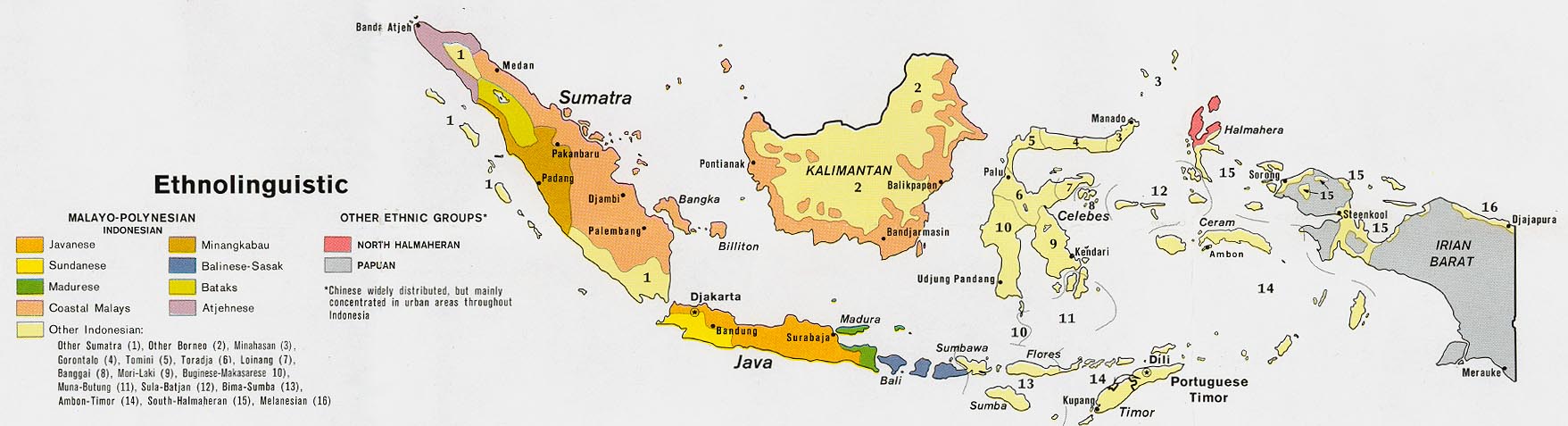
The Tamnin Citak are part of the wider people known as the Citak people. Their native language is the dialect called Tamnin Citak (sometimes "Citak, Tamnin"), which belongs to the Trans-New Guinea language family and is used as a first language by the community.
Historically, the Citak people — including those identified as Tamnin Citak — lived a semi-nomadic life in small, scattered villages along the rivers, notably around the Brazza River region. Over time, under colonial administration (Dutch East Indies government), they were encouraged or coerced to settle in larger, more permanent villages.
Their society has traditionally followed a matrilineal kinship system, with families organized according to maternal descent, and marriage practices reflecting that heritage. Originally they did not practise a clan system. Over time — especially with increased outside influence and the arrival of Christian missionaries — many of these traditional structures have adjusted or changed. Thus the Tamnin Citak represent an indigenous people whose lives are rooted in ancestral land and riverine forest, who have undergone social transition — from semi-nomadic to settled — across generations, while retaining many elements of their traditional identity, including language and ties to the forest.
Families among the Tamnin Citak are organized in a matrilineal system. Descent and property rights traditionally pass through the mother's line, and marriage practices reflect that custom.
Communities live in villages along the rivers and forested swamps in the upper reaches of rivers in South Papua (notably in Mappi Regency, Citak Mitak district).
Their traditional economy is based heavily on natural resources — especially the use of the sago palm. Sago starch, derived from sago palm, is the staple food of the Citak people. Women typically gather and process sago and fish, while men provide meat through hunting and may fish or hunt for wild game.
Fishing and hunting remain important. Men often hunt using small boats for meat; fish and river resources provide regular protein and supplement their diet.
Given the reliance on sago, fishing and hunting, their lifestyle has been described historically as relatively self-sufficient and closely tied to the forest and rivers.
Although much about the daily recreational life of Tamnin Citak is not widely documented, the broader Citak / Asmat-adjacent cultural region is known for its woodcarving and carved art traditions. Among the neighboring peoples (such as the Asmat people), wood carving is central — creating canoes, shields, ancestral poles, sculptures and ritual items that are deeply embedded in spiritual and social life.
Many among the broader Citak people follow Christianity — especially Catholicism — but traditional beliefs remain influential.
Historically, before external influence, their spiritual world would likely have included belief in ancestral spirits, the power of nature (forest, rivers, trees), and a worldview that honored the connection between humans, animals, plants, and the unseen spiritual realm — a context common among many Papuan indigenous groups. This is especially common for older members of this group who live in remote areas.
With the advent of Christianity, many became believers in Christ. At present their "primary religion" is recorded as Christianity.
Though many identify as Christians, there is likely a need for deeper discipleship, follow-up, pastoral care, and rootedness in biblical teaching that respects their cultural worldview. Some may still hold onto syncretistic beliefs or fear of ancestral spirits; they may need patient, culturally sensitive evangelism and mentoring in the gospel.
Their language — Tamnim Citak — remains a living first language among the people. As outside influences increase (Indonesian national language, logging, external migration, etc.), there is a need to help preserve their language, cultural heritage, and identity (oral histories, songs, art, carvings, traditional knowledge). Given that their sustenance depends on forest, rivers, sago groves, and wild resources, policies or external threats (e.g., logging, land conversion, conservation laws that do not recognize customary use) could endanger their way of life.
Access to education, health care, clean water, basic infrastructure, and opportunities for children — while respecting their cultural context and ways of life — could help meet physical and social needs.
Pray that the Lord would raise up faithful believers among the Tamnin Citak who are committed to Christ, grounded in Scripture, and sensitive to the cultural context — men and women who can serve as pastors, mentors, and disciplers who will teach others to make more disciples.
Pray for spiritual breakthrough where traditional fear of spirits and syncretistic beliefs may still hold sway; that families would come to fully trust in Christ alone for salvation, hope, and security.
Pray for enduring protection and wise stewardship of their forests, rivers, and natural resources.
Pray for sustainable, culturally-appropriate development: for community-led initiatives that provide education, health, clean water, and livelihood.
Scripture Prayers for the Citak, Tamnin in Indonesia.
https://en.wikipedia.org/wiki/Citak_people
"Good News – Citak, Tamnim." Global Recordings Network / MegaVoice.
Asmat Sculptures / Cultural Art of Papua region." Indonesia Travel & Asmat Museum of Culture and Progress.
| Profile Source: Joshua Project |