


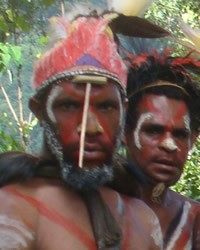

The Faiwol are an ethnic group living in the rugged highlands of western Papua New Guinea, particularly in Sandaun Province near the border with Indonesia. Their communities are often located in mountainous and forested areas, where steep terrain and limited infrastructure contribute to their relative isolation. The Faiwol speak a language that is part of the Ok language family, linking them culturally to other groups in the surrounding highland regions.
Historically, the Faiwol lived in small, clan-based communities with strong ties to their land. Their environment shaped their way of life, requiring resilience and cooperation to survive in a challenging landscape. Social organization centered on kinship, with leadership based on respect, wisdom, and the ability to lead in times of need.
Contact with outsiders came through government patrols, missionaries, and later development efforts. These interactions brought changes in religion, education, and access to goods and services. While some aspects of traditional life have shifted, the Faiwol have retained a strong sense of identity rooted in their land and community relationships.
Faiwol daily life is centered on subsistence agriculture. Families grow crops such as sweet potatoes, taro, bananas, and leafy greens, which form the foundation of their diet. Pigs are highly valued and are often raised for important social and ceremonial purposes. Hunting and gathering also contribute to their food supply.
Work is shared among family members. Men are typically responsible for clearing gardens, building homes, and caring for pigs, while women tend the gardens, prepare food, and look after children. Children learn practical skills early, helping with chores and observing the roles of adults.
Family and clan relationships are central to Faiwol society. Extended families live near one another, and cooperation is essential for farming, building, and caring for the community. Elders are respected and play a key role in preserving traditions and guiding younger generations.
Community life includes gatherings for feasts, ceremonies, marriages, and funerals. These events often involve the exchange of food, especially pigs, and may include singing and dancing. Such occasions strengthen social bonds and reflect both traditional customs and newer influences.
The Faiwol are primarily identified as Christians, with Protestant influences being the most common due to missionary work in the region. Churches are an important part of community life, providing regular opportunities for worship, teaching, and fellowship.
Despite this identification, traditional beliefs continue to influence spiritual understanding. These may include beliefs in spirits, ancestral presence, and unseen forces that affect health, crops, and relationships. Practices related to protection, healing, or addressing misfortune may still be observed in some areas.
Christian teachings have brought significant changes, but in some cases, understanding of the gospel may be limited. Faith is often expressed through participation in church activities, and there can be a blending of Christian beliefs with older spiritual concepts.
The Faiwol face significant physical challenges due to their remote and mountainous location. Access to healthcare is limited, and travel to medical facilities can be difficult. Clean water, sanitation, and basic health education are ongoing needs. Educational opportunities are also limited, especially for children living far from schools.
Economic opportunities are scarce, and most families rely entirely on subsistence farming. Improved infrastructure, such as roads and communication systems, would help connect communities to essential services and markets.
Spiritually, there is a need for deeper understanding of biblical teaching and personal faith. Access to Scripture in the Faiwol language and consistent discipleship would help strengthen believers. Training for local church leaders is also important to support growing and healthy churches.
Pray for improved access to healthcare, clean water, and education for the Faiwol.
Pray for strong, well-equipped church leaders to teach and guide their communities.
Pray for a deeper understanding of the gospel and personal faith in Christ.
Pray that Faiwol believers will share their faith with nearby groups and remain faithful witnesses.
Scripture Prayers for the Faiwol in Papua New Guinea.
| Profile Source: Joshua Project |



