


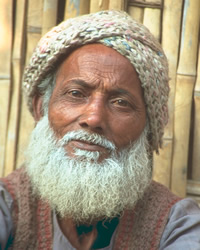

Bengalis are a complex people. They are defined by the widely spoken Bengali language, the second largest in South Asia after Hindi. They are divided between those who are Hindu and those who are Muslim. Like most South Asian peoples, their greatest divide is along religious communities. Millions of Muslim Bengalis live in Bangladesh, yet millions of Bengalis Muslims live in India's adjacent state of West Bengal. West Bengal is home to most Hindu Bengalis. Bengali speakers are known for their outstanding accomplishments in literature, but most educated Bengalis today are also fluent in English.
Most are either in Bangladesh or India, but they are also living in several Middle Eastern countries; Lebanon, Jordan, and Libya. There is also a sizable Bengali diaspora in the European countries of Germany, Belgium, Sweden, Spain, and the Netherlands. A small number are in Ireland.
In Ireland, Bengalis stay connect with one another through a Facebook page and the All Bangladeshi Association of Ireland (ABAI). They come together for Bengali celebrations. Not all Bengalis in Ireland are from Bangladesh; some are from India, but they are also Muslims.
Muslim Bengali social structure is patriarchal, with men typically being the primary breadwinners and women managing the household. However, women's roles are evolving, with increasing participation in the workforce and higher education. That is especially true in Europe, where women usually work.
Bengalis in Ireland are Sunni Muslim. Sunni Muslims believe that the supreme God, Allah, spoke through his prophet, Mohammed, and taught mankind how to live a righteous life through the Koran and the Hadith. To live a righteous life, you must utter the Shahada (a statement of faith), pray five times a day facing Mecca, fast from sunup to sundown during the month of Ramadan, give alms to the poor, and make a pilgrimage to Mecca if you have the means. Muslims are prohibited from drinking alcohol, eating pork, gambling, stealing, slandering and making idols. They gather for corporate prayer on Friday afternoons at a mosque, their place of worship.
The two main holidays for Sunni Muslims are Eid al Fitr, the breaking of the monthly fast and Eid al Adha, the celebration of Abraham's willingness to sacrifice his son to Allah.
Sunni religious practices are staid and simple. They believe that Allah has pre-determined our fates; they minimize free will.
In most of the Muslim world, people depend on the spirit world for their daily needs since they regard Allah as too distant. Allah may determine their eternal salvation, but the spirits determine how well we live in our daily lives. For that reason, they must appease the spirits. They often use charms and amulets to help them with spiritual forces.
Muslim Bengalis in Europe have an opportunity to find the only Savior. They will still face opposition from their families and communities, but there are limits to what someone can do to persecute religious minorities in European countries.
Pray for the Lord to raise up vibrant Christians to be Christ-bearers to Muslim Bengalis in Europe and the Middle East.
Pray for the Holy Spirit to arrange situations where Muslim Bengalis will hear the gospel in a culturally-appropriate way.
Pray for the Lord to give dreams and visions of the risen and victorious Christ to Bengali family leaders.
Pray that soon, Muslim-background Bengali believers will disciple others in the ways of Christ.
Scripture Prayers for the South Asian, Bengali-speaking in Ireland.
References
| Profile Source: Joshua Project |



