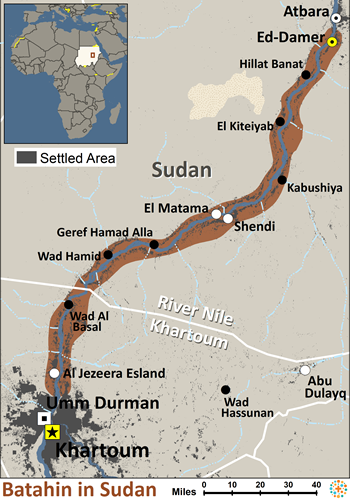

The Batahin are an Arab tribe living primarily in the Butana region of eastern and central Sudan, an area located between the Blue Nile and Atbara River. They are part of the larger Ja'alin tribal confederation and are closely connected to other Sudanese Arab pastoral peoples often associated with the Baggara and camel-herding tribal traditions of Sudan. The Batahin speak a form of Sudanese Arabic commonly known as Baggari Arabic, which is widely understood among Arabic-speaking communities in Sudan.
Historically, the Batahin developed within the tribal networks of the Butana plain, a region long shaped by nomadic movement, cattle herding, trade routes, and tribal alliances. Oral traditions and historical writings connect them to centuries of interaction and conflict with neighboring tribes such as the Shukriyya, Kawahla, and Beja peoples. Tribal loyalty, genealogy, and clan relationships remain important aspects of Batahin identity.
The Butana region itself has historically been an important grazing area for nomadic tribes because of its open plains and seasonal pasturelands. Over time, environmental pressures, modernization, conflict, and economic change have affected the traditional nomadic lifestyle of many Sudanese Arab tribes, including the Batahin. Some families remain mobile pastoralists, while others have become more settled near villages or water sources.
The Batahin are traditionally nomadic or semi-nomadic cattle herders. Livestock ownership has long been central to their economy, social status, and cultural identity. Families move seasonally across grazing lands in search of water and pasture for cattle, camels, sheep, and goats. This mobile way of life developed as an adaptation to the dry climate and limited rainfall of the Sudanese plains.
Life in the Butana region can be physically difficult. Water shortages, drought, desertification, and environmental instability frequently affect pastoral communities. Families often live in temporary or semi-permanent camps made from locally available materials suited to travel and harsh weather conditions. Daily routines revolve around caring for livestock, finding water, preparing food, and maintaining family survival in demanding environmental conditions.
Extended family and tribal structures strongly shape social life. Tribal elders and clan leaders often help resolve disputes, preserve customs, and maintain relationships between families and neighboring tribes. Hospitality, honor, courage, and loyalty are highly valued cultural traits among many Sudanese Arab pastoral groups. Oral poetry, storytelling, and shared tribal memory also remain important parts of cultural identity.
Modern pressures have increasingly affected traditional life among the Batahin. Some younger people migrate toward towns or cities for education or employment opportunities, while others continue herding traditions passed down through generations. Access to healthcare, education, transportation, and stable economic opportunity can still be limited in remote pastoral regions.
The Batahin are overwhelmingly Sunni Muslims, and Islam shapes much of their personal, family, and tribal life. Religious practices include daily prayer, fasting during Ramadan, participation in mosque life, and observance of Islamic customs connected to marriage, burial, and community celebrations. Islamic identity is deeply woven into Batahin culture and tribal tradition.
Alongside formal Islamic belief, some traditional spiritual fears and folk practices may continue to influence daily life. As in many nomadic and rural communities in Sudan, beliefs involving blessings, curses, spirits, protective rituals, or sacred religious figures can exist alongside orthodox Islamic practice. Tribal customs and religion are often closely connected within community life.
Most Batahin have had little meaningful exposure to biblical Christianity. Strong Islamic identity, nomadic movement, and geographic isolation have made gospel outreach difficult among them. They need to hear that forgiveness of sins and reconciliation with God come through Jesus Christ alone rather than through religious identity, rituals, or human effort.
The Batahin remain a difficult people group to reach because many continue to live mobile or semi-nomadic lifestyles across remote areas of Sudan. Christian workers seeking to reach them must be willing to adapt to harsh living conditions, travel regularly, and build long-term relationships grounded in humility, patience, and trust.
Practical needs are also significant. Many pastoral communities face drought, livestock disease, economic uncertainty, poor healthcare access, and limited educational opportunities. Environmental pressures and regional instability in Sudan have created additional hardship for rural and nomadic peoples throughout the country.
There is a need for Scripture resources, audio Bible materials, and culturally understandable gospel teaching in forms accessible to mobile communities. Any believers among the Batahin would need strong discipleship, fellowship, and encouragement because of social pressure and isolation. Compassionate ministry that addresses both spiritual and practical needs can help demonstrate the love of Christ in meaningful ways among the Batahin people.
Pray that the Batahin people will hear a clear presentation of the gospel and place their faith in Jesus Christ for salvation.
Pray that God will raise up faithful Christian workers who are willing to serve among the Batahin despite difficult travel, harsh conditions, and a nomadic lifestyle.
Pray that the Batahin people will be adopted through the People Group Adoption program so that churches and believers will commit to sustained prayer and future gospel outreach among them.
Pray that any believers among the Batahin will grow strong in biblical truth and boldly share the hope of Christ with their families and tribal communities.
Scripture Prayers for the Batahin in Sudan.
https://en.wikipedia.org/wiki/Batahin
https://en.wikipedia.org/wiki/Butana
https://www.globalsecurity.org/military/world/sudan/tribes.htm
https://www.cambridge.org/core/books/history-of-the-arabs-in-the-sudan/full-pedigree-of-the-gaaliin-and-in-particular-the-batahin-and-information-about-other-tribes/B051E80879B7408CC7638C07DF0948DE
https://www.sslh.online/en/posts/forms-of-conflict-resolution-and-wars-in-sudan
| Profile Source: Joshua Project |