


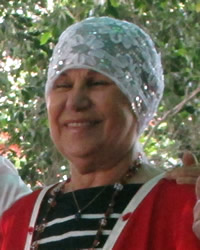

The Arbil, also known as the Lishanid Noshan, are a small Jewish ethnic group in Israel. They trace their roots to the ancient Jewish communities in the region of Arbil (modern-day Erbil in northern Iraq), where Jews lived for over 2,000 years. These communities date back to the Babylonian exile in the 6th century BC and the destruction of the Second Temple in AD 70. For generations, the Arbil Jews spoke a Neo-Aramaic dialect called Lishanid Noshan, or "our tongue," and maintained a distinct cultural identity amid Assyrian, Kurdish, and Arab influences. They worked as traders, craftsmen, dyers, builders, cobblers, and porters. In the mid-20th century, rising persecution in Iraq led to mass emigration. During Operation Ezra and Nehemiah in 1950–1951, nearly all Arbil Jews airlifted to Israel, joining other Iraqi Jews in neighborhoods like Jerusalem's Bukharim quarter. Today they blend their heritage with Israeli life while preserving Aramaic linguistic ties.
Arbil families in Israel often live in urban areas such as Jerusalem and other cities with established Iraqi Jewish communities. Many work in trade, construction, small businesses, or skilled crafts, drawing on their ancestral expertise in dyeing and building. Others have moved into education, healthcare, and service industries as second- or third-generation Israelis. Family dynamics center on close-knit households where elders pass down stories of Iraqi life and Aramaic phrases. Extended families gather for support and traditions, with marriages typically arranged within the community or broader Iraqi Jewish circles.
Celebrations include major Jewish holidays like Passover and Hanukkah, infused with Iraqi flavors such as songs in Judeo-Arabic. They also mark personal milestones with feasts featuring kubbeh (meat-filled dumplings), samoon (flatbread), and teas spiced with cardamom. Daily life mixes Israeli routines with nostalgic customs, like preparing dolma (stuffed vegetables) for Shabbat dinners.
The Arbil follow Judaism as their faith, rooted in Torah observance and synagogue worship. They maintain traditional practices, including daily prayers, kosher dietary laws, and lifecycle rituals like circumcision and bar mitzvah. Aramaic influences appear in their liturgy, with some using Lishanid Noshan for sacred readings. Community rabbis, often descendants of Iraqi scholars, guide ethical and spiritual life. While fully integrated into Israel's Jewish framework, a small subset holds to ethnic religious customs that blend ancient Mesopotamian elements with rabbinic Judaism, such as protective amulets or folk healing tied to biblical stories.
The Arbil community needs better access to cultural preservation programs to teach Lishanid Noshan to younger generations, as the language faces extinction. They require expanded educational resources in underfunded neighborhoods to support youth in higher learning and professional training. Healthcare services tailored to aging family members, including support for chronic conditions common in immigrant groups, would improve quality of life. Spiritually, they seek deeper engagement with Jewish outreach that honors their unique heritage while fostering connections to broader Israeli society.
Pray for the Arbil to have open hearts to the full message of Jesus Christ, building on their rich Jewish heritage.
Pray for programs that revive Lishanid Noshan and strengthen family bonds through cultural education.
Pray for economic opportunities that allow Arbil youth to thrive in Israel's workforce without losing their identity.
Pray for peace and reconciliation within mixed communities, reducing isolation and promoting neighborly ties.
Scripture Prayers for the Arbil, Lishanid Noshan in Israel.
Wikipedia. "Jewish Community of Erbil." Last modified February 2025. https://en.wikipedia.org/wiki/Jewish_community_of_Erbil.
Encyclopaedia Judaica. "Irbil." Gale Group, 2007. https://www.jewishvirtuallibrary.org/irbil.
Ethnologue. "Inter-Zab Je
| Profile Source: Joshua Project |




.jpg)