


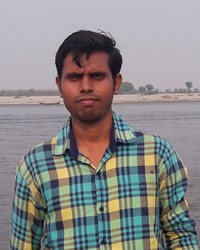

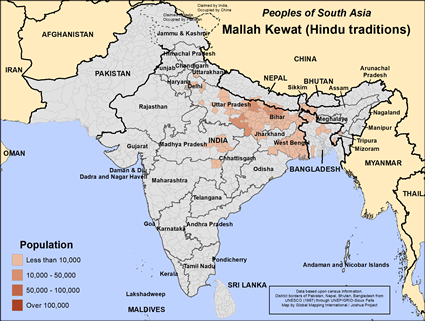
The Mallah Kewat are a river-based community found primarily in northern and eastern India, especially in Uttar Pradesh, Bihar, Jharkhand, Madhya Pradesh, and neighboring regions. They are part of the broader Mallah and Kewat social groups traditionally associated with boating, fishing, ferrying passengers, and occupations connected to rivers and waterways. Depending on the region, they commonly speak Hindi, Bhojpuri, Maithili, Magahi, or related local dialects. The name "Kewat" appears in ancient Indian literature and is historically linked with boatmen and river workers.
For generations, the Mallah Kewat lived closely connected to India's rivers, especially the Ganges and its tributaries. Rivers shaped not only their livelihoods but also their social and religious identity. Many families historically transported people and goods by boat before modern bridges and road systems reduced demand for traditional ferry work. Over time, many also became involved in fishing, agriculture, sand collection, labor work, and small-scale trade. Despite their long contribution to river transport and fishing economies, many Mallah Kewat communities have remained economically and socially marginalized within the caste structure of Indian society.
Many Mallah Kewat families still live near rivers, lakes, and wetlands where fishing, boating, agriculture, and wage labor provide income. Some continue operating small boats or fishing nets, while others work in transportation, construction, farming, or urban labor due to declining opportunities in traditional river occupations. Seasonal flooding, environmental pollution, and changing river systems can create ongoing economic instability for many households.
Family and community ties are usually strong. Extended families often live near one another, and marriages are commonly arranged within the community. Village councils and caste associations may help settle disputes and preserve social customs. Meals commonly include rice, lentils, vegetables, and fish where locally available. Religious festivals, river ceremonies, weddings, and seasonal gatherings remain important parts of social life.
In poorer communities, access to healthcare, sanitation, and education may remain limited. Children sometimes leave school early to help support family income through fishing or labor work. Younger generations increasingly migrate to towns and cities seeking employment, though many still maintain strong ties to ancestral villages and river traditions.
The Mallah Kewat primarily follow Hinduism mixed with folk religious practices connected to rivers, nature, spirits, and ancestral traditions. Many worship Hindu gods and goddesses while also honoring river deities and local spirits believed to influence safety, health, fertility, weather, and fishing success. Rivers are often viewed with deep spiritual significance, and ritual bathing or offerings may be part of religious observance.
Belief in karma, rebirth, ritual purity, and unseen spiritual forces strongly shapes worldview and daily practice. In some communities, local priests, shamans, or spiritual specialists are consulted during sickness, family crises, or important ceremonies. Folk beliefs involving protection from evil spirits and supernatural harm remain influential in many villages.
Although Christianity is known in parts of northern India, many Mallah Kewat still have little understanding of the biblical gospel. Jesus is often viewed simply as another religious figure rather than the crucified and risen Son of God who alone provides forgiveness of sins and reconciliation with God. Many communities have limited access to biblical teaching, mature churches, and long-term discipleship.
The Mallah Kewat need improved access to stable employment, healthcare, education, sanitation, and economic opportunity, especially in poorer river communities. Environmental changes affecting rivers and fishing livelihoods continue to create hardship for many families. Communities dependent on seasonal labor or fishing may also face debt, unstable income, and limited infrastructure.
Spiritually, the Mallah Kewat need faithful gospel witness in their own languages and cultural settings. Many have never clearly heard the biblical message of repentance, grace, and salvation through Jesus Christ. Oral Bible storytelling, audio Scripture resources, discipleship, and relationship-based ministry are especially important in communities where literacy remains limited. Existing believers in northern India also need encouragement and training so they can faithfully reach Mallah Kewat families and neighboring river communities with the gospel.
Pray that the Mallah Kewat people will hear a clear presentation of the gospel in their own languages and place their faith in Jesus Christ.
Pray that God will raise up faithful local believers and church leaders who can disciple Mallah Kewat families and establish biblically grounded churches among them.
Pray that communities facing poverty, unstable river livelihoods, poor healthcare, and limited educational opportunities will experience practical help and lasting hope.
Pray that the Mallah Kewat people will be adopted through the People Group Adoption program so that ongoing prayer, evangelism, discipleship, and church planting efforts will continue among them.
Scripture Prayers for the Mallah Kewat (Hindu traditions) in India.
https://en.wikipedia.org/wiki/Mallah
https://en.wikipedia.org/wiki/Kewat
https://peoplegroups.org/explore/GroupDetails.aspx?peid=41619
https://www.forwardpress.in/2021/08/the-kewats-and-their-rivers/
| Profile Source: Joshua Project |




