


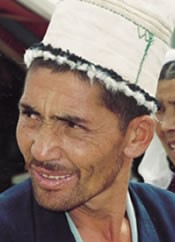

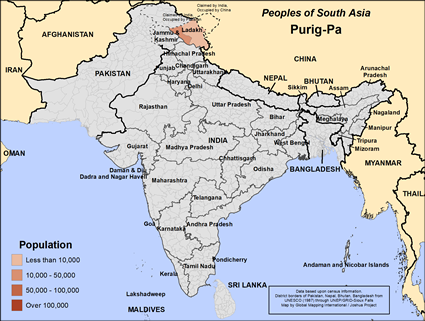
The Purig-Pa are a people group living primarily in the Kargil district of Ladakh in northern India, especially in the Suru Valley and surrounding Himalayan regions. Their name is commonly understood to mean "of Tibetan origin," reflecting their historical roots among Tibetan and Dardic peoples who began mixing in the region centuries ago. The Purig-Pa developed within the rugged mountain environment of Ladakh, a historic crossroads between Tibet, Kashmir, Baltistan, and Central Asia.
The Purig language, also called Purgi or Purki, is a Tibetic language closely related to Ladakhi and Balti. Over time, the language absorbed influences from Persian and Balti due to Islamic expansion and trade connections across the western Himalayas. Historically, the Purig-Pa followed Tibetan Buddhism, but many later converted to Islam between the fifteenth and seventeenth centuries through the influence of Muslim preachers and regional political alliances.
The Purig region has long been marked by interaction between Buddhist and Muslim communities. Ancient monasteries, mosques, and shrines throughout Ladakh reflect the area's layered religious and cultural history. Despite modernization, the Purig-Pa still retain strong ties to their mountain homeland, language, and traditional identity.
The Purig-Pa traditionally live in isolated mountain valleys where farming and animal husbandry are central to survival. Many families raise sheep, goats, and yaks while cultivating crops suited to the harsh Himalayan climate, including barley and other cold-weather grains. Agriculture is closely tied to seasonal cycles, and many communities still use traditional calendars connected to Tibetan culture.
Daily life in Ladakh can be physically demanding because of high altitudes, severe winters, and geographic isolation. Villages are often small and tightly connected through extended family relationships and community cooperation. Traditional homes are designed to withstand extreme weather, and families commonly store food and fuel supplies for long winter months when roads may become inaccessible.
Food commonly includes tsampa, butter tea, bread, dairy products, meat, and locally grown grains and vegetables. Traditional clothing such as the goncha robe is still worn in some areas, especially during festivals and ceremonial gatherings.
While many younger people now pursue education and work opportunities outside their villages, strong cultural identity and family loyalty remain important within Purig-Pa society.
Most Purig-Pa today follow Islam, primarily within Shia traditions, although small minorities remain Buddhist or follow other Islamic traditions such as Sunni or Noorbakhshi Islam. Islamic practices commonly include prayer, fasting during Ramadan, mosque attendance, observance of Islamic festivals, and reverence for religious leaders and shrines.
In some areas, elements of older Tibetan and folk traditions remain blended into religious life. Spiritual practices may include the use of charms, reverence for saints, shrine visitation, and beliefs connected to the spirit world. The historical transition from Tibetan Buddhism to Islam has left cultural traces that still shape local customs and identity.
The Purig-Pa need the gospel of Jesus Christ and the assurance of salvation that comes through His death and resurrection rather than through religious observance, inherited tradition, or spiritual mediation.
The Purig-Pa need continued access to Scripture, biblical discipleship, and faithful Christian witness presented with humility and cultural understanding. Although there has been some Christian outreach in the region historically, the Purig-Pa remain difficult to reach because of geographic isolation, strong religious identity, and limited long-term evangelical presence.
Practical needs include healthcare access, educational opportunities, infrastructure improvement, and economic stability in remote mountain regions where severe winters and isolation can create hardship. Younger generations also face tensions between preserving traditional culture and adapting to modern economic and social pressures.
There is a need for mature believers who are willing to serve patiently among the Purig-Pa, build trusted relationships, and help establish strong local fellowships rooted firmly in biblical truth.
Pray that the Purig-Pa people would hear a clear presentation of the gospel and come to know Jesus Christ as Savior and Lord.
Pray that God would raise up compassionate and biblically faithful workers who are willing to serve among the Purig-Pa in the difficult Himalayan environment.
Pray that the Purig-Pa would be adopted through the People Group Adoption program so that sustained prayer, discipleship, and long-term gospel outreach would continue among them.
Pray for strengthened families, improved healthcare and education, and spiritual openness among the Purig-Pa communities throughout Ladakh.
Scripture Prayers for the Purig-Pa in India.
https://en.wikipedia.org/wiki/Purigpa
https://en.wikipedia.org/wiki/Purgi_language
https://en.wikipedia.org/wiki/Ladakh
https://en.wikipedia.org/wiki/Suru_Valley
https://digitalcommons.macalester.edu/cgi/viewcontent.cgi?article=1828&context=himalaya
https://digitalcommons.macalester.edu/cgi/viewcontent.cgi?article=1826&context=himalaya
https://irp-cdn.multiscreensite.com/5ddddb20/files/uploaded/purik.pdf
| Profile Source: Joshua Project |




