




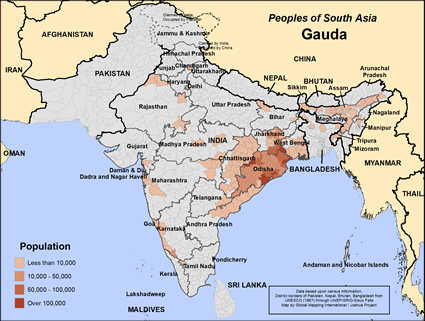
The Gauda are a broad Hindu community found across several regions of India, especially in Odisha, Karnataka, Andhra Pradesh, Telangana, Goa, and parts of eastern and southern India. The name appears in several forms such as Gauda, Gouda, Gowda, Gopal, or Goud depending on language and region. Because the term developed over many centuries and across different cultural areas, not all Gauda communities share the same exact history or occupation. In some regions the name refers to cattle herders and milk producers, while in others it refers to cultivators, village headmen, toddy tappers, or agricultural landholders.
In Odisha, Gauda communities are traditionally associated with cattle raising, dairy farming, and agriculture and are closely related to the wider Ahir and Yadav traditions found throughout India. Historical records describe them as one of the major agrarian communities of Odisha, where they also served in military roles under regional kings and participated in temple service connected to Lord Jagannath.
In Karnataka and parts of South India, "Gowda" historically functioned as an honorific title for village leaders or landholding agricultural families. Over time the term became associated with several cultivating and pastoral communities, especially among Kannada-speaking peoples. Ancient inscriptions from Karnataka frequently mention gavundas or gaudas as village administrators, tax collectors, and local leaders.
The Gauda identity therefore reflects a long history of agriculture, cattle keeping, village administration, and regional cultural influence. Oral tradition, clan identity, caste associations, and family lineage continue to shape community life among Gauda families across India.
The lives of Gauda communities vary by region, but agriculture and livestock care remain central themes in many areas. In Odisha, Gauda families traditionally raised cattle, supplied milk and dairy products, and cultivated crops such as rice, millet, pulses, and vegetables. In Karnataka and Andhra Pradesh, many Gauda or Goud families work as farmers, cultivators, plantation workers, traders, or toddy tappers depending on local tradition.
Village life usually centers around extended family relationships and strong community cooperation. Men commonly work in farming, livestock management, transport, labor, or local business, while women contribute heavily through household management, food preparation, agricultural labor, and care for animals. Seasonal festivals, weddings, and religious celebrations remain important social events that strengthen family ties and preserve regional customs.
Many Gauda communities maintain caste councils or social organizations that help oversee marriages, disputes, and community affairs. Respect for elders, hospitality, and family honor are strongly valued. In some regions the Gauda historically held positions of village leadership, which contributed to their continued influence in local politics and rural administration.
Modernization has changed many traditional occupations. Younger generations increasingly move to cities for education and employment opportunities in government service, business, technology, construction, and transportation. Even so, many rural Gauda families continue to face economic pressures tied to agriculture, water shortages, debt burdens, changing market conditions, and limited educational opportunities.
The Gauda are predominantly Hindus, and Hindu beliefs strongly shape family and community life. Religious practices commonly include temple worship, household rituals, pilgrimages, observance of Hindu festivals, and devotion to gods such as Krishna, Shiva, Durga, Hanuman, and regional village deities. Among dairy-related Gauda groups, Krishna is often especially honored because of his association with cowherding traditions.
Many Gauda communities also combine formal Hindu worship with local folk traditions. Belief in astrology, ritual purity, ancestral customs, blessings, curses, spirits, and protective rituals may influence decisions involving marriage, illness, farming, finances, and family wellbeing. In rural areas, village deities and regional shrines often remain important parts of religious life.
Religious identity is deeply connected to family heritage, caste belonging, and social expectation. Participation in festivals, temple rituals, and family ceremonies is commonly viewed as necessary for maintaining social harmony and spiritual wellbeing.
Although some Gauda communities have had exposure to Christianity, many still have little understanding of the biblical gospel. Christianity is often viewed as foreign or outside accepted family and caste identity. The Gauda need to hear clearly that forgiveness of sins and reconciliation with God come through Jesus Christ alone rather than through rituals, karma, caste status, or inherited religion.
Many Gauda communities remain spiritually unreached or only lightly reached with the gospel. Cultural Hinduism, caste identity, family pressure, and reliance on traditional religious customs can create barriers to biblical Christianity. Faithful Christian workers are needed who are willing to build long-term relationships, communicate biblical truth respectfully, and demonstrate the love of Christ through humility and practical service.
Practical needs vary widely because the Gauda are spread across many regions and occupations. Rural farming communities may struggle with unstable agricultural income, water shortages, debt burdens, and limited healthcare access. Families dependent on livestock or small farming operations are especially vulnerable to drought, rising costs, and market instability. Urban migration has also created social pressure on traditional family structures and village life.
The Gauda need Scripture resources, discipleship materials, and gospel teaching communicated in the languages they understand best, including Odia, Kannada, Telugu, and other regional languages. Relationship-centered ministry, oral Bible storytelling, and strong local fellowships may all help communicate the gospel effectively. Any believers among them would need encouragement, biblical training, and fellowship support so they can stand firm in faith and share Christ within their communities.
Pray that the Gauda people will hear a clear presentation of the gospel and place their faith in Jesus Christ for salvation.
Pray that God will raise up faithful Christian workers who are willing to serve among the Gauda with wisdom, humility, patience, and compassion.
Pray that the Gauda people will be adopted through the People Group Adoption program so that churches and believers will commit to sustained prayer and future gospel outreach among them.
Pray that any Gauda believers will grow strong in biblical truth and boldly share the hope of Christ with their families and communities.
Scripture Prayers for the Gauda in India.
https://en.wikipedia.org/wiki/Gopal_(caste)
https://en.wikisource.org/wiki/Castes_and_Tribes_of_Southern_India/Gauda
https://en.wikipedia.org/wiki/Gowda_(surname)
https://ncbc.nic.in/Writereaddata/addodh54.pdf
https://en.wikipedia.org/wiki/Gauda_and_Kunbi
https://www.worldhistory.org/Gauda_Kingdom/
| Profile Source: Joshua Project |




