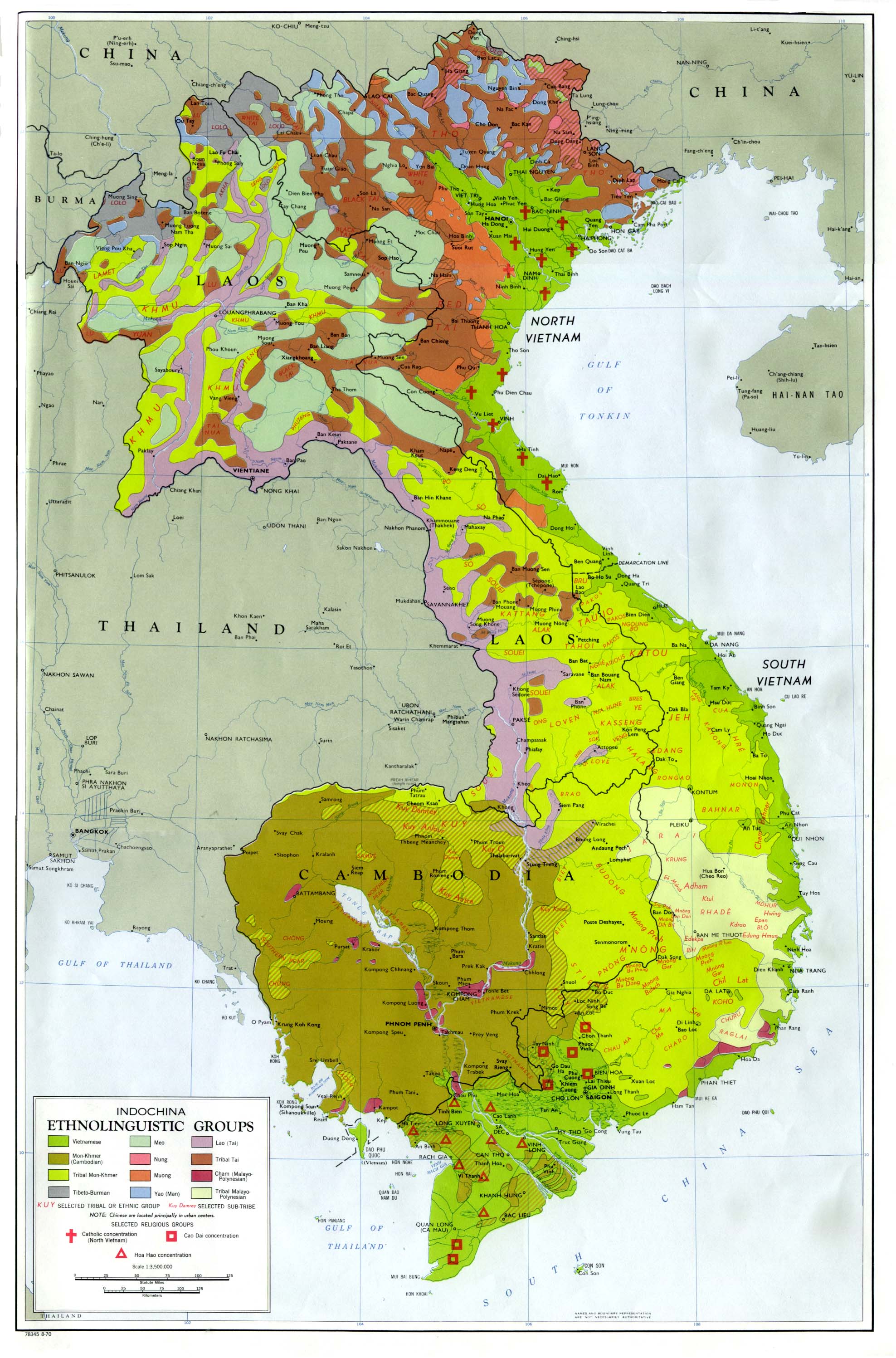

The Khom Khae are an ethnic people group in Laos. They speak Khmer as their primary language and are categorized in the Mon-Khmer people cluster within the Southeast Asian Peoples affinity bloc. The term Khom historically has been used in the region to reference Khmer or Mon-Khmer peoples, and in Lao and Thai historical contexts it sometimes appears in relation to ancient Khmer influence across mainland Southeast Asia, although modern usage varies in meaning and identification.
The record for the Khom Khae lacks a full published ethnographic history, but their cultural roots reflect the long presence of Khmer-speaking peoples in Southeast Asia. These communities likely have deep ties to the broader Khmer cultural sphere and have maintained identity distinct from both lowland Lao and other ethnic minorities in Laos.
The Khom Khae live in Laos, primarily in rural areas where Khmer-speaking people have historically settled or migrated. They inhabit villages that often maintain traditional lifestyles and where the Khmer language remains the main means of communication. Their settlements are typically located in regions where ethnic diversity is high and accessibility to major urban centers is limited. They likely participate in rural livelihoods typical of Khmer communities in the region, such as farming rice or fishing, adapted to Laos' environment. Khom Khae families farm garden plots, raise livestock for household use, and sell small surpluses at nearby markets. Villages center on extended family networks and local ritual places that anchor social life. Children attend local schools when available, but many communities face limited access to consistent education, health care, and market infrastructure. Daily life follows seasonal rhythms of planting and harvest, and people pass knowledge and history by oral tradition, communal festivals, and temple centered activities.
The Khom Khae belief systems are centered on animistic and spirit-based traditions. They maintain practices that honor ancestral spirits and natural forces believed to influence health, prosperity, crops, and social events. Rituals, offerings, and observances that acknowledge spirit realms are common ways of seeking blessing and protection for the community. While mainstream Theravada Buddhism influences many Khmer communities beyond Laos, among the Khom Khae Buddhist practice tends to blend with indigenous animistic worldviews rather than fully replacing them.
The Khom Khae have very limited access to evangelical Christian witness. They need clear and culturally meaningful presentation of the gospel in their heart language, along with Scripture and JESUS Film resources that speak into their worldview and spiritual context. They need discipleship pathways that help individuals and families grow in faith and understanding of Christ in ways that respect and redeem—not simply dismiss—their cultural identity. They need long-term relationships and ministry presence that support holistic wellbeing in education, health care, and community development, demonstrating the love of Christ in tangible ways. They need prayer support for spiritual openness and receptive hearts as they encounter the gospel in a landscape dominated by ancestral and spirit beliefs.
Pray that God raises up courageous workers to reach the Khom Khae with the good news of Jesus Christ.
Ask the Lord to soften hearts among the Khom Khae and grant them openness to the gospel message.
Intercede for the development, distribution, and acceptance of Christian resources in the Khmer language.
Pray for protection and favor over any outreach efforts in Laos, amid restrictions on religious activities.
Seek God's intervention through dreams, visions, or divine encounters to reveal Himself to this unreached people.
Scripture Prayers for the Khom Khae in Laos.
Wikipedia
| Profile Source: Joshua Project |