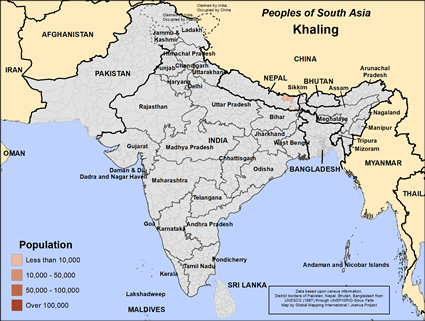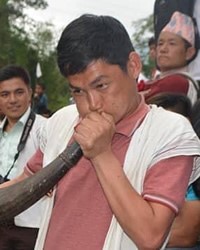

The Khaling people originate from eastern Nepal and belong to the Kiranti ethnic cluster. Their language, Khaling, is part of the Sino-Tibetan family and is traditionally spoken in rural Himalayan communities.
Migration to Austria has occurred in recent decades, primarily for economic opportunities and education. Surprisingly, more live in Austria than Nepal today. While many Khaling in Austria speak Nepali and increasingly German for daily life, their mother tongue remains an important marker of identity, especially within family and community gatherings.
Khaling families in Austria often live in urban or semi-urban settings, working in service industries, construction, and other labor-intensive jobs. Some pursue higher education and professional careers, reflecting aspirations for stability and advancement. Family life remains close-knit, with strong ties to relatives both in Austria and Nepal. Cultural celebrations such as weddings and traditional festivals are observed, often blending Nepali customs with Austrian influences.
Meals typically include rice, lentils, vegetables, and meat dishes, though European foods are increasingly incorporated. Community gatherings provide opportunities to maintain language and traditions while adapting to life in a new cultural environment.
The Khaling people traditionally follow animistic practices rooted in ancestor veneration and nature worship. Rituals to honor spirits and maintain harmony with the environment are part of their heritage. In Austria, some Khaling have adopted Hindu customs, while others remain connected to traditional beliefs. Christianity has had limited impact among the Khaling, and most have not encountered the gospel in a way that speaks to their cultural and linguistic context.
The Khaling in Austria face challenges of cultural adjustment, language barriers, and economic vulnerability. Access to community support and educational opportunities is essential for integration and stability. Spiritually, the Khaling need the message of Jesus Christ communicated in a way that honors their cultural identity and addresses their deep spiritual questions. Resources in the Khaling language, along with relational outreach, would help them understand the hope and mercy found in Christ.
Pray for the Khaling people in Austria to encounter the truth of Jesus Christ and experience his transforming grace.
Ask God to raise up believers who will build relationships and share the gospel in culturally sensitive ways.
Pray for improved employment opportunities that provide stability for Khaling families.
Pray for strong Christians to approach them with the gospel.
Scripture Prayers for the Khaling in Austria.
Ethnologue – Khaling Language
Migration Data Portal – Nepalese Migration
| Profile Source: Joshua Project |