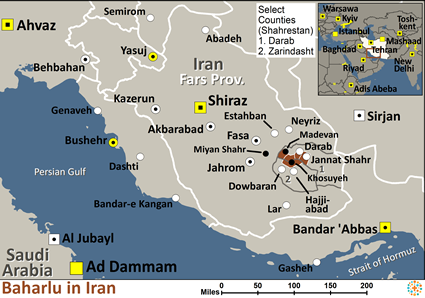

The Baharlu are a Turkic ethnic group living primarily in Iran, especially in Fars Province, with smaller communities in Kerman, Khorasan, and other regions. Historically, they were associated with nomadic tribal confederations in southern Iran and are connected to the broader Turkic tribal history of the region. The Baharlu speak a dialect closely related to South Azerbaijani, a Turkic language distinct from Persian (Farsi).
For centuries, the Baharlu lived as nomadic or semi-nomadic herders, moving seasonally with their livestock across grazing lands in southern Iran. They became part of the Khamseh tribal confederation during the nineteenth century under the Qajar rulers, alongside several other tribal groups in Fars Province. Their tribal identity, kinship structure, and migratory traditions remained strong despite increasing modernization and government settlement policies during the twentieth century.
Some historians connect the Baharlu to older Turkic tribal confederations linked to the Qara Qoyunlu period in Persian history. Over generations, many Baharlu gradually settled into villages and towns, though aspects of tribal culture and identity continue to remain important. Christian witness among the Baharlu has been extremely limited, and many have never heard a clear explanation of the gospel.
Traditionally, the Baharlu depended heavily on livestock herding and seasonal migration. Sheep, goats, and other animals formed the center of their economy and daily life. Even among settled Baharlu communities today, many cultural traditions still reflect their nomadic heritage. Tribal loyalty, extended family ties, and respect for elders remain important parts of social life.
The Baharlu are especially known for weaving finely crafted rugs and textiles. Their carpets have historically been valued for their quality and distinctive tribal patterns. Handicrafts, weaving, and animal products often supplemented income from herding and agriculture.
Life for many Baharlu families has changed significantly in recent decades. Government settlement programs, expanding roads, urban migration, and economic pressures have reduced traditional nomadic movement. Younger generations increasingly pursue work in towns and cities, creating tension between preserving tribal customs and adapting to modern Iranian society.
Food and hospitality remain important aspects of Baharlu culture. Meals commonly include bread, rice, yogurt, meat, tea, and dairy products connected to pastoral life. Family gatherings, weddings, oral storytelling, and seasonal celebrations continue to reinforce community identity.
The Baharlu are predominantly Shiite Muslims, though folk Islamic beliefs and older tribal spiritual traditions continue to influence aspects of daily life. Like many tribal Muslim communities in Iran, religion is often closely connected to family, ethnic identity, and local custom.
Among folk Muslim communities, people may combine formal Islamic practice with beliefs involving charms, spiritual protection, curses, dreams, saints, or unseen spiritual powers. Religious leaders and traditional customs often hold strong influence within community life.
Very few Baharlu are known to follow Christ. Access to biblical teaching, discipleship, and Christian fellowship remains extremely limited. Conversion to Christianity can bring social pressure and family opposition because Islamic identity is deeply woven into tribal and cultural identity.
The Baharlu need greater access to the gospel in culturally understandable ways and in the language they speak most comfortably. Many have never encountered a follower of Jesus Christ who could explain the message of salvation clearly and biblically. Long-term Christian witness and discipleship are greatly needed among them.
Practical challenges also affect many Baharlu families as traditional nomadic life continues to decline. Economic uncertainty, urban migration, loss of traditional livelihoods, and cultural transition have placed strain on many tribal communities. Some rural areas also face limited educational and economic opportunities.
The Baharlu would benefit from Scripture resources, audio Bible materials, relationship-based ministry, and mature believers willing to serve among them patiently and respectfully. There is also a need for Iranian believers and nearby Christians to carry the gospel faithfully to Turkic tribal peoples throughout southern Iran.
Pray that the Baharlu people would hear the gospel clearly and come to understand that salvation is found only through Jesus Christ.
Pray that God would raise up faithful Christian workers who are willing to serve among the Baharlu with humility, wisdom, and perseverance.
Pray that the Baharlu would be adopted through the People Group Adoption program so they receive sustained prayer, ongoing gospel engagement, and future discipleship efforts.
Pray that any believers among Iran's Turkic peoples would grow strong in biblical faith and boldly share the truth of Christ with the Baharlu and neighboring tribes.
Scripture Prayers for the Baharlu in Iran.
https://en.wikipedia.org/wiki/Baharlu_(ethnic_group)
https://www.iranicaonline.org/articles/baharlu-turkic-tribe
https://en.wikipedia.org/wiki/Khamseh
https://www.iranchamber.com/people/articles/iranian_ethnic_groups.php
| Profile Source: Joshua Project |