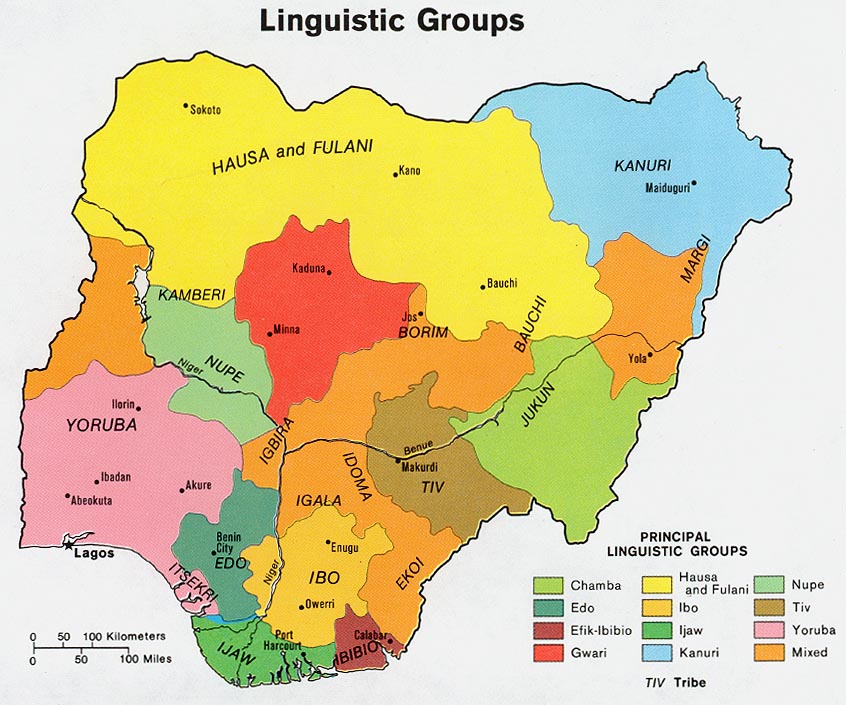
The Dera, also known as the Kanakuru, are an ethnic group living primarily in northeastern Nigeria, especially in parts of Adamawa and Borno states near the Mandara Mountain region. They call themselves "Dera," while neighboring peoples often use the name "Kanakuru." Their language, Dera or Kanakuru, belongs to the West Chadic branch of the Afro-Asiatic language family and is related to several other Chadic languages spoken in northeastern Nigeria.
The Dera have lived for generations in an area shaped by trade routes, farming settlements, and interaction with neighboring ethnic groups such as the Hausa, Margi, and Kanuri peoples. Their history has largely been preserved through oral tradition, clan memory, and local cultural practices rather than extensive written records. Traditional village leadership and kinship systems have remained important in preserving their identity despite outside political and religious influences.
Over time, Islam spread into the region through trade and contact with neighboring Muslim communities, though older traditional beliefs continued to influence many Dera communities. More recently, northeastern Nigeria has faced severe instability because of insurgency, displacement, and economic hardship. These pressures have affected many Dera villages and contributed to migration and social disruption.
Although portions of the Bible and Christian resources have existed in the Dera language, the Dera remain a largely unreached people group with limited access to consistent evangelical discipleship and mature local churches.
Most Dera families live in rural farming communities where agriculture forms the center of daily life. Millet, sorghum, maize, beans, and groundnuts are common crops, and livestock such as goats, sheep, and chickens contribute to household survival and income. Seasonal farming patterns strongly shape village life and family responsibilities.
Extended family and clan relationships remain central within Dera society. Elders and traditional leaders are respected for preserving customs, resolving disputes, and guiding community decisions. Marriages are usually arranged with strong involvement from the extended family, and community reputation and kinship ties remain highly valued.
Food commonly includes grains such as millet and sorghum prepared into porridge or flatbreads along with vegetables, beans, and locally available meat. Markets and community gatherings serve as important centers of social interaction and trade. Oral storytelling, music, dance, and ceremonial celebrations continue to preserve Dera identity and cultural memory.
Life in northeastern Nigeria can be difficult because of poverty, drought, limited healthcare access, weak infrastructure, and insecurity connected to regional violence. Some Dera communities have experienced displacement and economic instability because of unrest affecting Adamawa and Borno states. Younger generations increasingly migrate toward larger towns seeking work and education opportunities.
The Dera are primarily Christian. Commonly they blend faith in Jesus Christ with faith in the power of the spirit world and ancestral spirits. They have Bible portions and the Jesus Film in their language, so they can hear and understand the gospel.
The Dera need greater access to Scripture resources, and long-term discipleship in their own language.
Practical needs are also significant. Many Dera communities face poverty, limited educational opportunity, inadequate healthcare, food insecurity, and instability connected to violence in northeastern Nigeria. Rural villages may struggle with weak infrastructure, lack of clean water access, and limited economic opportunity.
The Dera would benefit from audio Bible resources, literacy programs, medical outreach, trauma care ministries, vocational assistance, and compassionate Christian workers willing to serve patiently among them. There is also a need for strong local believers who can disciple others and establish enduring churches rooted in biblical truth.
Pray that the Dera people would come to trust in Jesus Christ alone for salvation.
Pray that God would raise up faithful Dera Christian workers who will go to Muslim peoples with Jesus Christ, the only one who offers hope for this life and for the life to come.
Pray for the Holy Spirit to bring a powerful revival to Dera churches and families, leading them to victorious lives.
Scripture Prayers for the Dera, Kanakuru in Nigeria.
https://en.wikipedia.org/wiki/Kanakuru_language
https://glottolog.org/resource/languoid/id/dera1248
https://www.ethnologue.com/language/kna/
https://www.sil.org/resources/archives/25684
https://www.researchgate.net/publication/305279557_A_Grammar_of_Dera_Kanakuru
https://en.wikipedia.org/wiki/Adamawa_State
https://en.wikipedia.org/wiki/Borno_State
| Profile Source: Joshua Project |