


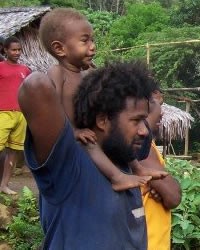

The Wetamut people of Vanuatu are one of the many small and distinct communities that contribute to the nation's remarkable cultural and linguistic diversity. Living within an island environment that has fostered both isolation and strong local identity, the Wetamut have developed traditions and social structures closely tied to their land and ancestry. Their history is primarily preserved through oral storytelling, with narratives that recount origins, clan relationships, and the movement of families across the islands.
Like other communities in Vanuatu, the Wetamut experienced outside contact through European explorers, traders, and eventually missionaries. These encounters brought new beliefs, tools, and systems of education. Over time, Christianity became part of the religious landscape, though its depth of influence has varied. Despite these changes, the Wetamut have retained much of their traditional way of life, balancing inherited customs with newer influences.
Today, they remain a distinct people group, shaped by both their heritage and the gradual changes brought by increased connection to the wider world.
Life among the Wetamut people is typically centered on subsistence and community cooperation. Families rely heavily on gardening, cultivating staple crops such as taro, yams, and other root vegetables. Coconut palms and fruit trees may also be important sources of food and small-scale trade. Fishing supplements their diet, especially for those living near coastal areas.
Villages are usually small and organized around extended family units. Homes are often constructed from natural materials gathered locally, reflecting both practicality and environmental knowledge. Much of daily life takes place outdoors, where people cook, work, and gather together.
Relationships are central to Wetamut society. Mutual support within families and clans is essential, and communal work is common. Whether preparing land for planting or organizing a celebration, cooperation reinforces social bonds and ensures survival in a setting where resources can be limited.
Language remains a key marker of identity. The Wetamut people speak their own language, which may be used primarily within their community. For broader communication, many also speak Bislama, allowing them to connect with other groups across Vanuatu.
Access to services such as education and healthcare can be uneven, particularly if the Wetamut live in more remote areas. Travel may involve long distances by boat or on foot, depending on infrastructure. While some younger individuals pursue opportunities beyond their home area, many maintain strong ties to their community and cultural heritage.
Christianity has had an influence among the Wetamut, and elements of Christian teaching are often present within the community. Churches may exist, and people participate in Christian practices such as prayer or worship gatherings. However, the depth of biblical understanding can vary.
Traditional beliefs often continue to play a role in shaping worldview. These may include respect for ancestral spirits and a sense that unseen forces influence everyday life. Events such as illness, crop failure, or success may be interpreted through a spiritual lens that blends both traditional and Christian ideas.
In some cases, this results in a dual belief system. Individuals may outwardly identify with Christianity while still relying on traditional practices for guidance or protection. Without consistent biblical teaching and discipleship, it can be difficult for believers to fully grasp the message of grace and the sufficiency of Christ.
The Wetamut people have important spiritual needs, particularly in the area of clear gospel understanding. While Christianity has reached the community to some extent, there is a need for deeper teaching that leads to genuine faith and transformation.
Access to Scripture in their own language, if currently limited, is a significant need. When people encounter the Bible in their heart language, it becomes more accessible and meaningful. Translation efforts, as well as oral Bible storytelling, can help bridge this gap.
Discipleship is another key need. Believers require ongoing guidance to grow in their faith and to understand how biblical truth applies to their daily lives. This includes addressing areas where traditional beliefs may conflict with Scripture in a respectful and thoughtful way.
Practical needs are also present. Geographic isolation can make it difficult to access healthcare, education, and economic opportunities. Support in these areas can improve overall well-being and create opportunities for ministry that demonstrates Christ's love in tangible ways.
The development of local leadership is essential for long-term impact. When members of the Wetamut community are trained and equipped to lead, the church can grow in a way that is both sustainable and culturally relevant.
Pray that the Wetamut people would come to a clear and personal knowledge of Jesus Christ, embracing the truth of the gospel with understanding and faith.
Pray for the translation and effective communication of Scripture in their language, that God's Word would take root deeply in their hearts.
Pray for strong local leaders who will faithfully teach the Bible and guide others in spiritual growth.
Pray for Christian workers who are called to serve among the Wetamut, asking that they would build trusting relationships and minister with humility and wisdom.
Pray for the physical needs of the community, including access to healthcare, education, and sustainable resources, that they may experience both hope and stability.
Scripture Prayers for the Wetamut in Vanuatu.
Regional cultural and ethnographic studies of Vanuatu
General research on rural island livelihoods and community structures
| Profile Source: Joshua Project |



