


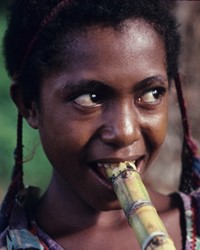

The Ono is an indigenous people living on the Huon Peninsula in Morobe Province of Papua New Guinea. Their communities are found in the Finschhafen District along the northeastern part of the peninsula, an area known for its rugged hills, forested landscapes, and coastal influences. The Ono people are identified by their use of the Ono language, a Papuan language belonging to the Finisterre–Huon branch of the Trans–New Guinea language family.
Like many communities in Papua New Guinea, the Ono people have maintained their identity through strong village life, family ties, and the preservation of their language across generations. Their history has been shaped by interaction with neighboring peoples of the Huon Peninsula as well as by Christian mission work that reached many parts of the region during the twentieth century.
Ono communities are typically organized around rural villages where extended families live near one another and cooperate in daily work. Gardening forms the foundation of the local economy, with families cultivating staple crops in small garden plots suited to the tropical climate and mountainous terrain. Hunting, fishing, and gathering forest resources may also supplement household food supplies.
Village life places strong emphasis on kinship and cooperation. Families often work together to clear land, plant gardens, construct homes, and care for children and elders. Footpaths connect villages across the hills and valleys of the Huon Peninsula, and many people also use Tok Pisin or other regional languages when communicating with neighboring groups or traveling outside their communities.
The natural environment plays an important role in shaping daily activities. The forests, streams, and fertile soil provide the resources necessary for farming and village life, and the land remains closely tied to family identity and community relationships.
Most Ono people identify with Christianity, and churches are an important part of community life. Christian worship, teaching, and fellowship shape many aspects of village relationships and moral guidance.
In some places, traditional ideas about spiritual forces or ancestral influence may still be remembered or influence how certain life events are interpreted. Within this context, continued biblical teaching and discipleship are important so that believers grow in a clear understanding of the gospel and the saving work of Jesus Christ alone.
Portions of the Bible and the New Testament are available in the Ono language, allowing believers to hear and study Scripture in their own heart language.
The Ono people benefit from continued discipleship that helps believers grow in their knowledge of Scripture and in faithful obedience to Christ. Local congregations are strengthened when pastors and church leaders receive training and encouragement in biblical teaching and pastoral care.
Access to Scripture and Christian teaching resources in the Ono language supports families and churches as they engage deeply with God's word. Encouraging younger believers and raising up new leaders can help ensure that the church continues to grow in spiritual maturity and faithful witness.
In addition to spiritual needs, improvements in education, healthcare, and sustainable livelihoods can support the well-being of families and communities across the Huon Peninsula.
Pray that Ono believers will grow in spiritual maturity and develop a deep love for the word of God.
Pray for pastors and church leaders to be strengthened with wisdom and faithfulness as they shepherd their congregations.
Pray that families and young people will follow Jesus Christ wholeheartedly and build strong Christian homes.
Pray that the churches among the Ono will remain united and active in sharing the gospel with neighboring peoples who lack a relationship with Jesus Christ.
Scripture Prayers for the Ono in Papua New Guinea.
| Profile Source: Joshua Project |



