


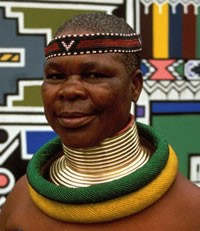

The Ndebele are a Bantu people with a proud and storied heritage, found primarily in Zimbabwe. Smaller numbers are in Zambia and Botswana. In Zimbabwe, they are concentrated in the Matabeleland region in the southwest, with Bulawayo serving as their cultural heartland. Though sharing a common ancestry, the two groups developed distinct cultural identities over generations shaped by migration, conflict, and adaptation.
The Ndebele trace their origins to the Zulu nation of southern Africa. In the nineteenth century, a faction led by Chief Mzilikazi broke away from the Zulu kingdom and migrated northward, eventually settling in what is now Zimbabwe. This group became known as the Zimbabwean Ndebele, or Matabele, and built a powerful kingdom before coming into conflict with colonial powers. Their history is marked by resilience, military courage, and a fierce determination to preserve their identity.
The Ndebele language, also called isiNdebele or Sindebele depending on the region, belongs to the Nguni branch of the Bantu language family and remains central to their cultural identity today.
Ndebele society is built around strong family and clan structures. The extended family unit is the foundation of daily life, with elders commanding deep respect as keepers of tradition and community wisdom. Cattle hold a place of both economic and ceremonial importance, symbolizing wealth, status, and spiritual connection.
In rural areas, livelihoods revolve around subsistence farming, livestock herding, and small-scale trade. In urban centers like Bulawayo, many Ndebele are engaged in commerce, industry, and the professions. Urbanization has introduced new pressures on traditional life, yet cultural identity remains strong across generations.
The Ndebele are particularly renowned for their vibrant artistic traditions. Their geometric wall paintings and intricately beaded garments are recognized worldwide as expressions of identity, beauty, and cultural pride. Ceremonies marking birth, initiation, marriage, and death continue to structure the rhythm of community life, serving as moments of celebration, remembrance, and social bonding.
The Ndebele are broadly considered a Christian people, with most identifying with Protestant or independent African Christian churches. Mission activity over the past two centuries introduced the gospel widely across Ndebele communities, and Christian practice is common in both urban and rural settings.
Nevertheless, traditional beliefs run deep alongside Christian profession. Ancestor veneration is widely practiced, with many Ndebele consulting traditional healers and spiritual intermediaries to navigate illness, misfortune, and major life decisions. The spirits of the ancestors are believed to influence the living, and rituals honoring them remain embedded in daily and ceremonial life. As with many African peoples, this blending of Christian identity with animistic practice means that genuine, biblically grounded faith is less common than outward religious affiliation suggests.
Across both Zimbabwe and South Africa, many Ndebele communities face serious socioeconomic challenges. In Zimbabwe, economic hardship, political instability, and limited access to healthcare and education have placed enormous strain on families and communities. In South Africa, inequality, unemployment, and social fragmentation present their own set of burdens.
The Ndebeles also need the gospel to penetrate beyond cultural Christianity and produce genuine transformation. They need faithful teachers of Scripture who can disciple believers out of syncretism and into a living, biblically rooted faith. And they need to hear the call to be part of God's global mission — not only as a people who have received the gospel, but as a people commissioned to carry it further.
Pray that the Holy Spirit would move across Ndebele communities, calling men and women into authentic, saving faith in Jesus Christ.
Pray that the local church would grow in biblical depth and maturity, breaking free from the hold of ancestor veneration and syncretistic practices that undermine true discipleship.
Pray that Ndebele believers would embrace their identity as members of God's global mission force — rising up as evangelists, disciplers, church planters, and cross-cultural workers among unreached peoples in Africa.
Pray for relief from poverty, unemployment, and political instability, and that the church would be a beacon of hope and tangible care within struggling communities.
Pray for wise and godly leaders — in the church and in civic life — who will shepherd the Ndebele people with integrity, justice, and a heart for God's Kingdom.
Scripture Prayers for the Ndebele, Tabele in Zimbabwe.
| Profile Source: Joshua Project |



