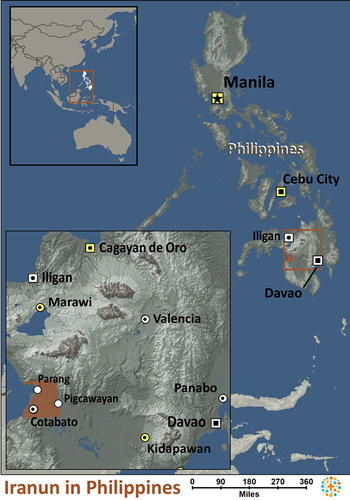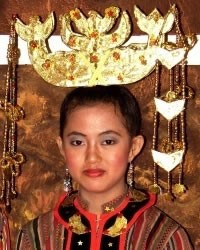

The Iranun, also spelled Illanun or Iranon, are a Muslim ethnic group native to southwestern Mindanao in the southern Philippines. They are closely related to the Maranao and Maguindanaon peoples, and all three groups belong to the Danao linguistic and cultural family that developed around the Mindanao region. Their language, Iranun, is an Austronesian language still spoken widely in parts of Mindanao and also among Iranun communities in Sabah, Malaysia.
Historically, the Iranun were famous sailors, shipbuilders, traders, and maritime warriors. From the seventeenth through nineteenth centuries they became widely known across Southeast Asia for naval raids and piracy throughout the Sulu Sea and surrounding regions. Their swift vessels and seafaring skill made them both feared and respected throughout the Malay world. European colonial records often referred to them as "Illanun pirates," though within their own history they were also defenders of Muslim coastal territories and participants in regional trade and warfare.
Most Iranun communities today live in the Bangsamoro region of Mindanao, especially in Maguindanao del Norte, parts of Lanao del Sur, Cotabato, and coastal areas extending toward Zamboanga. Smaller communities are also found in major Philippine cities because of migration for work and education. Oral tradition, clan relationships, Islamic identity, and strong family loyalty continue to shape Iranun society.
The Iranun are part of the broader Moro peoples of the Philippines, a collection of Muslim ethnolinguistic groups in Mindanao and the Sulu Archipelago with a long history of resistance to Spanish, American, and later Philippine central control. This history has deeply shaped Iranun identity, community solidarity, and religious consciousness.
Traditionally, many Iranun lived as fishermen, sailors, traders, and coastal farmers. Fishing remains an important livelihood for numerous Iranun communities living along the coastlines of Mindanao. Others cultivate rice, corn, coconuts, vegetables, and root crops in inland farming areas. Some families also raise livestock or work in transportation, trade, government service, or small businesses.
Village and family life are strongly centered around extended kinship networks and clan loyalty. Respect for elders, hospitality, family honor, and community cooperation are highly valued. Weddings, Islamic festivals, family gatherings, and communal celebrations remain important parts of Iranun social life. Oral storytelling, music, weaving, and traditional artistic patterns connected to Moro culture continue to preserve cultural identity among many families.
Historically, the Iranun were renowned shipbuilders and navigators. Although modern economic conditions have changed many traditional occupations, coastal life and seafaring heritage still influence community identity. In some areas, however, younger generations increasingly move toward cities for education and employment, creating pressure on traditional language use and older customs.
Many Iranun communities continue to face economic hardship tied to poverty, limited infrastructure, political instability, and conflict in parts of Mindanao. Decades of armed conflict involving insurgencies, clan feuds, and political violence in the Bangsamoro region have disrupted education, displaced families, and hindered economic development. Rural communities may struggle with healthcare access, unemployment, and educational limitations.
The Iranun are overwhelmingly Sunni Muslims, and Islam strongly shapes family, community, and cultural life. Religious practices commonly include daily prayer, fasting during Ramadan, mosque participation, Quranic instruction, and observance of Islamic customs connected to marriage, burial, and family celebrations. Islamic identity is deeply woven into Iranun history and Moro identity as a whole.
At the same time, traditional spiritual beliefs and folk practices remain influential among many Iranun communities. Fear of spirits, curses, unseen beings, and supernatural harm may affect daily decisions and family life. Protective rituals, charms, and traditional healing practices are often blended with Islamic belief, creating a syncretistic religious environment.
Islam among the Iranun is also strongly connected to cultural and political identity. Christianity is often viewed as foreign or associated with outside groups rather than understood through direct exposure to the gospel itself. Historical tensions between Muslim and Christian populations in the Philippines have sometimes reinforced suspicion toward Christianity.
Although there has been some Christian outreach among the Iranun, many still have little understanding of the biblical message of salvation through Jesus Christ. They need to hear clearly that forgiveness of sins and reconciliation with God come through Christ alone rather than through religious identity, rituals, or inherited tradition.
The Iranun remain largely unreached or only lightly reached with the gospel. Although some ministry efforts exist, there are still very few known evangelical believers among them. Strong Islamic identity, historical tensions, and limited long-term discipleship efforts continue to create barriers to gospel witness.
Practical needs are also significant. Many Iranun communities face poverty, unstable employment, weak educational systems, healthcare shortages, and limited economic opportunity. Areas affected by conflict in Mindanao continue to struggle with displacement, insecurity, and political instability. Rural fishing and farming communities are especially vulnerable to environmental hardship and economic fluctuations.
The Iranun need Scripture resources, discipleship materials, and gospel teaching communicated clearly in the Iranun language and related regional languages. Audio Scripture, oral Bible storytelling, and relationship-centered ministry may be especially effective because of the strong oral and family-centered nature of the culture. Existing believers need encouragement, biblical training, and fellowship support so they can grow strong in faith and share Christ within their own communities.
Pray that the Iranun people will hear a clear presentation of the gospel and place their faith in Jesus Christ for salvation.
Pray that God will strengthen and encourage the small number of Iranun believers and help them boldly share the hope of Christ with their families and communities.
Pray that the Iranun people will be adopted through the People Group Adoption program so that churches and believers will commit to sustained prayer and future gospel outreach among them.
Pray that God will raise up faithful Christian workers who are willing to serve among the Iranun with wisdom, humility, perseverance, and genuine love for the people.
Scripture Prayers for the Iranun in Philippines.
https://en.wikipedia.org/wiki/Iranun_people
https://en.wikipedia.org/wiki/Iranun_language
https://bcpch.bangsamoro.gov.ph/iranun/
https://peoplegroups.org/people_groups/pg007692/
https://www.dvv-international.de/en/adult-education-and-development/editions/aed-562001/minorities-learning-and-languages/the-iranunrsquos-strategy-for-language-and-culture-preservation
https://en.wikipedia.org/wiki/Moro_people
https://en.wikipedia.org/wiki/Maranao_people
| Profile Source: Joshua Project |