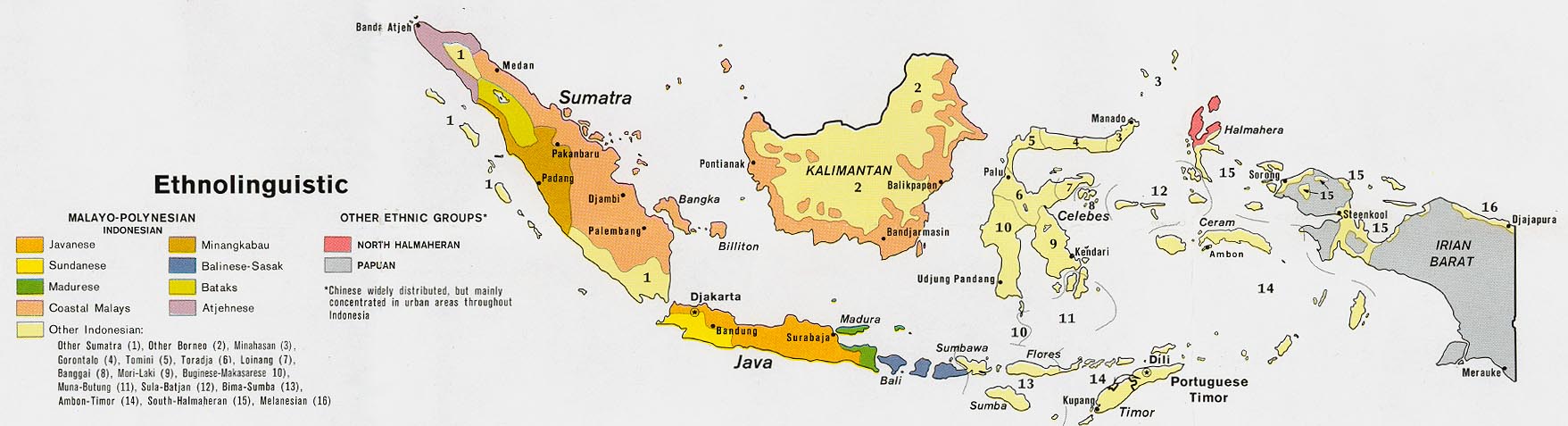
The Engganese people live on Enggano Island, located off the coast of Sumatra in Indonesia. Their language, Enggano, is unique and considered endangered, with fewer speakers among younger generations as Indonesian becomes more dominant. Historically, the Engganese were known for their isolation, living in small villages and relying on subsistence farming and fishing.
Contact with outsiders was limited until colonial times, when Dutch administrators and later Indonesian governance introduced new systems of trade, education, and religion. Despite these influences, the Engganese have retained much of their cultural identity through oral traditions, rituals, and community-based practices.
Daily life among the Engganese revolves around farming, fishing, and small-scale trade. Families cultivate rice, cassava, and bananas, while the surrounding seas provide fish and other marine resources. Food staples include rice, fish, and root crops, often prepared with coconut and spices. Work is divided along gender lines, with men often fishing or farming and women managing household responsibilities and gardens. Family dynamics emphasize cooperation and kinship, with extended relatives living nearby and sharing responsibilities for raising children and maintaining communal harmony.
Celebrations often include traditional dances, music, and feasts, which strengthen community bonds and mark seasonal or religious events. Hospitality is highly valued, and guests are welcomed with generosity.
The Engganese people identify primarily as Christian, though evangelical presence remains limited. Christianity has shaped much of their community life, with church attendance and festivals marking important occasions. However, syncretism is common, as traditional beliefs and practices continue to influence worldview and rituals.
The gospel has reached the Engganese, but discipleship remains shallow, and many believers lack access to Scripture in their heart language. The community is considered superficially reached, meaning that while Christianity is present, there is a great need for spiritual renewal and deeper commitment to biblical faith.
The Engganese people face both spiritual and physical challenges. Spiritually, the community requires deeper discipleship and teaching in the Word of God, so that faith can move beyond nominal identification and become transformative. Translation of Scripture into the Enggano language is essential for lasting impact, as many believers rely on Indonesian translations that may not fully resonate with their hearts.
Physically, the island's isolation limits access to healthcare, education, and economic opportunities, leaving families vulnerable to poverty and disease. Socially, younger generations are increasingly drawn to urban centers, creating tension between traditional life and modern aspirations. The Engganese need encouragement to embrace their identity in Christ and to become part of the mission force reaching their own people and neighboring groups.
Pray that Engganese believers will grow strong in their faith and become bold witnesses to their neighbors.
Pray asking God to raise up leaders who can disciple others and strengthen the small evangelical presence.
Pray for translation and teaching efforts that will make the Word of God accessible in the Enggano language.
Pray for their physical needs, including better healthcare, education, and sustainable economic opportunities.
Pray that the Engganese will experience the blessing of Jesus Christ, who provides answers to life's issues and desires to bring hope to all nations.
Scripture Prayers for the Engganese in Indonesia.
His Feet International: Unreached People Groups in Indonesia
Pray for Indonesia: Prayer for Indonesian Peoples
| Profile Source: Joshua Project |