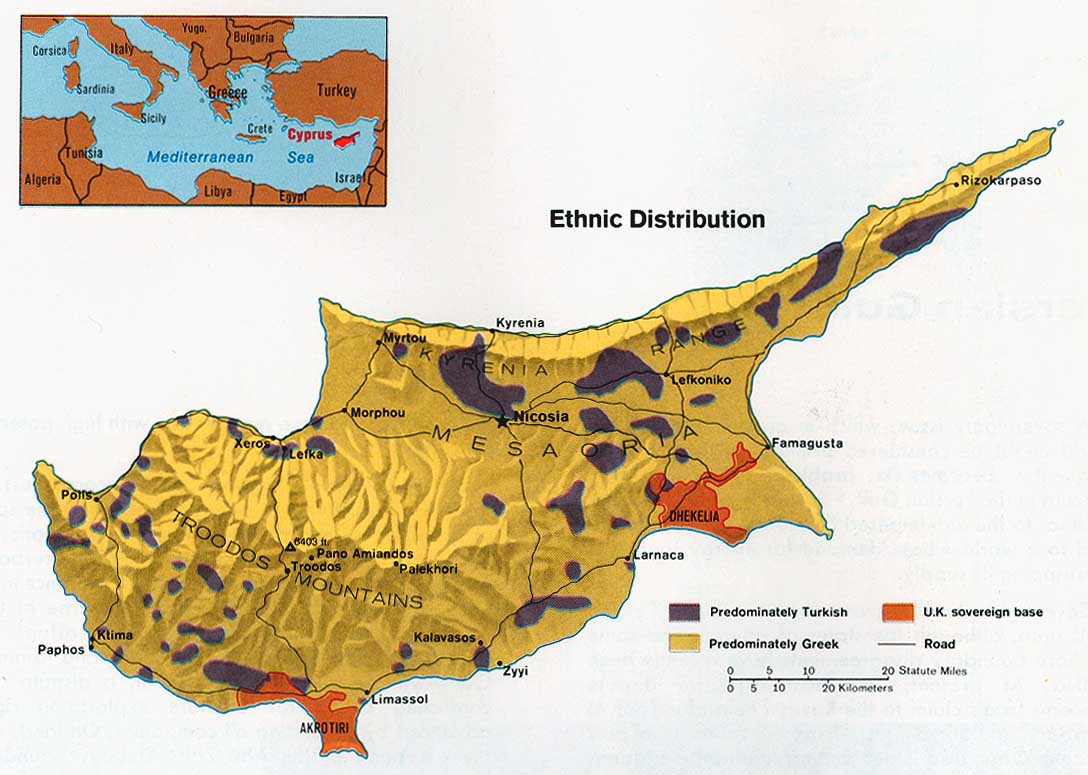

The Maronite Arabs of Cyprus form an ancient Christian community whose roots trace back to Syria and Lebanon, where the Maronite Church emerged in the centuries following the life of its namesake, Saint Maron. Waves of Maronite settlers crossed the eastern Mediterranean to Cyprus beginning as early as the Middle Ages, seeking refuge from the political and religious upheavals that repeatedly swept through the Levant. Over the following centuries, Maronite communities took root in numerous villages across the island, most prominently in the northern region around Kormakitis, which became the heart of Maronite life and language on Cyprus. The community's fortunes have risen and fallen with the island's turbulent history, and the Turkish invasion of Cyprus in 1974 forced a dramatic displacement, scattering most Maronites from their ancestral villages in the north to the Greek Cypriot south. Though reduced from their medieval numbers, the Maronite Arabs have preserved a distinct identity that ties together Levantine Arab heritage, an ancient form of Eastern Catholic Christianity, and a long history as a recognized minority within Cypriot society.
Maronite Arabs in Cyprus today live largely integrated into the wider fabric of Greek Cypriot society, having resettled in urban centers such as Nicosia after being displaced from their northern villages. Many families maintain close ties to their ancestral village of Kormakitis, returning for religious feast days, weddings, and commemorations even though permanent residence there is no longer widespread. Education and professional life are highly valued, and Maronite Cypriots are generally well integrated into the island's Greek-speaking economy while striving to preserve a cultural identity distinct from both mainland Greek Cypriots and Arab communities elsewhere in the region. Family and community bonds remain central, with the Maronite Church serving as an anchor for social life, education, and charitable activity. A distinctive marker of Maronite Cypriot heritage is Cypriot Maronite Arabic, a unique Arabic dialect blended with Aramaic roots and shaped by centuries of contact with Greek, though the number of fluent speakers has declined sharply as younger generations grow up speaking Greek as their primary language. Community leaders and cultural organizations have worked in recent years to document and teach this dialect to prevent its disappearance, recognizing it as a living link to the group's Levantine origins. Religious festivals tied to the Maronite liturgical calendar, along with village patronal feasts, remain important occasions for gathering, worship, and reaffirming communal identity.
The Maronite Arabs are a historically Christian people, belonging to the Maronite Catholic Church, an Eastern Catholic body of the West Syriac liturgical tradition that remains in full communion with the Church of Rome while retaining its own ancient rites, chants, and traditions. Their faith is thus distinct from, yet closely connected to, the wider Roman Catholic Church, and their liturgy still carries echoes of Syriac, a language descended from Aramaic. For Maronite Arabs, religious identity has long been inseparable from ethnic and communal identity, with the Church historically serving as the primary guardian of language, culture, and political standing on the island. This close fusion of faith and ethnicity can present a subtle danger, in that belonging to the Maronite community and observing its rites may be treated as equivalent to genuine, personal faith in Jesus Christ, when true salvation rests not in ethnic heritage or church membership but in a living relationship with Christ himself. The call for Maronite Arabs, as for any nominally Christian community, is to move beyond inherited religious identity toward wholehearted trust in Jesus as Savior and Lord.
The Maronite Arabs of Cyprus face the ongoing physical and cultural need to preserve their language and heritage, particularly as the community's distinctive Arabic dialect nears extinction with the passing of its eldest speakers. Displacement from ancestral villages has also left many families longing for restored access to their historic homes and churches in the north of the island. Spiritually, the community needs a renewed, personal encounter with Jesus Christ that goes beyond inherited religious tradition and ethnic identity, so that faith becomes a living reality rather than simply a marker of heritage.
Pray that Maronite Arabs would move beyond religious tradition to place genuine trust in Jesus Christ.
Pray for revival fire to move powerfully in their families and churches.
Pray for reconciliation and renewed access to ancestral villages and churches in northern Cyprus.
Pray that Maronite believers would be bold witnesses of Christ's love to their Muslim and Orthodox neighbors throughout the region.
Scripture Prayers for the Arab, Maronite in Cyprus.
https://en.wikipedia.org/wiki/Maronite_Cypriots
https://kohzen.com/where-did-the-maronites-come-from/
https://projectm.cy/cyprus-maronite-arabic/
https://langsci-press.org/catalog/view/235/1809/1835-1
| Profile Source: Joshua Project |