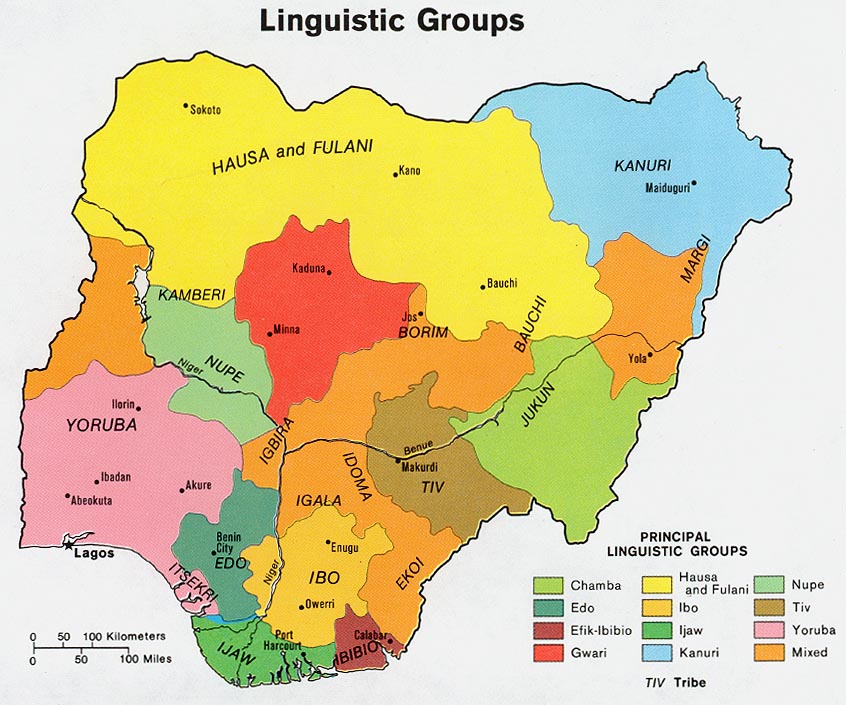

Ijaw, also known as the Nkoro or Nkoroo people, are a small ethnic community belonging to the broader Ijaw nation of the Niger Delta region in southern Nigeria. They live primarily in the Opobo-Nkoro Local Government Area of Rivers State, in towns such as Nkoro, Dema, and Ayama. Their homeland is a riverine landscape of creeks, mangroves, and waterways that has shaped every dimension of their culture and livelihood. They share Nkoro town with the Defaka people, with whom they have lived in close association across many generations.
According to oral and recorded history, the people migrated from Okrika, another Ijaw community in Rivers State. Over time, living near the Ogoni people to the north has left a cultural imprint on the Ijaw, who have absorbed elements of Ogoni customs while retaining their distinct Ijaw identity. The broader Opobo-Nkoro region rose to regional prominence in the nineteenth century under the legendary merchant-king Jaja of Opobo, who turned the area into a significant trading hub and established a navy to protect its commercial interests. Though British colonial forces eventually subdued the region in the early twentieth century, the Ijaw preserved their identity through the colonial period and into Nigerian independence.
Fishing is the heartbeat of Ijaw daily life. Men spend long hours on the rivers and creeks in canoes, bringing back fish, shrimp, periwinkles, clams, and other seafood that form the backbone of both the local diet and the local economy. Women often process and sell the catch at community markets, which remain central to economic and social life. The Queens Town Market in the area is a regular gathering place where goods, news, and relationships are exchanged. Farming supplements fishing, with families cultivating oil palm, plantains, bananas, cassava, yams, and cocoyams. Some households are involved in timber trade and small-scale commerce.
Meals in Ijaw homes are built around fish and starchy staples. Soups made with palm oil, fresh or smoked fish, and vegetables are everyday fare, often served with pounded yam or plantain. Smoked fish is also prepared for sale and trade beyond the community.
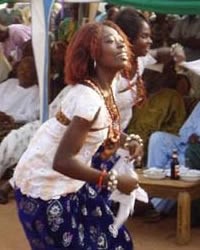
Family life is organized around extended kinship networks, and community elders and chiefs continue to hold significant social authority. The chiefly system, historically prominent among Ijaw clans, means that status and decision-making often run through recognized leaders. Community festivals celebrate shared identity and mark the rhythms of life. The Agiri festival, observed in the Opobo-Nkoro area, is one of the more prominent cultural celebrations in the region, drawing the community together through music, dance, and the honoring of tradition.
Christianity is the majority religion among the Ijaw, and the area's churches reflect a history of missionary influence that stretches back to the colonial era. However, a significant portion of the community continues to hold to traditional ethnic religions involving belief in ancestral spirits, water deities, and the spiritual forces believed to govern the natural world of the creeks and rivers. For many in the community, Christian identity and traditional spiritual practices exist side by side rather than in clear opposition.
While evangelical believers who hold to a personal, biblically grounded faith in Jesus Christ are present among the Ijaw, their numbers remain modest relative to the broader population.
The Ijaw live in a region that sits atop enormous oil and gas wealth, yet that wealth has done little to improve daily life for ordinary people. Oil spills and environmental degradation have damaged fishing areas and farmland, threatening the food security and livelihoods of communities whose existence has always depended on the health of the waterways. Access to quality healthcare and clean water remains limited for many households. Educational opportunities, while improving, are still uneven across the more remote communities of the Opobo-Nkoro area.
Pray that God will raise up and protect faithful Ijaw believers who are grounded in scripture and committed to making disciples within their own community.
Pray for healing and restoration of the waterways and fishing grounds that the Ijaw depend on for survival.
Pray that Ijaw Christians will carry the gospel of Jesus Christ to the unreached and less-reached peoples of Nigeria.
Scripture Prayers for the Ijaw in Nigeria.
https://en.wikipedia.org/wiki/Nkoroo_people
https://www.ethnologue.com/language/nkx/
https://www.schooldrillers.com/rivers-state-tribes/
https://www.manpower.com.ng/places/lga/738/opobo-nkoro
https://globalrecordings.net/en/language/nkx
https://www.101lasttribes.com/tribes/ijaw.html
https://www.britannica.com/topic/Ijo
| Profile Source: Joshua Project |