


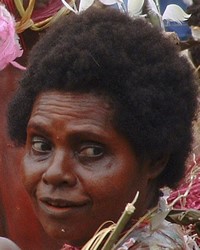

The Kein are a small Melanesian people group living in Madang Province, one of Papua New Guinea's most linguistically diverse regions along the northern coast of the main island. Their home territory sits within the broader Madang linguistic mosaic, a province that alone contains roughly two hundred distinct languages — a reflection of the extraordinary cultural and linguistic fragmentation that has shaped this part of the island for thousands of years. The Kein speak Kein, a Papuan language belonging to the Madang branch of the Trans-New Guinea language family, a large grouping of languages that spans much of the mainland interior and northern coast of Papua New Guinea.
Papua New Guinea was inhabited for tens of thousands of years before European contact, and the Madang coast was among the regions touched by German colonial rule beginning in the 1880s. German Lutheran missionaries arrived with the colonial administration and established a lasting Protestant presence across much of the Madang Province that continues today. Following Germany's defeat in World War I, Australia administered the territory under a League of Nations mandate, then governed it until Papua New Guinea gained independence in 1975. The legacy of this missionary history means that Christianity took root in many Madang communities, including those now identified as Kein, generations ago.
The Kein live in villages characteristic of rural Madang Province, where daily life is organized around subsistence agriculture and the cycles of the tropical growing season. Gardens of taro, sweet potato, yam, and banana provide the staple foods, supplemented by sago in areas where the palm grows, and by fishing and hunting when opportunity allows. Pigs remain culturally important as markers of wealth and are central to community feasts and ceremonial exchanges.
Family life is structured around extended kinship networks and clan identity, which determine land rights, marriage patterns, and community obligations. Elders hold authority in village governance, and their decisions carry weight in matters ranging from land disputes to community celebrations. Church services and Sunday gatherings have become part of the rhythm of weekly life for many Kein, serving as social as well as spiritual occasions that draw families together. Tok Pisin, Papua New Guinea's national creole, is widely used alongside the Kein language for trade, travel, and communication with neighboring communities, while English is the language of formal education.
As is widely noted across Papua New Guinea, Christian identity and traditional animistic belief have sometimes coexisted in the same person or community. The fear of spirits, ancestor veneration, and the use of traditional spiritual remedies for illness can persist alongside church attendance, creating a form of religious blending that falls short of the wholehearted, Scripture-grounded faith that Jesus calls his followers to. The opportunity before Kein believers is to move from inherited religious identity to a living, transforming encounter with the risen Christ.
Access to quality healthcare, reliable clean water, and advanced educational opportunities remains a challenge for rural communities in Madang Province, and the Kein are no exception. Geographic remoteness can limit access to markets, medical care, and government services. Scripture resources in the Kein language are limited or unavailable, which means that even community members who identify as Christians may have little access to the Word of God in the language closest to their hearts. Literacy programs that equip Kein adults and children to engage with Scripture directly would be a significant gift to the community.
Spiritually, the Kein need a deepening of faith that goes beyond church tradition and touches the heart with the reality of the gospel — that Jesus Christ died to forgive sin, rose to defeat death, and calls every person into a living relationship with the living God. Kein believers who have experienced that transformation carry a calling not only to strengthen their own community but to take the good news to neighboring peoples across Madang Province who have not yet heard.
Pray that Kein Christians will grow in genuine, scripture-rooted faith and experience the full freedom and joy that Jesus Christ offers.
Pray that Kein believers will be stirred to carry the gospel to neighboring language communities in Madang Province who remain unreached by the good news.
Pray for the translation and distribution of Scripture in the Kein language so that God's word can be heard and understood in the heart language of the people.
Pray for improved access to healthcare, clean water, and educational opportunity for Kein families living in rural Madang Province.
Scripture Prayers for the Bemal, Kein in Papua New Guinea.
https://en.wikipedia.org/wiki/Kein_language
https://en.wikipedia.org/wiki/Madang_Province
https://en.wikipedia.org/wiki/Languages_of_Papua_New_Guinea
https://en.wikipedia.org/wiki/Religion_in_Papua_New_Guinea
https://en.wikipedia.org/wiki/Evangelical_Lutheran_Church_of_Papua_New_Guinea
https://www.usip.org/programs/religion-and-conflict-country-profiles/papuanewguinea
https://minorityrights.org/country/papua-new-guinea/
https://pnglanguages.sil.org/resources/provinces/province/Madang
https://www.britannica.com/place/Papua-New-Guinea/Daily-life-and-social-customs
| Profile Source: Joshua Project |



