


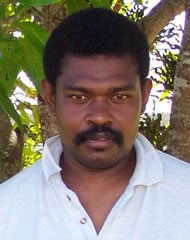

The West Ambae in Vanuatu are a distinct island people of Ambae, also called Aoba, in Penama Province. Their communities are centered on the western side of the island, where language and local identity set them apart from neighboring groups on the same island. Ambae has long been part of the wider Melanesian world, with village life shaped by kinship, customary land ties, gardening, and seafaring connections to nearby islands. Over time, mission influence, schooling, inter-island travel, and migration to larger centers in Vanuatu have brought change, but the West Ambae remain a recognizable people with their own language and community heritage rooted in the western part of Ambae.
The West Ambae in Vanuatu live in an island setting marked by steep terrain, rich rainfall, fertile garden land, and the constant presence of an active volcano. Community life is generally village-based rather than urban, and daily rhythms are often tied to family land, gardens, church life, and movement between coastal and inland areas. Travel on and around Ambae commonly involves trucks, small boats, and aircraft, which means transportation can affect access to markets, schools, medical care, and regular fellowship across the island.
Life on Ambae is still strongly connected to subsistence and small-scale agriculture. Families commonly depend on gardens for crops such as taro, banana, yam, manioc, sweet potato, vegetables, fruits, and nuts, while some households also grow cash crops such as copra, cacao, and dried kava to help cover school fees and household needs. Remittances from relatives working in Port Vila or Espiritu Santo can also help support village families. In this kind of setting, family cooperation, customary obligations, and practical resilience remain important parts of everyday life.
Their language is West Ambae, an Oceanic language also known in some sources as Duidui or Opa, with recognized dialects including Nduindui and Walaha. It is spoken on western Ambae, while people on other parts of the island often speak different Ambae languages. Because Vanuatu is highly multilingual, many people also use Bislama for wider communication, especially when speaking across language boundaries or in broader national settings.
The West Ambae in Vanuatu are traditionally identified as Christian. Christianity is deeply woven into life on Ambae, and church affiliation is often a normal part of community identity, family rhythm, and village life. In places like this, however, outward Christian identity can sometimes remain more cultural or inherited than deeply grounded in repentance, saving faith, and obedient discipleship. There can also be lingering customary assumptions or older spiritual patterns beneath public Christian practice, especially where tradition and church life have long existed side by side.
Because of this, the need is not simply for Christian familiarity, but for genuine spiritual renewal through the gospel of Jesus Christ. They need the truth of Scripture to move beyond nominal religion and produce mature believers who know Christ personally, walk in holiness, and stand firmly on God's Word. Scripture is available in their language.
The West Ambae in Vanuatu need strong biblical discipleship that moves beyond inherited church identity into living faith in Jesus Christ. Since Christianity is already familiar in the community, the deeper need is for pastors, elders, and faithful believers who can teach Scripture clearly, call people to wholehearted obedience, and strengthen homes with truth rather than mere tradition. They need churches where faith is not assumed simply because it is culturally expected, but where the gospel is preached plainly and applied deeply.
They also need spiritual strength in the face of practical challenges common to island life. Transportation across rough terrain, reliance on boats or small aircraft, and distance from major services can affect access to education, medical care, trade, and consistent pastoral support. These realities can make it harder for scattered households or smaller congregations to remain well connected and steadily discipled. Families need stability, wise leadership, and enduring fellowship so that the next generation grows up grounded in biblical truth.
Because daily life is closely tied to gardens, local production, and support from relatives working elsewhere, practical pressures can also shape spiritual life. When livelihoods are fragile, churches and families can be stretched. Prayer is needed that local believers would be strengthened in both faith and perseverance, and that gospel witness would remain rooted, joyful, and durable in every village.
Pray that the West Ambae in Vanuatu would move beyond inherited Christian identity into genuine repentance, living faith, and joyful obedience to Jesus Christ.
Pray for pastors, elders, and faithful church leaders to teach God's Word clearly and to shepherd their communities with courage, humility, and biblical conviction.
Pray for families to be strengthened so that parents and grandparents pass on a real love for Christ and a serious commitment to Scripture.
Pray for children and young adults to be grounded in truth and protected from shallow religion, compromise, and spiritual drift.
Pray for practical help where needed in transportation, education, medical access, and daily provision, so that village life remains stable and local churches can continue to grow in strength and faithfulness.
Scripture Prayers for the Ambae, West in Vanuatu.
https://en.wikipedia.org/wiki/West_Ambae_language
https://www.ethnologue.com/language/nnd/
https://en.wikipedia.org/wiki/Ambae
https://www.toksavepacificgender.net/wp-content/uploads/2021/03/Tarisesei_J_2000.pdf
West Ambae of Vanuatu (PGID: PG018463) - PeopleGroups.org
Religion and expressive culture – Ambae – everyculture.com
| Profile Source: Joshua Project |



