




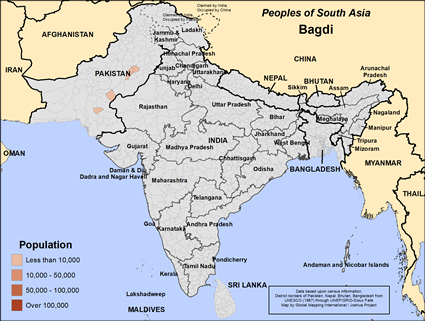
Bagdi is a small Hindu community found mainly in Sindh Province, especially in the Tharparkar and Umerkot regions near the Indian border. They are related to Bagdi and Bagri communities spread across parts of India and Pakistan and are connected culturally to the broader peoples of the Rajasthan and Sindh desert regions. Many speak Bagri along with Sindhi and other regional languages.
Historically, Bagdi communities were associated with agricultural labor, hunting, fishing, and rural village life. Over generations, migration, social marginalization, and economic hardship shaped much of their history. In Pakistan, many Bagdis belong to the scheduled caste Hindu communities that have often faced discrimination, poverty, and lack of land ownership.
Life in the desert regions of Sindh has always required resilience. Harsh climate conditions, drought, and limited economic opportunities have influenced the Bagdi way of life for generations. Many communities remain rural and isolated, with limited access to education and healthcare. Christian witness among the Bagdi in Pakistan has remained extremely limited, and many have had little opportunity to hear the gospel clearly explained.
Most Bagdi families in Pakistan live in rural villages and depend on agricultural labor, livestock care, seasonal work, or small-scale trade to survive. Many work on land owned by others rather than owning farmland themselves. Economic insecurity is common, especially in drought-prone desert regions where farming conditions can be difficult.
Extended family and clan relationships play an important role in community life. Families often live close together and rely heavily on mutual support. Traditional customs surrounding marriage, festivals, and village gatherings continue to shape social identity. Music, oral storytelling, and local religious celebrations remain valued parts of community culture.
Food commonly includes flatbreads, lentils, rice, vegetables, and dairy products when available. In poorer regions, families may struggle during seasons of drought or economic hardship. Access to modern medical care and consistent education can be limited in remote villages.
Many Bagdi communities continue to experience social marginalization because of caste identity. Children may leave school early to help support their families, and opportunities for long-term economic advancement are often limited.
The Bagdi in Pakistan primarily follow Hinduism mixed with folk religious beliefs and traditional spiritual practices. Worship may include devotion to Hindu gods and goddesses along with rituals connected to local shrines, ancestral traditions, and fear of spiritual powers.
Like many rural Hindu communities in South Asia, the Bagdi often practice a syncretistic form of religion that combines temple worship, festivals, offerings, protective rituals, and beliefs about spirits or curses. Religious customs are closely tied to family and community identity, making conversion to Christianity socially difficult.
Very few Bagdi believers are known in Pakistan. Many have never met a Christian who could clearly explain the gospel or provide biblical teaching in a culturally understandable way.
The Bagdi need access to the gospel in their own languages and cultural setting. Many have little understanding of Jesus Christ or the message of salvation through faith in Him alone. Long-term discipleship, oral Bible teaching, and faithful Christian witness are greatly needed.
Practical needs are also significant. Many Bagdi communities struggle with poverty, lack of land ownership, limited healthcare access, illiteracy, and restricted educational opportunity. In desert regions, drought and economic instability can place heavy pressure on families and entire villages.
The Bagdi would benefit from compassionate ministry that addresses both spiritual and practical concerns. Clean water projects, medical assistance, literacy programs, vocational training, and Scripture resources could help open doors for lasting gospel engagement. There is also a need for mature believers willing to live among them with humility and perseverance.
Pray that the Bagdi people in Pakistan would hear the gospel clearly and come to trust in Jesus Christ alone for forgiveness and eternal life.
Pray that God would raise up faithful Christian workers who are willing to serve among the Bagdi with compassion, wisdom, and endurance.
Pray that the Bagdi would be adopted through the People Group Adoption program so they receive sustained prayer, ongoing gospel engagement, and future discipleship efforts.
Pray that believers in Pakistan would grow bold in sharing the truth of Christ with marginalized Hindu communities throughout Sindh Province.
Scripture Prayers for the Bagdi in Pakistan.
https://en.wikipedia.org/wiki/Vaghri_people
https://peoplegroups.org/people_groups/pg041288/
https://www.worldwatchmonitor.org/2016/06/pakistans-hindu-dalits-face-extreme-discrimination-says-new-report/
| Profile Source: Joshua Project |




