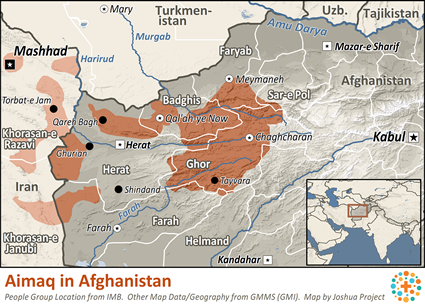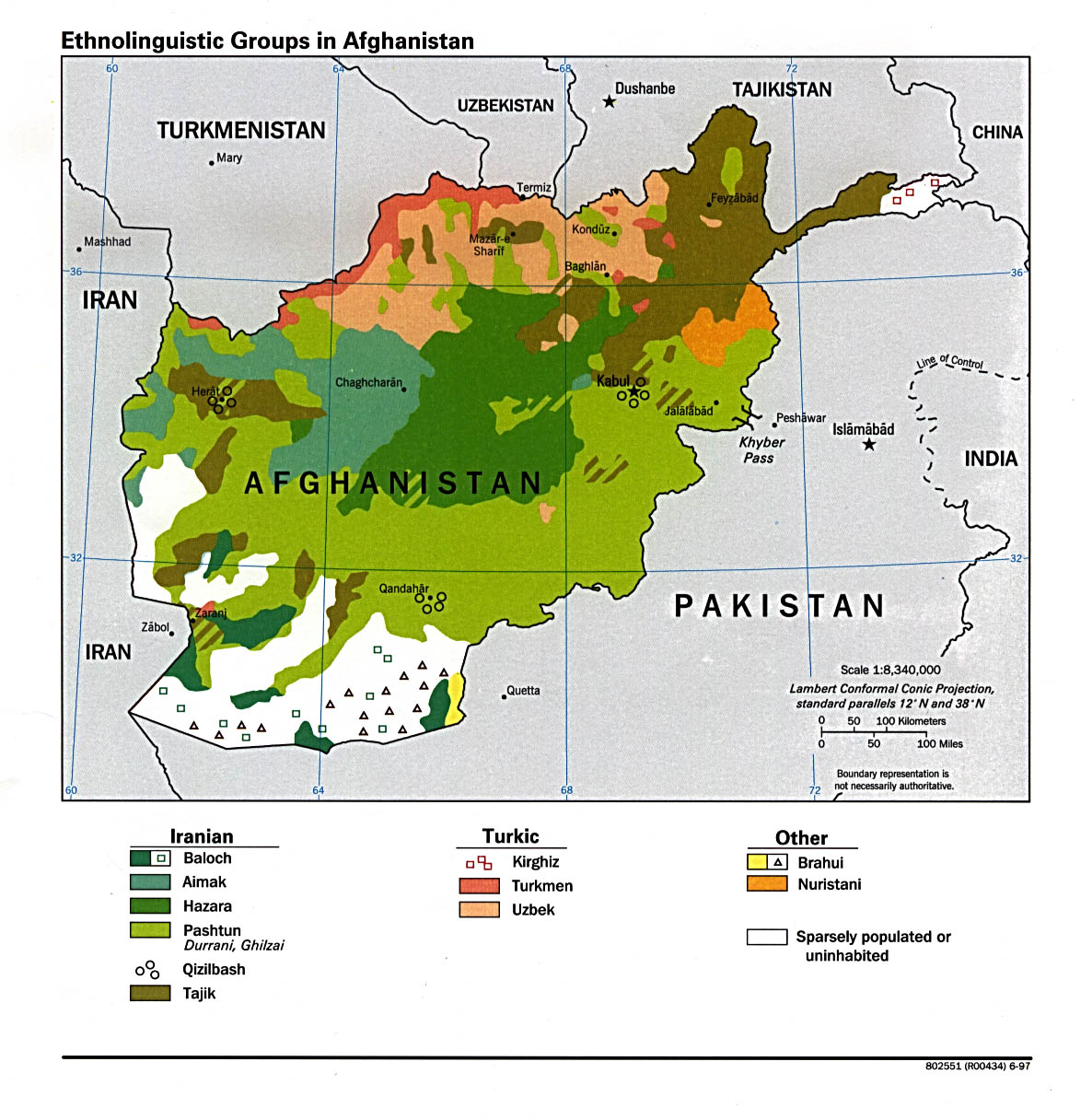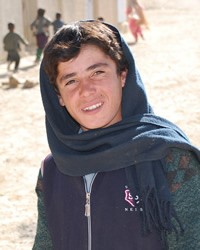

From ancient times, Afghanistan has been the crossroads of Asia. The ethnically mixed Aimaq tribes formerly stretched from northeastern Iran into western and central Afghanistan, where they still reside. They have always been formidable fighters and herders.
The Aimaq people of Afghanistan live primarily as rural pastoralists and agriculturalists, and their daily life is closely tied to the land and seasonal patterns. Many Aimaq men work as herdsmen, tending flocks of sheep and goats that are central to their livelihood. These animals provide milk, meat, wool, and trade goods, making livestock herding one of the most important economic activities among them. In addition to herding, some Aimaq farm small plots of land, growing grains such as wheat and barley where conditions allow. Their work is often physically demanding and requires cooperation within extended families, especially during planting, harvesting, and seasonal migrations.
A portion of the Aimaq population follows a semi-nomadic lifestyle, moving between summer and winter pastures to find adequate grazing land. Others have settled into villages but still maintain strong ties to pastoral work. Women play a significant role in the work of the household, including processing dairy products, preparing food, raising children, and often weaving textiles such as carpets or other wool goods. These handmade items can contribute to the family's income through local markets.
Recreation among the Aimaq people is generally simple and community-centered. Leisure time is often intertwined with social life rather than separated from it. Men may gather to talk, share stories, or drink tea after long days of work, while community gatherings provide opportunities to strengthen relationships. Traditional music and storytelling are important forms of cultural expression, helping preserve their heritage and pass on values from one generation to the next.
Festivals, weddings, and other celebrations serve as key recreational moments, bringing together families and communities for shared meals, music, and sometimes dancing. These events provide a break from daily labor and reinforce strong social bonds. Overall, both work and recreation among the Aimaq are shaped by a close-knit, cooperative lifestyle rooted in tradition and the rhythms of rural life.
The Aimaq people of Afghanistan are predominantly Sunni Muslims, and their spiritual life is shaped by the broader framework of Sunni Islam as practiced in rural Afghan society.
Their beliefs are rooted in the teachings of the Koran, which they regard as the final and authoritative revelation from God. They recite the Shahada (the statement of faith), daily prayers, fasting during Ramadan, giving to those in need, and observing important religious festivals. Their understanding of faith is closely connected to obedience, tradition, and community identity.
Among the Aimaq, Islam is not only a system of belief but also a guide for daily life. Religious values influence family structure, social relationships, moral decisions, and community leadership. Local religious leaders often hold influence, helping interpret Islamic teaching and guide community practice.
At the same time, as with many rural and tribal groups in Afghanistan, their expression of Islam may include elements of folk practice or traditional beliefs alongside formal Sunni teaching. This can include a strong awareness of the spiritual world, such as belief in unseen forces, protection rituals, or seeking blessings in times of need. These elements are often integrated into daily life rather than seen as separate from religion.
Strong tribal and family loyalties create difficult barriers for the message of God's grace found in Jesus. In addition, the Aimaq live in remote areas of Afghanistan. Scripture resources are needed in the Aimaq language.
Ask God to soften the hearts of the Aimaq toward the gospel message, and that they will hunger for the grace found in Jesus.
Pray for Christians to adopt the Aimaq people for regular prayer and outreach.
Ask God to give them courage and wisdom so they can represent the holiness and presence of our God and Father.
References
Scripture Prayers for the Aimaq in Afghanistan.
| Profile Source: Joshua Project |