




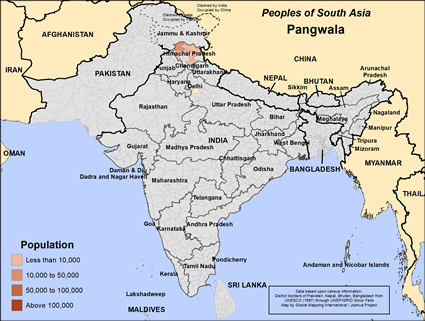
The Pangwala are a tribal people living primarily in the Pangi Valley of Himachal Pradesh in northern India. Their homeland lies in a remote mountainous region of the western Himalayas within the Chamba district. The difficult terrain and long winters historically kept the Pangwala relatively isolated from surrounding populations, helping preserve their distinct language, customs, and social traditions over many generations. Their culture reflects influences from both Himalayan tribal traditions and neighboring Hindu and Buddhist communities.
The Pangwala speak Pangwali, an Indo-Aryan language connected to the western Himalayan linguistic family. Historically, their economy centered on mountain agriculture, animal husbandry, and trade through narrow Himalayan routes linking valleys and neighboring regions. Traditional village structures, clan relationships, and seasonal survival patterns shaped daily life in this rugged environment. In recent decades, roads, education, government programs, and migration have gradually increased outside influence while still leaving many villages relatively isolated during harsh winter months.
Life among the Pangwala is heavily shaped by the Himalayan climate and mountainous geography. Families traditionally depend on terrace farming, livestock raising, and seasonal agricultural work. Crops may include barley, wheat, maize, potatoes, and peas suited for cooler mountain conditions. Sheep and goat herding are important in some areas, especially where grazing land is available in higher elevations.
Villages are often small and closely connected through kinship networks. Extended family relationships remain important, and cooperation between households is necessary for farming, livestock care, and surviving difficult winters. Homes are commonly constructed from stone and wood using designs adapted for cold weather and steep terrain.
Meals often include grains, lentils, vegetables, dairy products, and locally available meat. Traditional clothing suitable for cold mountain weather continues to be worn during festivals and ceremonial gatherings. Music, folk dances, and seasonal festivals remain important parts of Pangwala cultural identity.
Modernization is gradually changing traditional life. Younger generations increasingly pursue education, government employment, and migration to towns or cities. Improved transportation and communication have brought greater outside influence, though many villages still maintain strong attachment to traditional customs and family structures.
The Pangwala primarily follow Hindu religious traditions, though elements of folk religion and local Himalayan spiritual beliefs also influence everyday life. Religious practice commonly includes devotion to Hindu gods and goddesses, observance of village festivals, temple worship, and rituals connected to family and agricultural life.
In many Himalayan communities, traditional beliefs involving local deities, ancestral customs, sacred mountains, spirits, ritual protection, and seasonal ceremonies remain deeply woven into community life. Religious identity is closely connected to village tradition, family heritage, and cultural belonging.
Although the Pangwala may sincerely practice inherited religious customs and local spiritual traditions, they still need the gospel of Jesus Christ and the assurance of salvation that comes through faith in Him rather than through ritual observance, folk practices, or inherited religion.
The Pangwala need greater access to Scripture, biblical discipleship, and faithful Christian witness presented with humility and cultural understanding. Remote Himalayan communities often remain difficult to reach because of geography, weather conditions, and limited long-term ministry presence.
Practical needs include healthcare access, educational opportunity, transportation infrastructure, stable economic opportunities, and support during severe winter conditions. Geographic isolation can make access to medical care and government services difficult for many villages.
There is a need for mature believers who are willing to patiently build relationships, serve compassionately, and establish strong local fellowships rooted firmly in biblical truth. Christian workers serving in Himalayan regions also need perseverance and wisdom because of the physical and cultural challenges involved in long-term ministry.
Pray that the Pangwala people would hear the gospel clearly and come to know Jesus Christ as Savior and Lord.
Pray that God would raise up compassionate and biblically faithful workers who are willing to serve among the Pangwala in the challenging Himalayan environment.
Pray that the Pangwala would be adopted through the People Group Adoption program so that sustained prayer, discipleship, and long-term gospel outreach would continue among them.
Pray for strengthened families, improved healthcare and education, stable livelihoods, and spiritual openness within Pangwala communities throughout Himachal Pradesh.
Scripture Prayers for the Pangwala in India.
https://en.wikipedia.org/wiki/Pangi_Valley
https://www.himachalpr.gov.in/en-IN/pangi-tribal-development.html
https://www.india.gov.in/spotlight/development-pangi-valley-himachal-pradesh
https://en.wikipedia.org/wiki/Chamba_district
| Profile Source: Joshua Project |




