


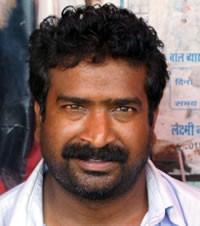

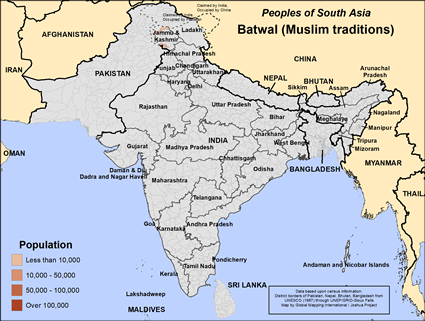
The Batwal (Muslim traditions) are a small Muslim community found primarily in the Jammu region of northern India. They are also known by names such as Bhojpas or Dhee in some local contexts. The community is connected culturally to the wider Dogra and Kashmiri social environment and commonly speaks Dogri and Kashmiri-related regional languages. Historically, the Batwal lived in the sub-Himalayan regions stretching across parts of present-day Jammu and neighboring Punjab areas.
In earlier generations, the Batwal were known as hunters, food gatherers, and village watchmen before gradually moving into settled agricultural life. Over time, many also became involved in trade and traditional crafts. Although they are Muslim, social divisions resembling caste structures have continued to influence community organization and status within the broader society of northern India.
The Batwal maintain strong clan identities and local leadership structures. Community elders and headmen traditionally helped resolve disputes and guide social decisions. Their history has largely been preserved through oral tradition and local memory rather than written historical records. Christian witness among the Batwal has remained extremely limited, and many have never encountered clear biblical teaching.
Most Batwal families today live in rural or semi-rural communities where agriculture provides the main source of income. Farming, livestock care, local trade, and craftwork help support many households. Some Batwal are known for weaving wool shawls and blankets, skills connected to the colder climate of northern India and Kashmir.
Family and clan relationships remain central within Batwal society. Marriage customs are strongly influenced by clan identity, and the community traditionally avoids marriage within the same clan. Elders continue to hold respect as guardians of family honor and community traditions. Social cooperation is important in resolving conflicts and organizing community matters.
The Batwal share many cultural customs with neighboring Dogra and Kashmiri peoples. Food commonly includes flatbreads, rice, lentils, tea, yogurt, vegetables, and regional meat dishes. Seasonal festivals, weddings, and religious gatherings remain important social occasions.
Life can be difficult in some Batwal communities because of economic instability, limited educational opportunities, and regional political tensions affecting Jammu and Kashmir. Younger generations increasingly face pressure to seek work outside traditional village life, contributing to gradual social and cultural change.
The Batwal (Muslim traditions) are primarily Sunni Muslims, though a smaller number follow Shia traditions. Islamic identity shapes family life, moral expectations, festivals, and community customs.
Like many rural Muslim communities in South Asia, some Batwal also retain folk religious practices connected to spiritual protection, blessings, healing rituals, shrines, or fear of unseen powers. Religious identity is deeply tied to family and community belonging, which can make conversion to Christianity socially costly.
Very few known believers exist among the Batwal. Many have never heard a clear explanation of the gospel centered on repentance, grace, and salvation through Jesus Christ alone. Access to biblical teaching, discipleship, and Christian fellowship remains extremely limited.
The Batwal need greater access to the gospel through faithful local-language evangelism, Scripture resources, and long-term discipleship. Many have little understanding of biblical Christianity or the message of salvation through Christ alone. Christian workers willing to build relationships patiently within Batwal communities are greatly needed.
Practical needs are also significant. Some Batwal communities face poverty, unstable employment, limited healthcare access, and educational barriers. Regional instability in northern India has also contributed to uncertainty and hardship for many families.
The Batwal would benefit from compassionate ministry that combines biblical teaching with practical assistance, literacy support, vocational training, and medical outreach. Audio Scripture resources and oral Bible teaching may also be especially valuable in communities where literacy levels vary.
Pray that the Batwal people would hear the gospel clearly and come to trust in Jesus Christ alone for salvation.
Pray that God would raise up faithful Christian workers who are willing to serve among the Batwal with humility, wisdom, and perseverance.
Pray that the Batwal would be adopted through the People Group Adoption program so they receive sustained prayer, ongoing gospel engagement, and future discipleship efforts.
Pray that believers living in Jammu and northern India would grow bold in sharing the truth of Christ with the Batwal and neighboring Muslim communities.
Scripture Prayers for the Batwal (Muslim traditions) in India.
https://peoplegroups.org/people_groups/pg041740/
https://www.dailyexcelsior.com/history-of-batwal-community/
https://en.wikipedia.org/wiki/Batwal
https://www.facebook.com/M.TayyabKaithRajput/posts/batwalpage-issuesthe-batwal-are-hindumuslim-rajput-caste-found-in-the-state-of-j/528218194328988/
| Profile Source: Joshua Project |




